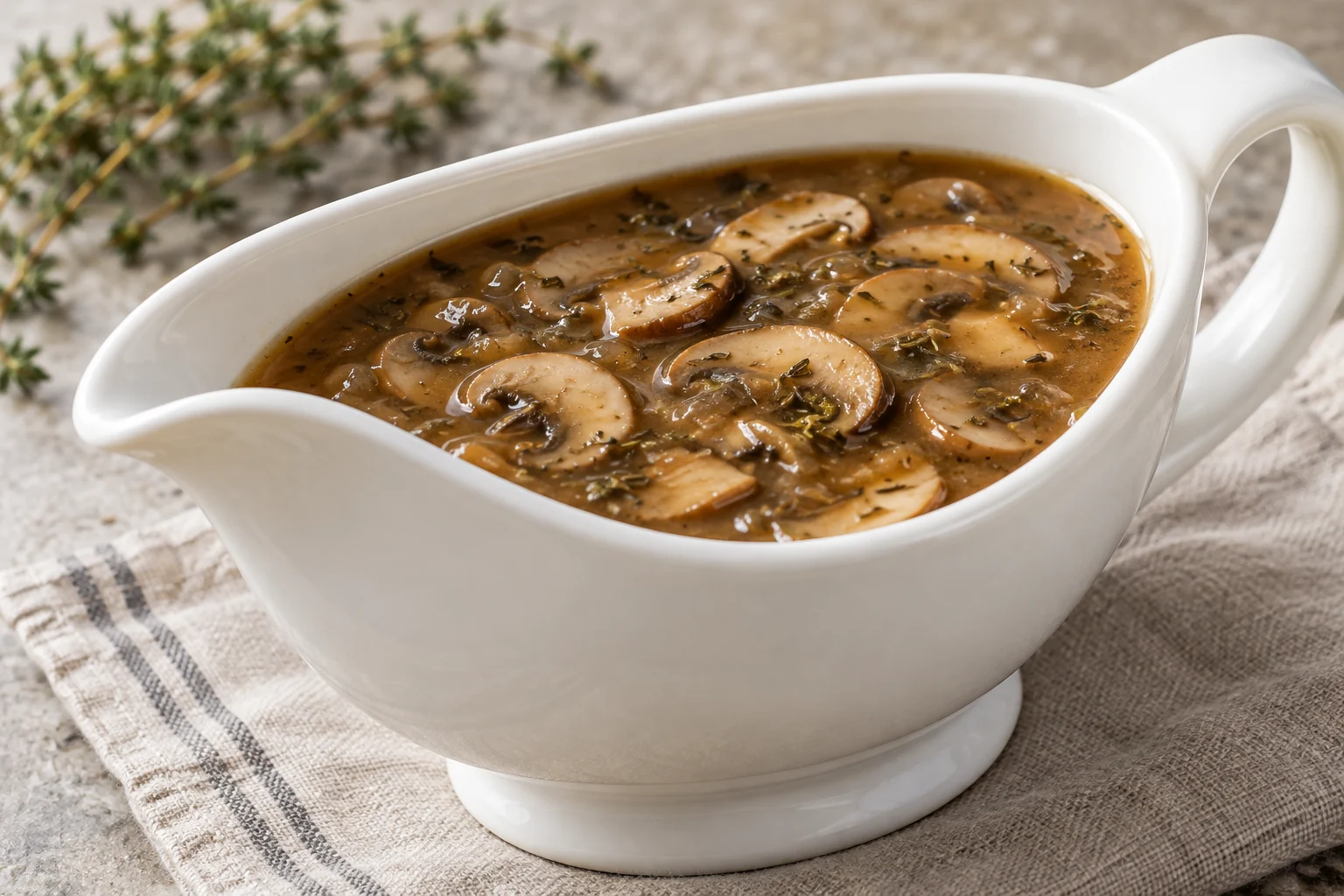
This gravy builds its savory base in the pan rather than relying on concentrated stock. The two important transitions are from wet mushrooms to lightly browned mushrooms, then from an oily flour coating to a smooth sauce. Treat those as separate stages. Adding all the water at the beginning would prevent the same browning and leave the flour harder to distribute.
Mushroom & thyme gravy makes 6 servings, with 40 min estimated total time. View the standalone recipe page.
Give the mushrooms room
Use a wide saucepan or deep skillet with enough surface area for the sliced mushrooms to spread out. Their first response to heat is often to release liquid. Stir occasionally, but allow that liquid to steam away before deciding whether the pan needs anything else. The specified oil is enough for this formula; pouring in more because the mushrooms initially look dry changes both texture and nutrition. Brown edges and a more concentrated mushroom aroma are better cues than a fixed minute count.
Add onion after the wet stage
The onion goes in after the mushrooms have lost much of their free moisture. Finely diced pieces soften quickly among the browned slices without competing with them during the initial stage. Reduce the heat to medium so the onion can soften without scorching the browned material on the base. A pale golden film is useful flavor; black patches and an acrid smell indicate excessive heat. Stir across the whole pan bottom, especially near the edges where thin films dry fastest.
Disperse flour before adding water
Sprinkle the measured flour over the oily vegetables rather than dropping it in one mound. Stir until there are no powdery pockets and cook for the stated minute. This distributes flour particles through the fat and vegetables before they meet a large amount of liquid. Add the first splash of water slowly while stirring, making a thick smooth mixture. Once that mixture is uniform, continue with the remaining measured water. A flexible spatula helps lift the browned pan film into the sauce.
Judge consistency at a gentle simmer
A lively boil is unnecessary once the gravy begins thickening. Maintain a gentle simmer and stir regularly so flour cannot settle and catch underneath the mushrooms. The finished sauce should leave a coating on a spoon while still pouring easily. It will become thicker as it cools, so do not reduce it to a paste in the pan. If it is very loose, give it a little more uncovered simmering time; avoid sprinkling raw flour directly into the finished liquid.
Portion the sauce separately
Divide the complete batch into six equal sauce portions. Potatoes, bread, rice or other foods beneath the gravy have their own ingredients and are not part of this estimate. Cool leftovers in a shallow container and refrigerate promptly. When reheating, stir so the center heats as well as the edges. A small splash of plain water can loosen refrigerated gravy without adding nutrients. The recipe contains wheat flour, so its dairy-free and vegan ingredient screens do not imply gluten-free suitability.
Common questions
Why did the gravy form lumps?
Flour may have met a large volume of water before it was evenly dispersed. Stirring in the first liquid gradually helps. Small lumps can be pressed against the pan side, but straining would also remove the intended mushroom pieces.
Can I use dried mushrooms instead?
Not at the same stated weight. Dry mushrooms need rehydration and a separate quantity and liquid plan. This recipe and its calculation describe fresh white mushrooms, including their natural moisture.
Technique & food-safety references
These primary references support the technique, safety and storage guidance. The recipe and cooking explanations are original Recipe Pinboard content.


