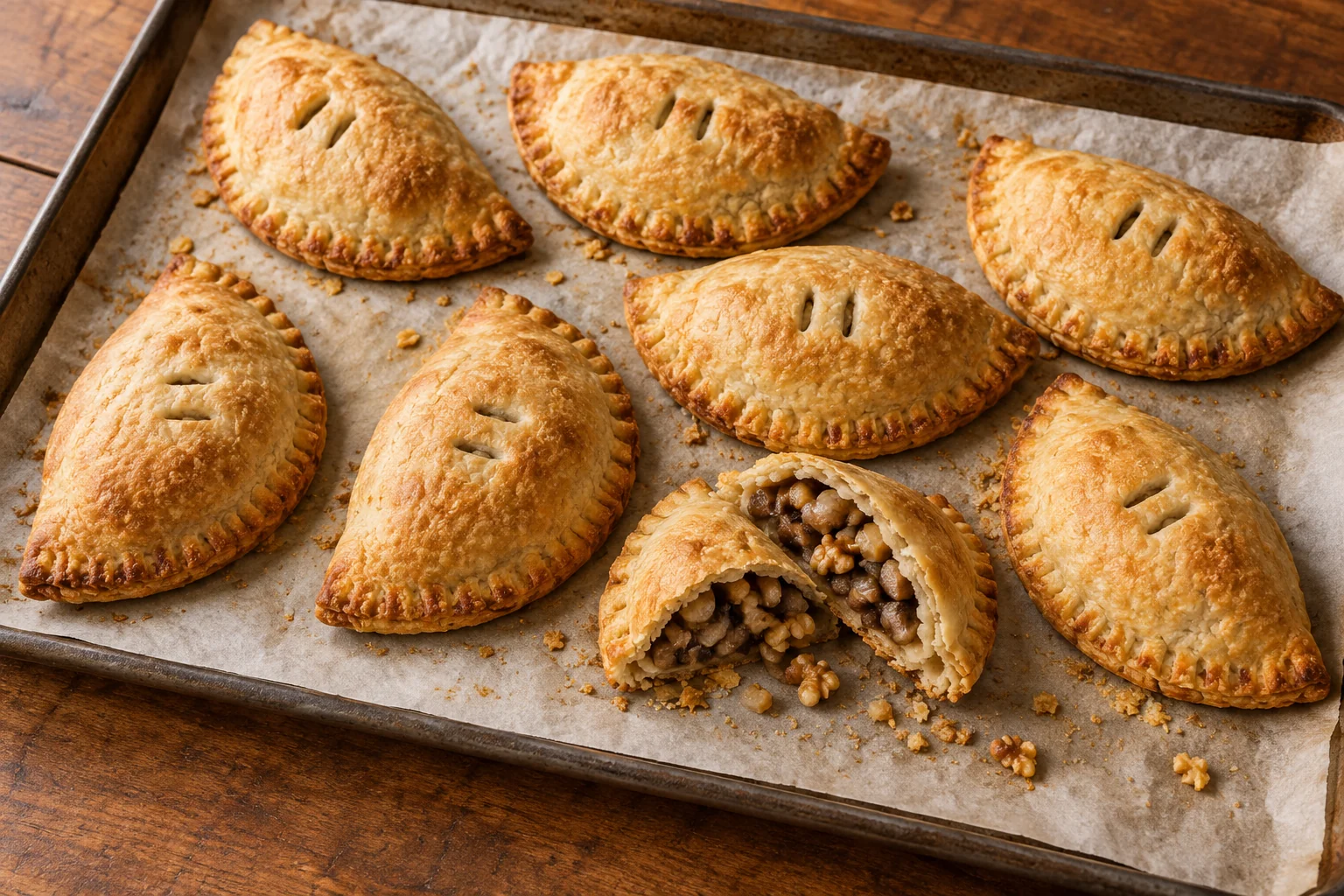
These eight hand pies use a cold-butter shortcrust and a mushroom filling whose moisture is reduced in the pan. Finely chopped walnuts give the filling substance without cheese or a separate binder. Two pies make one serving. The three-hour allowance includes both dough rests, cooling the filling, shaping, baking and the final brief rest. Start the pastry first, then cook the mushrooms while it chills. A shallow cooling dish and enough refrigerator space for the assembled tray make the sequence easier.
Mushroom and walnut hand pies makes 4 servings, with 3 hr estimated total time. View the standalone recipe page.
Keep the pastry cool and portioned
Rub cold butter into the flour only until the mixture is unevenly crumbly, with small visible butter pieces. Add the measured water and gather the dough without kneading it like bread. Divide into eight disks before chilling so each pie starts with a similar amount of crust. Reserve the separate 20 g flour for rolling; do not bury the dough beneath an unmeasured coating from the bag. If the kitchen is warm, keep most disks refrigerated while rolling one or two at a time. Soft, greasy pastry needs cooling before more handling.
Reduce the mushroom juices
Finely chop mushrooms and onions so the filling settles into the half-moon shape without large pieces pushing through the crust. Use a wide skillet and allow the mushrooms to release their liquid, then continue cooking until that liquid evaporates. A spoon drawn through the mixture should not leave a watery puddle behind. Stir rather than pouring away juices, because the recipe accounts for the complete vegetable input. Add walnuts after the vegetables have reduced. They provide texture, but they should not be expected to absorb a pan full of excess water.
Cool before filling the circles
Spread the cooked mixture into a shallow dish so heat can escape, then give it the scheduled refrigerator time. Warm filling softens butter in the dough and makes the bottom difficult to lift. Divide all filling into eight portions before assembling the pies. Roll each disk to a roughly six-inch circle with an even thickness, repairing a thin spot before adding filling. Keep a clear border all around. If dough begins pulling back strongly under the rolling pin, pause briefly with it covered rather than forcing it thinner through repeated heavy strokes.
Seal and vent each pocket
Place filling on one half of the circle, moisten the border lightly and fold the empty half over without stretching. Press the edges together, then crimp with a fork. A visible mound of filling trapped in the seam prevents a complete seal, so move it inward before pressing. Chill the formed pies for the final twenty minutes while the oven heats. Brush with the measured milk and cut two small vents through the upper crust. The openings let steam escape without relying on a seam to burst during baking.
Bake through and rest before lifting
Watch for evenly golden pastry rather than only browned fork marks. The center filling should reach 165°F, and the base should be firm enough to lift with a broad spatula. Let the pies stand for ten minutes before serving; their filling remains hot after the crust feels comfortable to touch. The estimate divides all eight pies into four portions and counts the rolling flour and milk-brushing allowances. It does not deduct guessed bench residue. Refrigerate leftovers promptly, use within three to four days and reheat thoroughly before serving.
Common questions
Why did the bottoms become damp?
Filling that was still wet or warm can soften the pastry before it sets. Reduce the mushroom juices fully and cool the mixture before assembly. Also leave room between pies so trapped moisture can escape from the tray.
Can I roll the pastry much thinner?
Very thin dough tears around the walnut filling and may not support lifting. Keep the approximate thickness in the card and distribute the dough evenly among eight pies. Larger or smaller shapes alter both baking behavior and the two-pie serving basis.
Technique & food-safety references
These primary references support the technique, safety and storage guidance. The recipe and cooking explanations are original Recipe Pinboard content.


