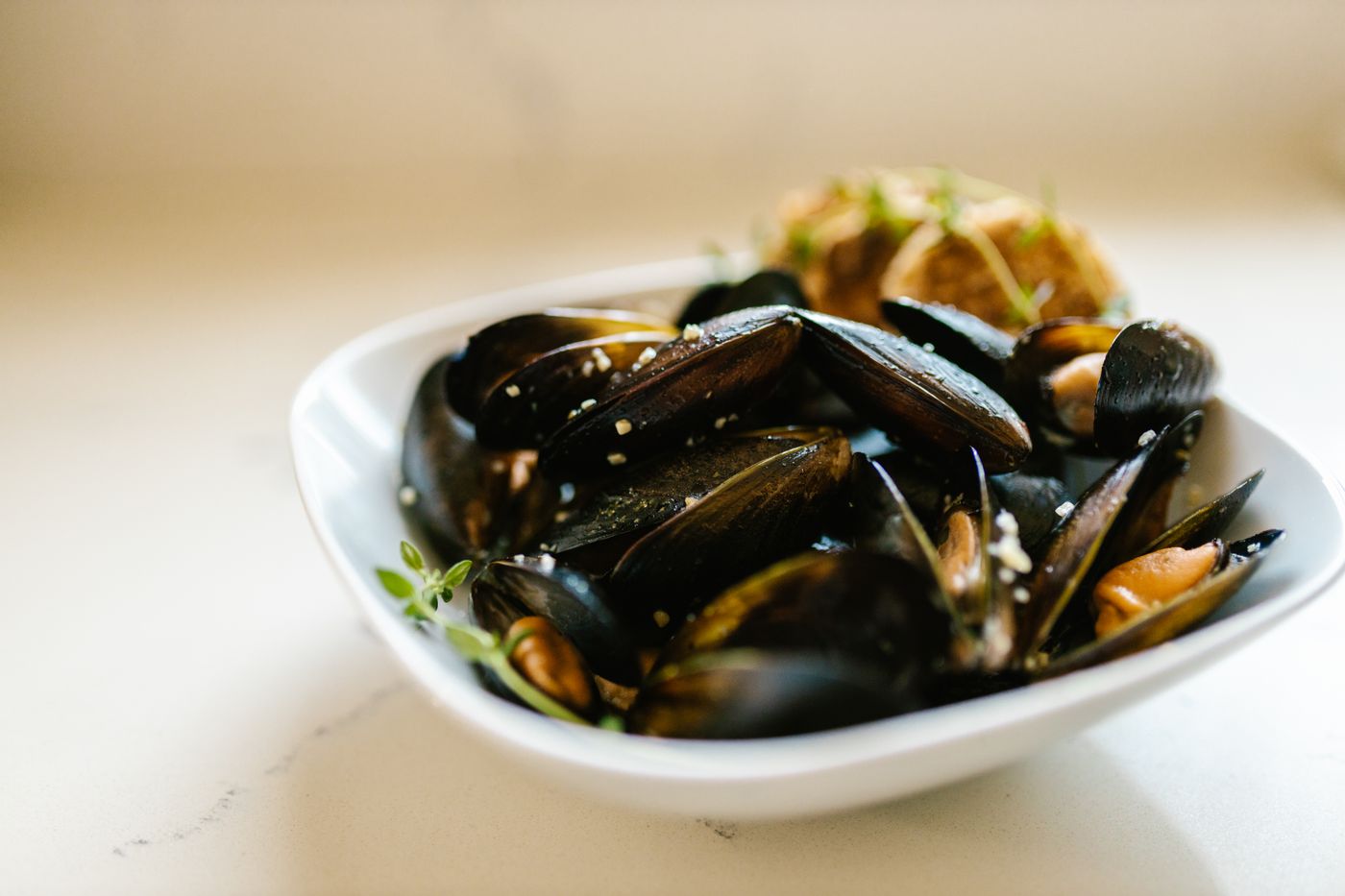
Mussels need careful selection and a short, organized cook. This two-serving recipe takes about 40 minutes and begins with 1 kg live mussels in their shells, so that weight is not a promise of edible flesh. Garlic, shallot, wine and water form the steaming broth; butter, parsley and lemon finish it afterward. Start with reputable, properly chilled shellfish and make the toast before the pot demands your attention.
Garlic-Herb Mussels with Toast makes 2 servings, with 40 min estimated total time. View the standalone recipe page.
Buy properly sourced mussels and check the shells
FDA advises looking for identification tags on live shellfish containers, including a processor certification number. Choose a supplier that can provide that traceability. Keep mussels cold until preparation. Scrub and remove beards under cold running water, following the recipe, rather than leaving them submerged in fresh water.
Discard cracked or broken shells and any open mussel that fails to close when tapped. This pre-cooking check is separate from the opening check after steaming. Do not try to rescue questionable mussels through extra cooking, and do not use a pleasant-smelling broth to judge the quality of shellfish that failed the initial selection checks.
Prepare the toast and a pot with a close-fitting lid
Heat the oven to 400°F / 200°C. Brush the sliced baguette with 10 g olive oil and toast for 6–8 minutes, turning once. Arrange the slices in a single layer so their surfaces color evenly. Keep them ready on a clean plate rather than balanced above a steaming pot where they will soften.
Choose a large lidded pot with enough room for the mussels to open. A tightly packed small saucepan makes it difficult to move the shells and distribute steam. Have serving bowls, a slotted spoon and somewhere to discard rejected shells ready before the cooking starts; the final stage moves quickly.
Soften shallot and briefly boil the broth
Warm the remaining 15 g olive oil over medium heat and cook the finely chopped shallot for 4 minutes. Add the minced garlic for 30 seconds, stirring to prevent it catching. Pour in 200 ml dry white wine and 150 ml water, then boil for 2 minutes.
The broth should be hot before the mussels enter so the covered pot can generate steam promptly. There is no need to reduce it into a thick sauce at this point; its liquid will be served with the shellfish and toast. A brief boil does not establish that the wine's alcohol has completely disappeared, so do not describe this preparation as alcohol-free.
Steam covered, then reject shells that stay shut
Add the cleaned mussels, cover tightly and steam over medium-high heat for 5–8 minutes, shaking the pot once or twice. Use oven gloves and hold the lid securely when moving the pot. Open the lid away from your face because the escaping steam can burn. Look for opened shells and cooked flesh.
Discard mussels that remain shut after cooking; do not pry them open to serve. Where you can place a thermometer in the flesh, check 145°F / 63°C as the recipe specifies. Shell opening is a useful cooking sign, but it does not undo poor sourcing, broken shells or failures of the live-shell check before cooking.
Finish the broth after lifting out the mussels
Transfer the opened, cooked mussels to the two bowls. Stir butter, chopped parsley, lemon juice and black pepper into the hot broth until the butter melts. Removing the shellfish first lets you finish the sauce without keeping the mussels cooking while you stir and adjust the pot.
Pour the broth over the mussels and serve immediately with toast. Spoon carefully if any grit has settled at the bottom instead of tipping every last drop blindly into the bowls. The recipe adds no separate salt, so do not season automatically before tasting the cooked broth. Shellfish can contribute their own salty liquid during steaming.
Common questions
Should mussels be open before or after cooking?
Before cooking, live mussels should close when tapped; discard ones that do not. After cooking, discard any that remain shut. These are different checks at different stages.
Can I soak mussels in a bowl of fresh water?
This recipe calls for scrubbing and debearding under cold running water, without a fresh-water soak. Keep them cold until preparation and begin with properly sourced live shellfish.
Technique & food-safety references
These primary references support the technique, safety and storage guidance. The recipe and cooking explanations are original Recipe Pinboard content.