Seafood · ALWAYS FREE
Garlic-Herb Mussels with Toast
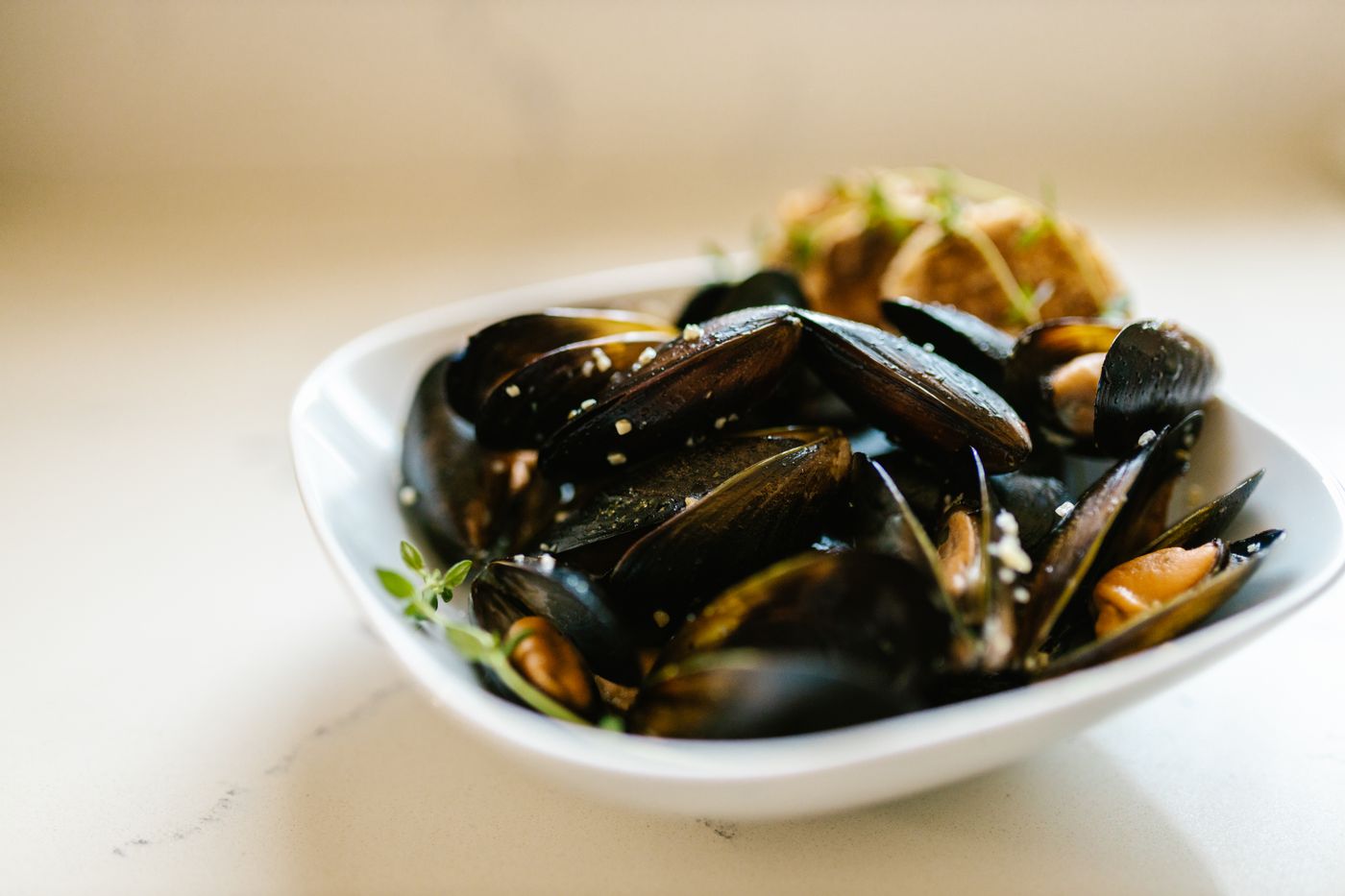
Fresh mussels steam in a light garlic broth and are piled into bowls with chopped parsley and crisp toast.
Ingredients
Volumes are approximate. For baking, use a scale; Metric keeps the specified gram weights.
Let’s make it
- Keep the mussels cold until preparing them. Scrub and debeard them under cold running water. Discard cracked shells and any open mussels that do not close when tapped; do not soak them in fresh water.
- Heat the oven to 400°F / 200°C. Brush the baguette with about 2 tsp (10 g) olive oil and toast on a tray for 6–8 minutes, turning once, until golden.
- Heat the remaining 15 g oil in a large lidded pot over medium heat. Cook the shallot for 4 minutes, then stir in the garlic for 30 seconds. Add the wine and water and boil for 2 minutes.
- Add the mussels, cover tightly and steam over medium-high heat for 5–8 minutes, shaking the pot once or twice, until the shells open and the flesh is cooked. Discard any mussels that stay shut. Where a thermometer can be inserted, the flesh should reach 145°F / 63°C.
- Transfer the open mussels to bowls. Stir the butter, parsley, lemon juice and pepper into the hot broth until the butter melts, then pour over the mussels. Serve immediately with the toast.
Estimated nutrition
Per serving · 1 of 2- Calories
- Unavailable
- Protein
- Unavailable
- Total carbohydrate
- Unavailable
- Total fat
- Unavailable
- Total sugars
- Unavailable
Some values are unavailable; missing data is never treated as zero. Brands, draining, cooking and portioning can change the result. Not a laboratory analysis.
Calculation notes & sources
Why values are unavailable: Ingredient 1: Mussel shell-free edible yield unknown Ingredient 6: Wine alcohol retention during steaming unknown
Estimated from listed ingredient amounts and identified food-composition profiles, divided by the stated number of servings. Not laboratory analysis or kitchen testing. The ingredient-sum method uses raw or cooked food profiles matching the ingredient state. Moisture gain/loss does not change the stated serving count. No general cooking/fermentation nutrient-retention factors are applied. Unless a discard/absorption blocker is listed, all measured pan fats and sauces are assumed consumed. Actual amounts left in pans, on utensils or during cooking can reduce intake. Optional additions are excluded when noted. Calories are kcal. Protein, total carbohydrate, total fat and total sugar are grams. Total carbohydrate includes fiber; these are not net carbs. No %DV or FDA-compliance claim. Null means unavailable, never zero. Sodium and fiber are omitted because retention, brands, rinsing and missing source rows make them less reliable here. Additional method uncertainty: Norwegian Food Table04.053 offers a raw blue-mussel edible-part reference51%, but this is species- and study-specific; must be confirmed against purchase form and source before modeling. Wine calories have separate alcohol-retention uncertainty.
View the ingredient calculations · Source 1Times are estimates. Images illustrate the dish; check ingredients and portions for your needs.
Use a food thermometer for meat, fish, and egg dishes. Refrigerate perishable food within 2 hours, or 1 hour above 90°F (32°C). Reheat leftovers to 165°F (74°C). Safe cooking temperatures · USDA leftover guidance