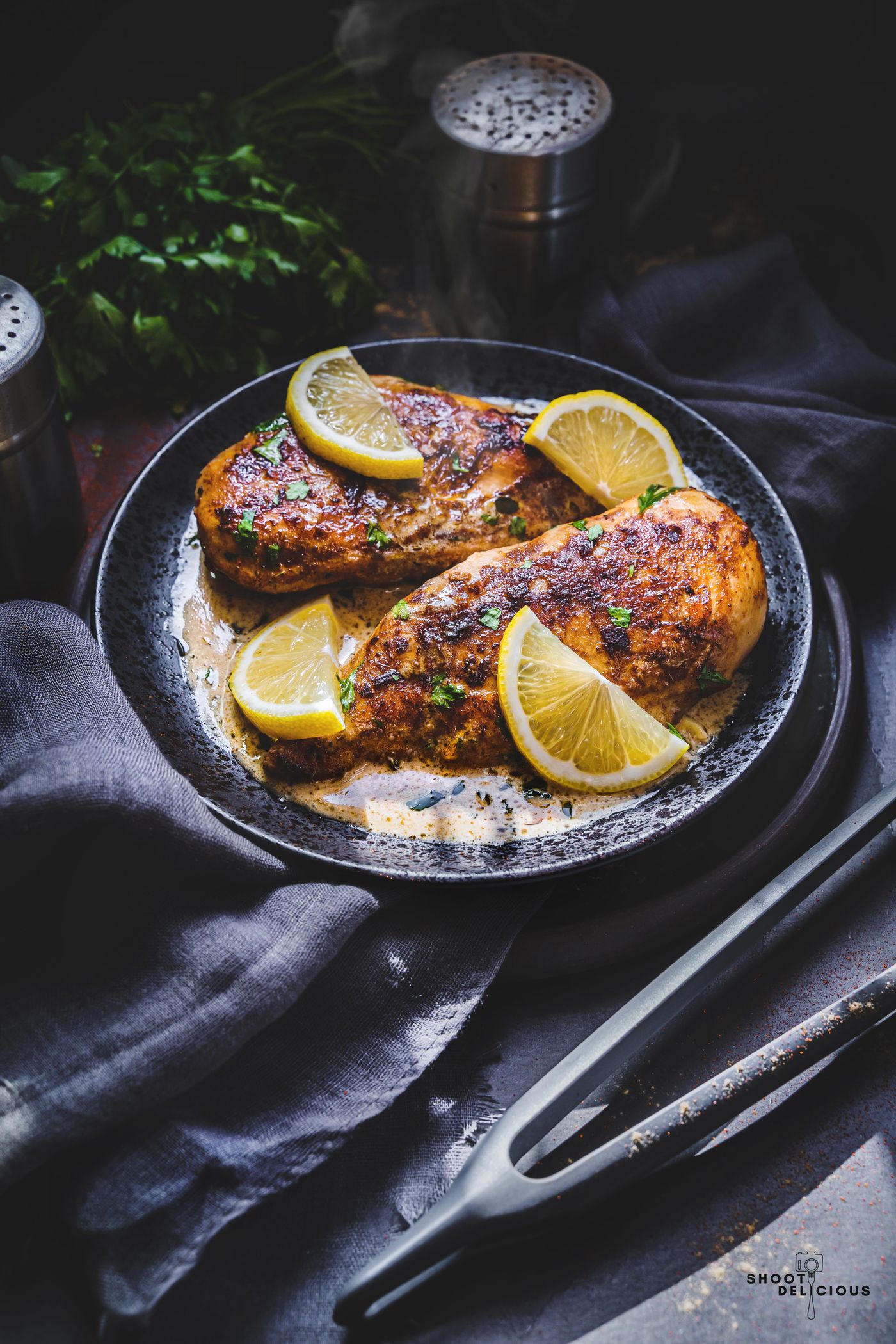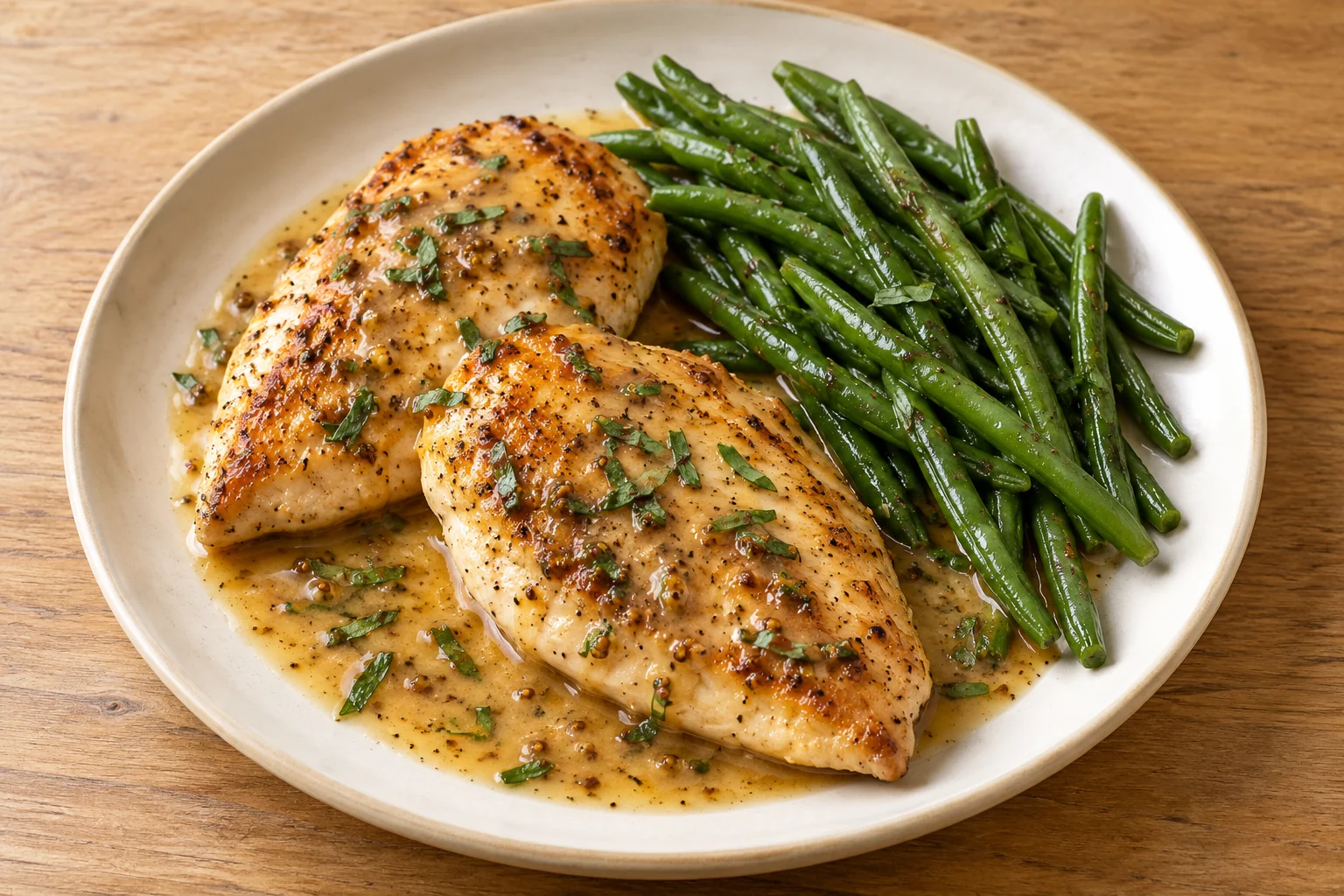
Four chicken cutlets and a generous quantity of green beans fit this dinner's 50-minute schedule because the beans cook while the chicken batches sear. Most of that time needs attention: allow about 40 active minutes. The pan sauce uses water, whole-grain Dijon, lemon and tarragon, collecting flavor left behind by the cooked chicken.
Mustard-tarragon chicken & green beans makes 4 servings, with 50 min estimated total time. View the standalone recipe page.
Flatten the cutlets and prepare separate clean equipment
Divide the 680 g chicken breast into four 170 g cutlets and gently pound each to about 1.5 cm thick. Weight alone does not ensure even cooking; a thick center takes longer than a broad, thin edge. Pat dry and season with 2 g salt and the pepper, keeping raw-chicken equipment separate from ready-to-eat ingredients.
Bring a large pot of water to a boil for the 800 g trimmed green beans. Measure the sauce's 150 g water separately so it is not confused with the boiling water. Have the mustard, lemon juice and chopped tarragon ready, and set out a clean plate for cooked cutlets before you begin searing.
Brown two cutlets at a time and verify each center
Heat 10 g oil in a wide skillet over medium-high heat and add the first two cutlets. The recipe allows about five to seven minutes per side, but the deciding measurement is 165°F (74°C) in each thickest part. Insert the thermometer so its sensing area reaches the center rather than touching the skillet.
Move cooked cutlets to the clean plate and repeat with another 10 g oil and the remaining two. Watch the browned residue during the second batch; lower the heat if it starts becoming very dark. You want flavorful brown bits for the sauce. Letting them scorch while chasing a darker crust weakens the final result.
Cook and drain the beans while the batches finish
Boil the green beans for six to eight minutes, until tender with a slight bite. Their thickness affects the final texture, so check a bean from the pot rather than assuming every batch finishes identically. Have the colander ready before draining. Wet beans will dilute their small oil-and-salt coating and any sauce on the plate.
Return well-drained beans to the warm pot and toss with the last 10 g oil and 1 g salt. This uses all three portions of the recipe's oil allocation: one for each chicken batch and one for the beans. Keep the beans ready while you finish the sauce instead of starting their preparation after the chicken is done.
Loosen browned bits and reduce before adding herbs
Add the measured water and 25 g whole-grain Dijon to the chicken skillet. Scrape the brown bits into the liquid and simmer for three to four minutes until lightly reduced. Water is the specified liquid; you do not need broth, cream or wine. The mustard remains visibly grainy rather than creating a perfectly smooth sauce.
Stir in 20 g lemon juice and 5 g chopped tarragon, then return the cooked chicken and its accumulated juices for one minute. Spoon the sauce over each cutlet. This short finish coats already cooked meat; it is not a replacement for reaching 165°F (74°C) during searing. Avoid extending it into a long simmer.
Divide the vegetables and sauce as carefully as the chicken
Serve one cutlet on each of four plates. Weigh and divide the cooked beans into four equal portions, then distribute all the sauce and juices. The 170 g chicken allocation describes each raw cutlet, so its cooked weight will differ. A broad spoon helps share mustard grains and tarragon instead of leaving them behind.
Refrigerate leftovers promptly in shallow containers at 40°F (4°C) or colder, within two hours or one hour above 90°F (32°C). Use within three to four days and reheat to 165°F (74°C). Store the chicken with its allotted sauce so reheating preserves the intended mustard-herb balance without requiring a fresh batch of dressing.
Common questions
Why does the sauce taste burnt?
The residue may have become black during the second searing batch. Control the heat before that happens, especially as the skillet stays hot between batches. Browned bits contribute flavor; scorched residue cannot be corrected simply by adding the measured water and mustard.
Can I cook all four cutlets together?
The canonical method uses two batches. A crowded pan reduces useful contact and makes the schedule less predictable. Keep the two-batch method and its divided oil unless you are separately adapting the recipe to different equipment.
Technique & food-safety references
These primary references support the technique, safety and storage guidance. The recipe and cooking explanations are original Recipe Pinboard content.