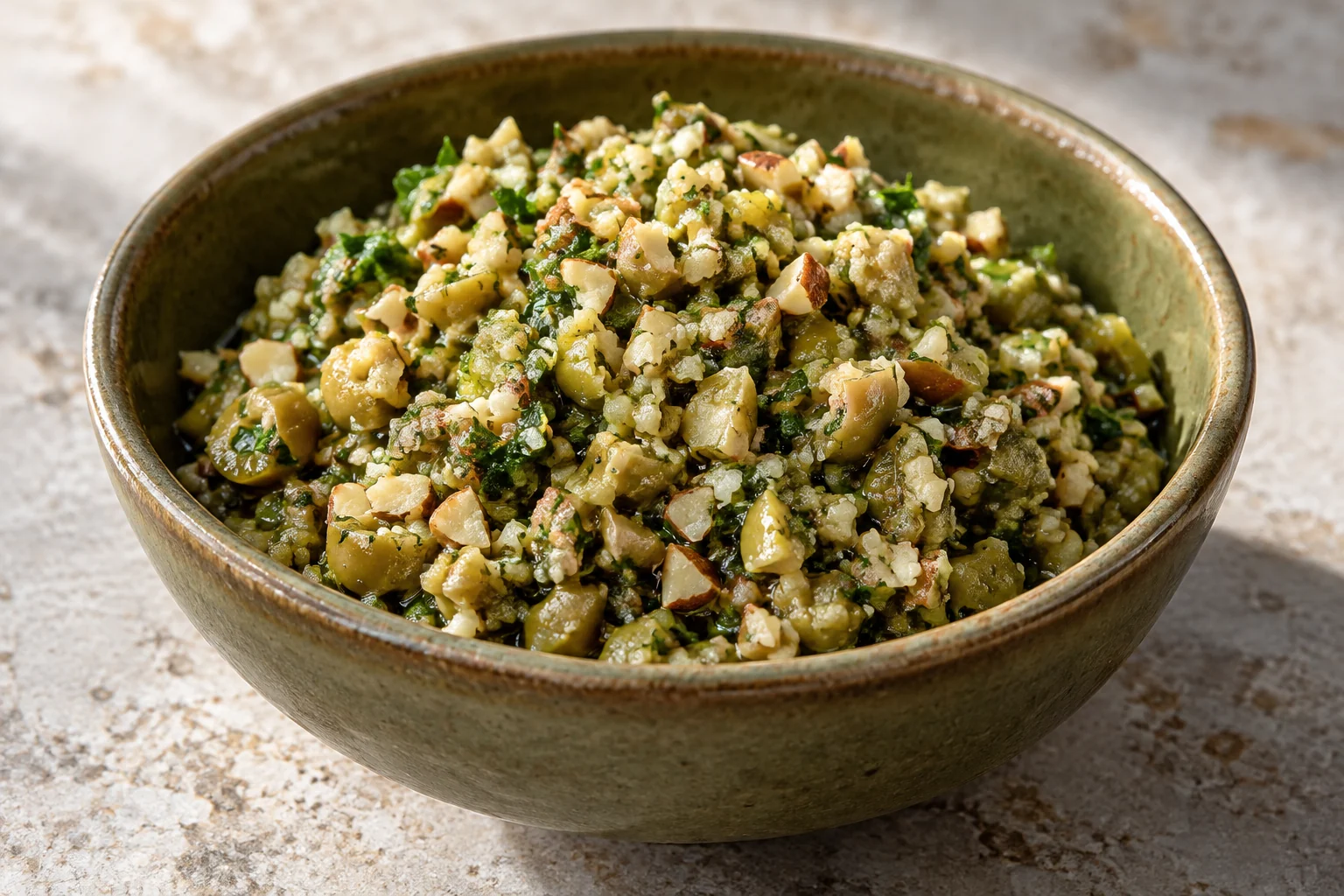
The goal is a finely chopped condiment with distinct olive and nut particles. It should hold together on a spoon without becoming a completely smooth puree. A small processor, dry drained olives and short pulses make that easier. Because olives supply most of the seasoning, the formula does not add a separate measure of salt.
Green olive & almond spread makes 8 servings, with 20 min estimated total time. View the standalone recipe page.
Check the olives before processing
Even products sold as pitted can occasionally contain a fragment. Inspect the drained olives before they reach the blade; a hard fragment is much easier to identify now than in a finished spread. Drain and pat dry rather than transferring a spoonful of brine with the olives. That keeps the lemon and oil proportions meaningful. Olive varieties and brining methods differ in saltiness, so the flavor will vary by brand even when the edible olive weight stays exactly the same.
Break down the almonds first
Raw unsalted almonds are firmer than olives and need a head start. Pulse them alone until they resemble coarse crumbs, stopping before they turn into a smooth nut butter. A processor bowl that is too large may simply fling the small batch against its sides. Stop the motor and scrape it down instead of running continuously. The almond fragments provide body and a mild sweetness; they are not merely a garnish that can be omitted while retaining the same yield and nutrition.
Use pulses for the wet ingredients
Add olives, parsley and garlic after the almonds are broken down. Short pulses give more control over the texture than a long continuous run. Look for small recognizable pieces distributed throughout, not separate large parsley leaves or chunks of raw garlic. Finely mince the garlic before adding it if the machine struggles with such a small amount. Avoid packing the bowl tightly; the blade needs space to move the mixture rather than spinning beneath an unmoving mound.
Add the liquids at the end
Lemon juice brightens the olives, while the measured olive oil helps the chopped particles cling together. Add both only after the solids have reached the intended size, then pulse briefly. Long processing after the oil is added can push the almonds toward an oily paste. The five-minute rest lets the flavors settle; it is not a fermentation or preserving step. Stir once before dividing so the oil and lemon are shared across the entire batch rather than pooled in one portion.
Store as a fresh condiment
This mixture contains fresh parsley and raw garlic. Keep it refrigerated rather than leaving it on a buffet for an extended period or topping it with oil for pantry storage. Use a clean spoon and divide into eight equal portions. Crackers and bread are outside the recipe card. The gluten-free screen applies to the listed ingredients with package checks; it does not certify cross-contact safety. Almonds remain a tree-nut ingredient, regardless of the vegan or dairy-free labels.
Common questions
Why is my spread watery?
The olives may have carried extra brine into the processor, or the mixture may have been processed longer than necessary. Drain thoroughly next time; do not add more nuts casually while claiming the unchanged nutrition panel.
Can I toast the almonds?
Toasting changes the flavor and moisture. The published formula uses raw almonds. If making a toasted variation, let them cool before processing and treat it as a variation rather than evidence that the original recipe was tested.
Technique & food-safety references
These primary references support the technique, safety and storage guidance. The recipe and cooking explanations are original Recipe Pinboard content.


