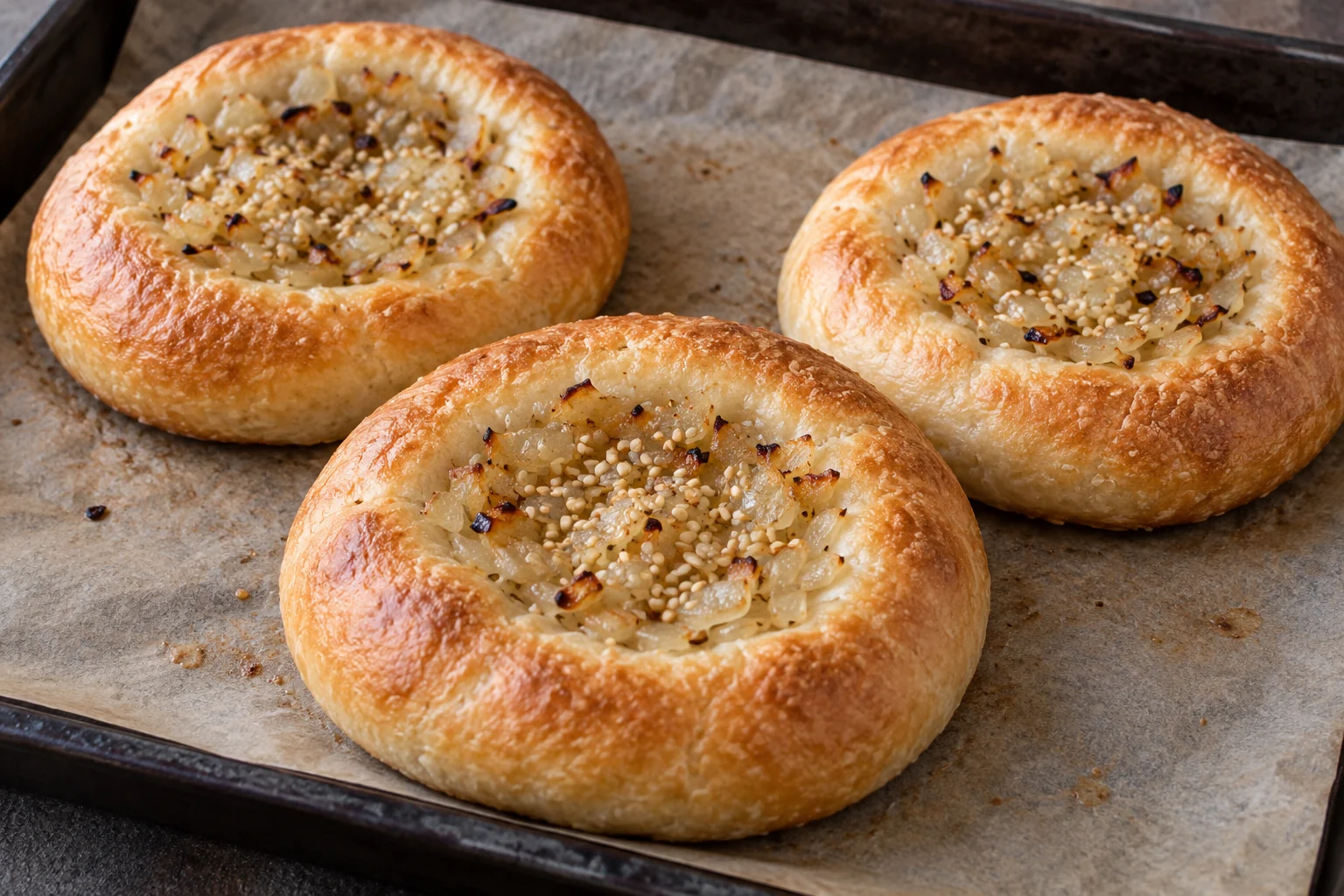
A bialy has a broad depression with a thin layer of dough underneath, rather than a bagel's open hole. This version uses a modest cooked onion-and-sesame filling and a same-day yeast dough. The rolls go directly into the oven without boiling. The most useful shaping decision is to keep the center thin and the rim raised, giving the filling a place to sit without turning the middle into a thick, wet mound.
Onion & sesame bialys makes 8 servings, with 4 hr 20 min estimated total time. View the standalone recipe page.
Keep the dough firm but workable
Measure the dough flour separately from the handling flour so the initial mixture follows the intended balance. This is firmer than a very wet ciabatta dough, and kneading should gradually make it smooth and elastic. Use the small reserved oil allocation on the bowl and hands rather than reaching for extra flour immediately. If the dough resists shaping later, a covered rest is more useful than forcing it with repeated hard rolling. Resting lets the dough relax without changing its ingredients.
Cook moisture out of the onions
Finely chopped onion spreads more evenly across a small center than long strips. Cook the measured amount with its allocated oil until soft and without a visible watery puddle. Stir in the sesame and let the filling cool. All the onion, oil and seeds belong to the batch; nothing is strained out. The filling is deliberately restrained. A large heap can insulate the thin dough underneath and make it harder for the middle to bake at the same pace as the rim.
Use the intermediate rest well
After dividing and rounding, cover the pieces so they do not form a dry skin. The short rest before flattening helps each round stretch more evenly. Keep the portions similar in size rather than making the first few large and leaving small scraps for the end. The final proof happens on the trays, with enough space between the rolls. Look for puffiness as well as the clock, particularly if the kitchen is cooler than usual.
Stretch a depression without piercing it
Work from the center outward with gentle pressure, leaving a raised border. The base of the depression should become very thin but remain intact. If it springs back repeatedly, pause with the dough covered, then return to it. Divide the complete cooled filling among the eight centers and spread it into a thin layer. Keep the onions off the rims, where they can darken quickly. There is no need to create a bagel hole or add a boiling step.
Check the centers as well as the edges
The rims will color first, so look at the filled centers before calling the batch done. Swap the two trays as directed to reduce uneven baking between shelves. Move the finished bialys onto a rack so the bottoms do not sit in trapped steam. Give them their cooling period before eating or storing. One serving is one complete roll with its share of filling, and the estimate includes every gram of handling flour brushed back onto the dough.
Common questions
Why did the center puff up and push out the onions?
The center may have been left too thick, or the filling may have been piled too deeply. Stretch a broad thin depression after proofing and distribute a small, even amount of filling. The raised border should be the thickest part of the shaped roll.
Can I boil these like bagels?
No boiling is included in this method. It would disturb the onion centers and create a different crust. The bialys are shaped with an intact thin base, filled and baked directly; their appearance should not be used as a reason to add a bagel-making step.
Technique & food-safety references
These primary references support the technique, safety and storage guidance. The recipe and cooking explanations are original Recipe Pinboard content.


