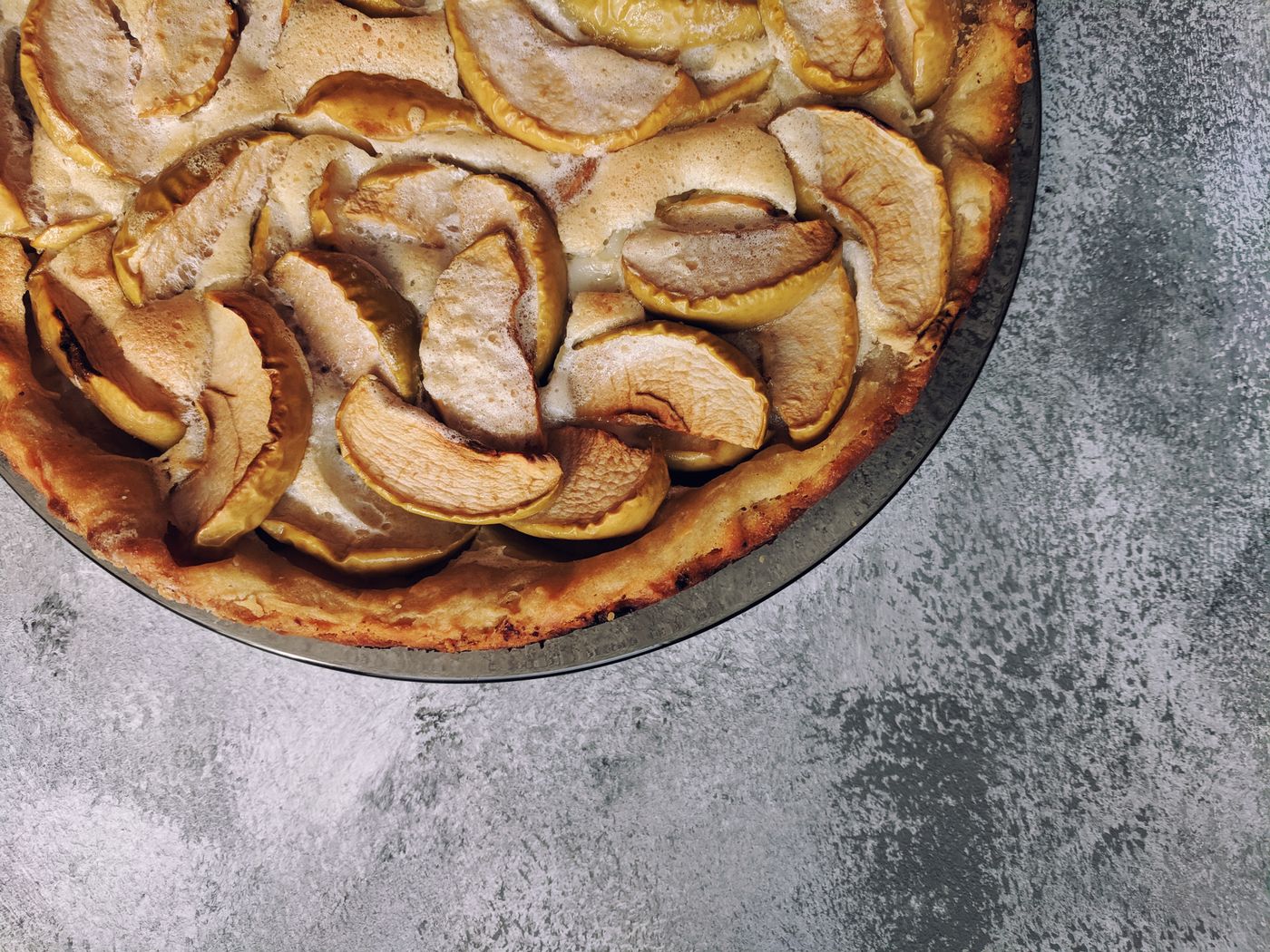
An open apple tart puts every slice of fruit on display, but the underside deserves equal attention. This recipe makes eight servings in a 9-inch tart pan and takes about seventy minutes, including a fifteen-minute rest before slicing. Thin, evenly cut apples can soften while the shortcrust base bakes. The apricot glaze is added afterward, so it supplies shine without taking the place of proper baking.
Open apple tart makes 8 servings, with 1 hr 10 min estimated total time. View the standalone recipe page.
Fit the shortcrust and prepare the apples
Heat the oven to 375°F (190°C). Line the 9-inch tart pan with the approximately 320 g ready-rolled pastry sheet, easing it into the corners rather than pulling it tight. Trim the edge and prick the base as directed. Press any small joins together so fruit juices cannot immediately escape through an open seam.
The four firm apples weigh about 700 g total before the peeling and coring step. Wash them, then remove the peel and cores. Choose sound fruit that holds its shape when sliced; soft, bruised apples are harder to arrange consistently. Do not silently reinterpret the listed weight as 700 g of peeled flesh and add more apples to compensate.
Slice thinly and coat without breaking the fruit
Cut the prepared apples into thin slices of reasonably equal thickness. Exact decorative perfection matters less than keeping thick pieces from hiding beneath much thinner ones. A sharp knife on a stable board gives good control. If using a mandoline, use its hand guard and keep fingers away from the exposed blade.
Toss gently with 1 tbsp lemon juice, 40 g granulated sugar and 1 tsp cinnamon. Separate slices that cling together so the seasoning reaches their surfaces. Keep the measured amounts rather than adding extra sugar before the apples have baked; their final sweetness and concentration will differ from a raw slice tasted during preparation.
Arrange overlapping circles with a modest profile
Lay the apple slices in overlapping circles within the pastry shell. Work around the outside and move inward, distributing the fruit across the base rather than piling most of it in the middle. A very tall central mound takes longer to soften and can shield the pastry beneath it from efficient cooking.
Brush the arranged fruit with the 30 g melted butter. Aim for a light coating across exposed slices rather than a butter puddle in one area. Any apple slices that break can fit beneath an overlap or nearer the center. You do not need to turn the recipe into a free-form galette or add a pastry lid to cover an imperfect pattern.
Check tender fruit and the pastry underneath
Bake for forty to forty-five minutes until the apples are tender and the pastry is golden and cooked underneath. Look for a tender bite when a small knife enters a thicker apple slice. Surface color alone is not enough: exposed tips can brown while thicker fruit below remains firm.
Check the base when you can do so safely with the pan supported. It should not look pale and raw. Oven behavior and pan material affect browning, so continue baking if the underside needs it, shielding the top loosely with foil if necessary. Do not remove the tart solely because the apple pattern has become attractive; a fully baked base is essential to a clean slice.
Glaze lightly and let the tart settle
Warm 2 tbsp apricot jam with 1 tsp water until brushable. Apply a thin layer over the baked apples, reaching exposed surfaces rather than filling every gap with jam. The glaze brings out the fruit’s color and gives a glossy finish. It is not a soaking syrup, and extra water would soften the surface unnecessarily.
Let the tart cool for fifteen minutes before slicing into eight pieces. Support each portion underneath as you lift it from the pan. For a conservative leftover plan, cover and refrigerate the cooled tart, then eat within a few days; the crust is best earlier. Rewarming a slice can improve its texture, but it will not restore pastry that was underbaked initially.
Common questions
Is the shortcrust blind-baked first?
No. This particular method puts the seasoned apple slices directly into the raw pastry shell and bakes them together. A separate blind bake would change the schedule. Thin slices, an even fruit layer and checking the cooked underside are therefore especially important.
Can I leave the apple skins on?
The recipe specifies peeled apples. Leaving skins on is a variation that changes appearance and texture, particularly around the edge of each slice. For the intended delicate, overlapping finish, peel and core them before slicing.
Technique & food-safety references
These primary references support the technique, safety and storage guidance. The recipe and cooking explanations are original Recipe Pinboard content.