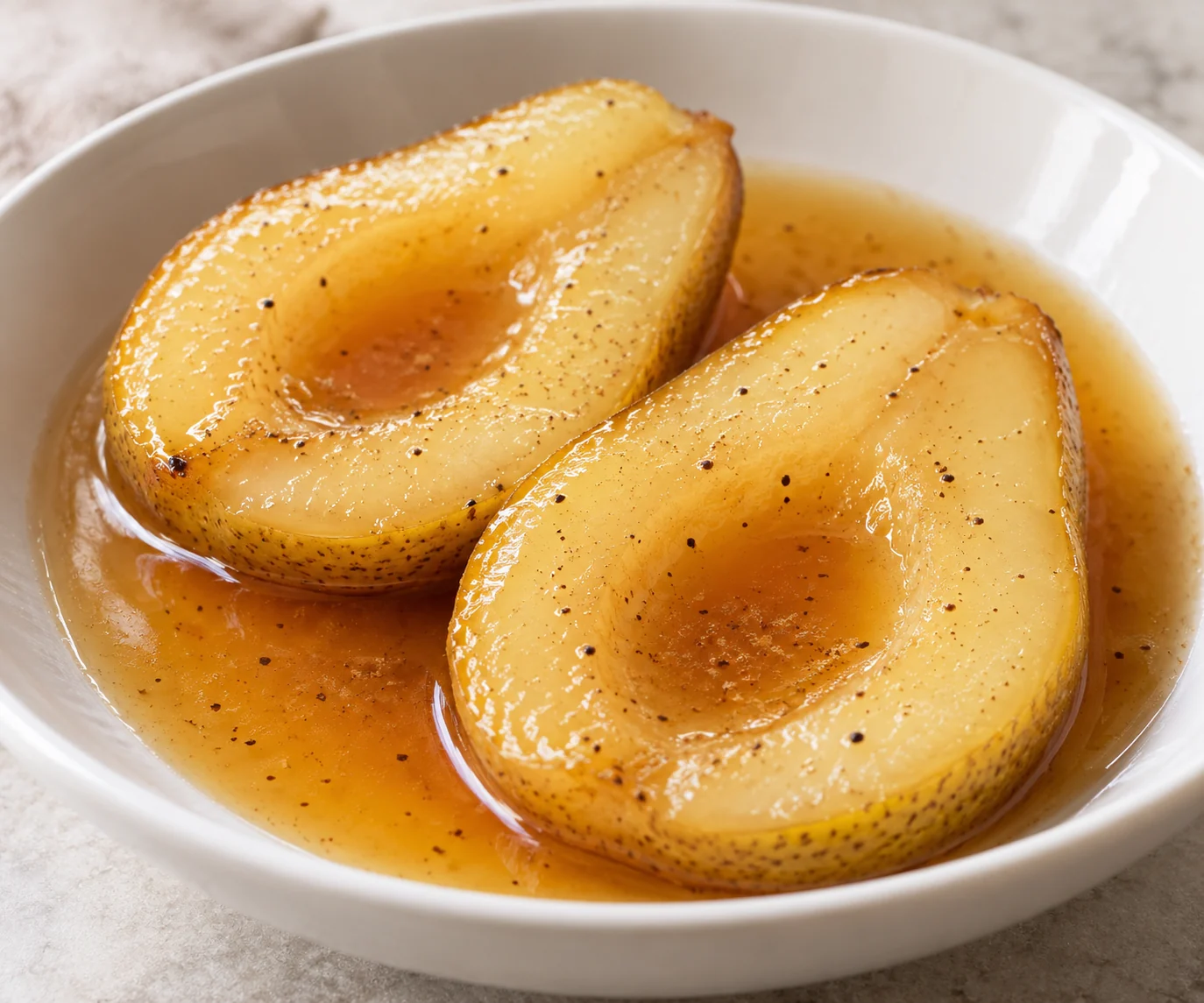
Poaching softens pears in a fragrant liquid without the browned surface produced by roasting. This version keeps the skins, uses ground cardamom and serves the entire reduced orange syrup with the fruit. Those choices make the edible ingredient weights and nutrient assumptions clear. Firm ripe pears are easier to handle than very soft fruit, but their exact cooking time still varies. Test tenderness rather than forcing every batch into the same minute. The finished dessert is two pear halves and one quarter of the syrup per person.
Orange & cardamom poached pears makes 4 servings, with 1 hr 30 min estimated total time. View the standalone recipe page.
Prepare the edible fruit before weighing
Halve the pears lengthwise and remove stems, seeds and the tough core while keeping the skin. Then weigh the prepared halves. Starting with the same weight of whole untrimmed fruit would leave less edible pear than the recipe specifies. Use fruit of similar firmness and size where possible so the halves soften together. Small blemishes can be trimmed before weighing. The retained skin matches the raw pear profile used for nutrition; peeling the fruit would be a different ingredient state and would also change its appearance in the finished bowl.
Choose a pan that keeps the halves close together
Use the wide pan described in the card and arrange the halves in one layer. A huge pan lets liquid evaporate too quickly, while a narrow deep pot makes turning and checking the fruit awkward. Dissolve the sugar in the juice and water before adding the pears. Stir in the ground cardamom and vanilla so the flavor is distributed. Unlike whole spice pods, the ground spice remains in the served syrup. There is no need to strain it out, and no discarded spice fraction is assumed in the calculation.
Maintain a quiet simmer and turn carefully
A rolling boil can knock softened pear halves against one another and damage their edges. Keep the liquid at a very gentle simmer under the parchment round, with a small hole for steam to escape. Lift the parchment carefully when turning or testing because trapped steam is hot. Turn the halves periodically so exposed surfaces cook evenly. Check the thickest part with the tip of a small knife. It should enter easily while the fruit still holds its shape. Firmer pears can need longer than the initial timing window.
Reduce the syrup after removing tender fruit
Transfer cooked pears to a shallow dish before concentrating the liquid. Leaving them in the pan during reduction risks turning tender halves into broken pieces. Simmer all the remaining liquid until it reaches the approximate finished weight and lightly coats a spoon. Stir more frequently toward the end because sugar becomes more concentrated as water leaves. This is a pourable fruit syrup, not a caramel: stop before it becomes sticky and very dark. If needed, a little plain water can loosen an over-reduced syrup without adding nutrients.
Serve all the syrup and cool leftovers promptly
Pour the complete syrup over the pears and allow the brief cooling period before serving warm. Divide it evenly rather than giving the first bowl most of the sweet liquid. The nutrient estimate counts all the juice and sugar; it does not guess how much the fruit absorbed during poaching. Ice cream, cream and nuts are not included. For later service, refrigerate promptly in a shallow covered container and use within three days. Keep the fruit with its syrup so the exposed surfaces do not dry in the refrigerator.
Common questions
Why are the pears soft outside but firm near the core?
The fruit may be especially firm or the simmer may have been too vigorous. Lower the heat and continue gently, turning as needed. Check the thickest area, not only the thin tapered end, before removing each half.
Can I discard the syrup for a less sweet serving?
You may choose to serve differently, but the displayed estimate assumes every portion receives its share of the complete syrup. Discarding it changes what is eaten, and the exact remaining sugar cannot be determined from this recipe alone.
Technique & food-safety references
These primary references support the technique, safety and storage guidance. The recipe and cooking explanations are original Recipe Pinboard content.


