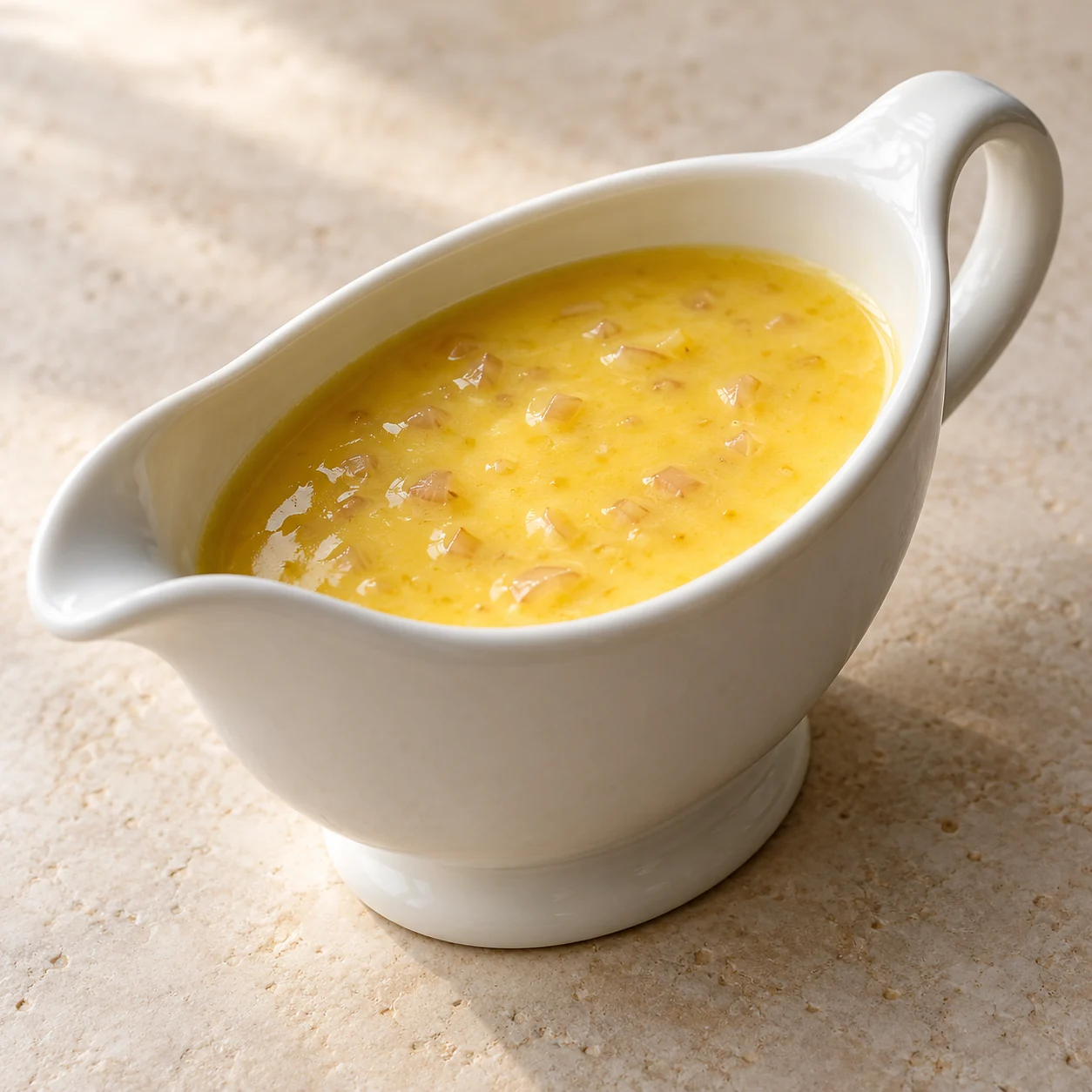
This warm sauce combines concentrated orange juice with cold butter to create a glossy emulsion. Tiny pieces of shallot stay in the finished sauce, adding texture without a separate straining step. The complete card makes six portions in about forty minutes. Have the food you plan to serve with it ready first, because the sauce is at its best immediately after the final butter cubes disappear.
Orange-shallot butter sauce makes 6 servings, with 40 min estimated total time. View the standalone recipe page.
Prepare the butter and shallot before heating
Cut the cold butter into small, reasonably even cubes and keep them refrigerated while making the reduction. Large chunks cool the pan unevenly and take longer to incorporate. Chop the shallot finely so its pieces soften within the reduction time and distribute through every spoonful. Use plain unsweetened orange juice and distilled white vinegar, as listed. Sweetened juice drinks, orange concentrates and balsamic vinegar would change both flavor and appearance. A small heavy saucepan and a whisk that reaches its corners make this modest batch easier to control than a broad frying pan.
Reduce to a measured amount, not a dry pan
Simmer juice, vinegar and shallot gently for ten to fifteen minutes. The target is forty-five to sixty grams of reduction, including the softened shallot. To check accurately, transfer it briefly to a heatproof bowl on a scale, then return it to the pan; avoid putting a hot saucepan directly on an unprotected scale. There should still be visible liquid around the shallot. If the pan becomes nearly dry, stop before the orange sugars scorch. Reduction time varies with pan width and burner strength, so weight and appearance are more useful than the timer alone.
Add the butter in small rounds
Turn the heat very low and whisk in a few cold cubes. Let them become creamy before adding the next group. The sauce should gradually look opaque and glossy rather than forming a clear yellow oil pool. Move the pan away from the burner whenever the mixture starts to bubble. The basic beurre blanc technique described by Good Food also relies on a reduction and gradual cold-butter incorporation; this recipe uses its own orange formulation rather than wine. Work patiently through all the measured butter, then add the salt. Keep the shallot in the sauce.
Recognize an emulsion that is getting too hot
A smooth sauce lightly coats a spoon. Transparent fat collecting at the edges is a warning that it is separating. Immediately remove the pan from the heat and whisk gently. If it remains split, a small splash of cool water whisked into a separate clean bowl can provide a fresh liquid base; gradually whisk the broken sauce into it. Recovery is not guaranteed, and any added water changes the final portion weight. Do not try to fix separation by boiling harder or reducing the completed sauce. Those actions work against the texture you are trying to preserve.
Serve six equal portions without a long hold
Stir before portioning so shallot is evenly distributed. The estimate counts all the butter and reduction across six equal shares; any fish, vegetables or bread served alongside require their own accounting. Make the sauce close to serving time instead of leaving it lukewarm for an extended period. Refrigerate leftovers promptly within two hours in a shallow covered container. Use within three to four days and reheat leftovers to 165°F / 74°C, understanding that this may break the emulsion. Treat reheated sauce as melted citrus butter rather than expecting the original silky finish.
Common questions
Can I strain out the shallot?
The written recipe retains it, and the estimate includes its full edible weight. Chopping very finely gives a less noticeable texture while preserving the measured ingredients. Straining creates a different batch with discarded solids.
Does this contain cream?
No cream is added, but butter contains milk, so this is not dairy-free. Check the actual butter, vinegar and juice labels when following the vegetarian or gluten-free classifications.
Technique & food-safety references
These primary references support the technique, safety and storage guidance. The recipe and cooking explanations are original Recipe Pinboard content.


