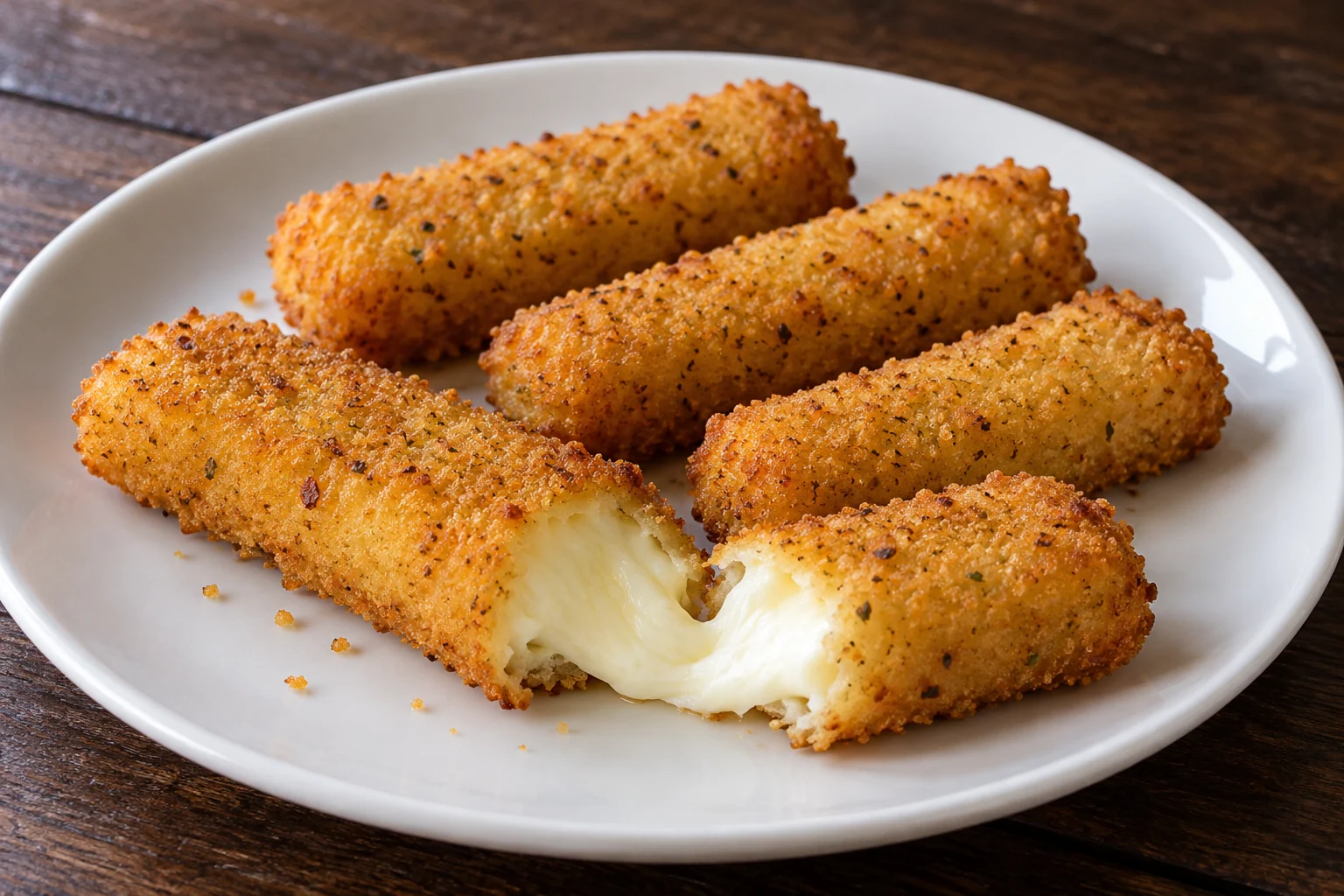
The main challenge with baked mozzarella sticks is timing the crust and cheese together. The coating needs enough heat to brown and set before the center melts into a puddle. Low-moisture cheese, complete breading and a proper freeze help manage that narrow window. These sticks use a whole-milk low-moisture block rather than fresh mozzarella, with measured flour, egg, crumbs and oil so the estimate does not hide an unlimited breading station.
Oven-baked mozzarella sticks makes 6 servings, with 3 hr estimated total time. View the standalone recipe page.
Choose a firm low-moisture block
Fresh mozzarella stored in water contains more moisture and is not the cheese specified here. Cut the low-moisture block into equal portions before shaping the sticks, keeping their thickness broadly consistent. Twelve equal pieces make the two-stick serving basis practical. Uneven small offcuts would melt faster than the larger sticks. The vegetarian tag also depends on the cheese's enzyme label; a generic mozzarella name does not confirm how it was made. Check plain breadcrumbs for their ingredients rather than assuming every seasoned crumb blend is interchangeable.
Cover the ends as carefully as the sides
The flour gives the egg a surface to cling to, and the egg holds the crumbs. Work through the dishes methodically, keeping one hand relatively dry if that helps avoid coating your fingers instead of the cheese. Pay particular attention to the cut ends and corners, where bare patches become escape routes for melting cheese. Press the fine crumbs gently into place. A second light pass can repair a gap, but a thick uneven mound of coating is not the goal. Keep the specified quantities fixed.
Count the coating honestly and discard unsafe remnants
Some flour, egg and crumbs may remain in the dishes even after every stick is well coated. The estimate conservatively includes all listed quantities; it does not pretend to know an exact adhesion percentage. Once those materials contact raw egg, they should not become an uncooked garnish or be tipped over finished food. Discard the contaminated remainder. Likewise, the measured oil includes what reaches the parchment and coating even though traces may remain on the brush or sheet. This uncertainty is documented rather than replaced with invented precise retention.
Freeze completely before the hot bake
The first brief freeze firms the bare cheese for handling. The longer freeze after breading is the important preparation for baking: the sticks should be solid, not merely cool on the outside. Freezer temperature and how crowded the tray is can affect that timing. Preheat the oven during the end of the wait, then arrange the frozen sticks with clear gaps on the prepared cool sheet. Do not leave the tray at room temperature while other dishes finish. Warming before baking removes part of the advantage of freezing.
Watch the final minutes and serve carefully
Begin checking early because a small difference in stick thickness or oven heat can change when the cheese escapes. Turn gently so the crust stays intact. The coating must be fully cooked, with the egg endpoint checked as directed; browned crumbs alone do not prove the center is ready. Small seams of melted cheese are different from losing the entire filling. After baking, let the sticks stand before eating because their centers are hot. The recipe includes no dipping sauce, so any sauce served alongside has separate ingredients and nutrients.
Common questions
Why did the cheese leak before the coating browned?
Common causes are insufficient freezing, fresh high-moisture mozzarella, bare breading patches or an oven that was not fully hot. Check those steps before simply extending the baking time. Once a stick has released most of its cheese, longer cooking cannot put the filling back inside its shell.
Can I prepare them ahead?
The breaded sticks can be frozen before the final bake. Keep them separated until solid, then store covered so the coating is not crushed or dampened. Bake from frozen and allow whatever additional time is needed to reach the stated endpoint. Do not thaw them on the counter as a shortcut before cooking.
Technique & food-safety references
These primary references support the technique, safety and storage guidance. The recipe and cooking explanations are original Recipe Pinboard content.


