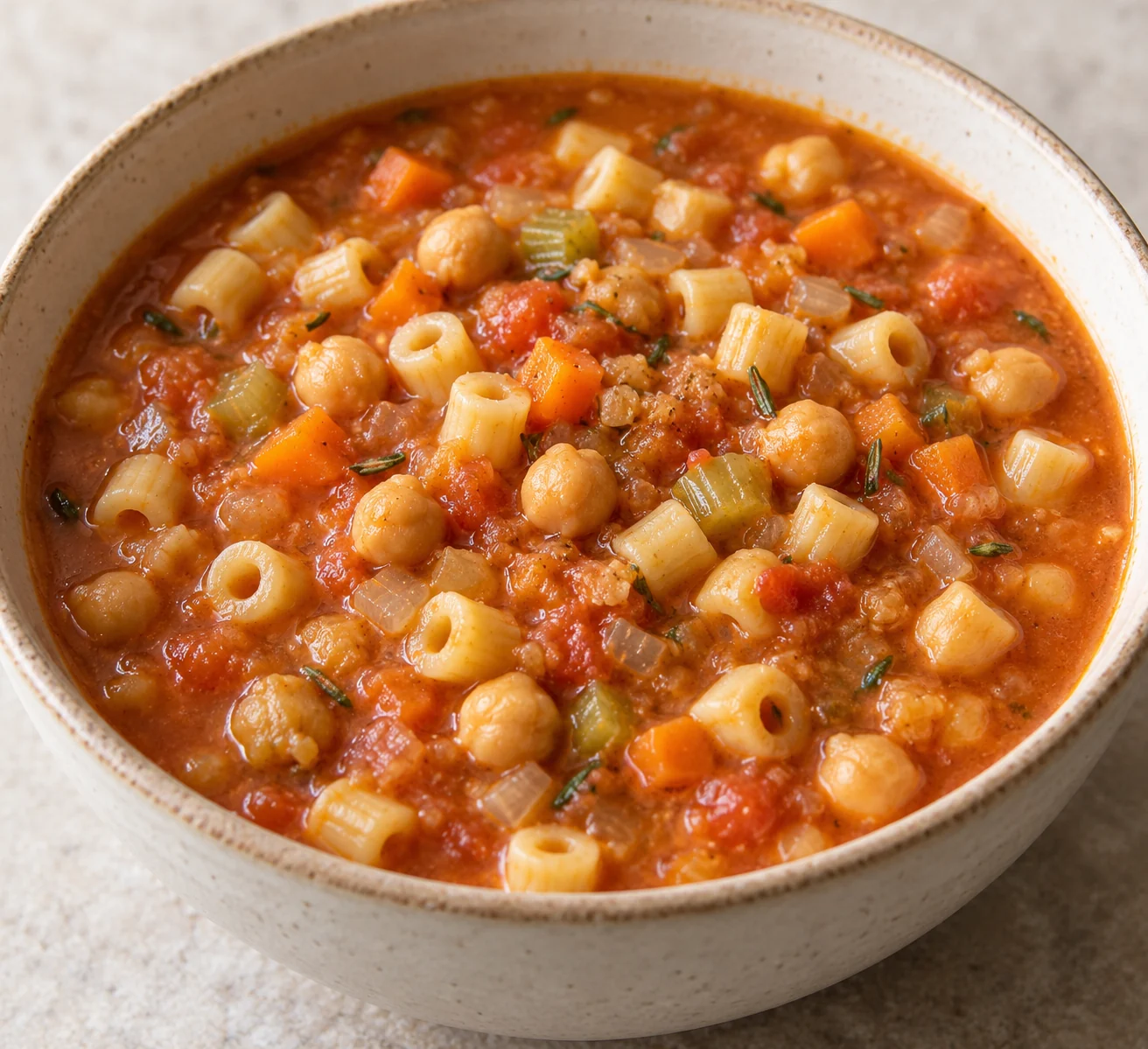
This soup cooks small pasta directly in a rosemary-scented chickpea broth. Partly mashed chickpeas give it body without cream, while the pasta adds starch as it softens. The finished consistency should still be spoonable, with visible broth around the beans and short tubes. It will thicken as it stands, so the best texture check happens near serving time. The recipe makes four equal bowls and retains every part of the cooking liquid. No cheese, bread or extra finishing oil is included in the card.
Pasta, chickpea & rosemary soup makes 4 servings, with 50 min estimated total time. View the standalone recipe page.
Build flavor before adding the water
Dice onion, carrot and celery finely enough that they soften at a similar pace and fit comfortably on a soup spoon. Cook them in the measured olive oil until softened rather than deeply browned. Add finely chopped rosemary and garlic briefly, then stir in tomato paste. Keep the paste moving so it develops a cooked aroma without leaving a scorched patch on the pot. The soup uses water rather than an unspecified stock, so this early vegetable stage supplies much of the flavor and keeps the ingredient accounting straightforward.
Match the chickpea weight to its prepared state
Drain and rinse canned chickpeas before weighing them. Their profile is for canned, drained and rinsed chickpeas, not dry chickpeas or the complete contents of a can with brine. Bring them to a simmer with the water and seasonings so they heat through before you mash a portion. Scoop roughly one third into a bowl with enough broth to make mashing easy. Return every bit to the pot, scraping the bowl. Leaving some beans whole gives contrast; blending the entire soup would create a different texture.
Choose small pasta and stir along the bottom
Ditalini provides short hollow pieces that cook evenly and share a spoon with the beans. Add it only after the broth returns to a gentle boil. Stir immediately to separate the pieces and continue sweeping the bottom as they cook. Mashed chickpeas make the broth thicker, which increases the chance of pasta sticking if the pot is left unattended. Use the timing as a starting point and taste a cooled piece for tenderness. A different pasta shape may require a different interval and may absorb a different amount of water.
Adjust consistency with plain hot water
The pasta cooks in retained liquid, so there is no draining step and no pasta-water nutrient loss to estimate. If the soup becomes too thick before the pasta is tender, add small amounts of hot plain water and keep stirring. Water changes the finished weight and thickness but not the ingredient-based nutrient total. Avoid adding an unmeasured splash of oil or a handful of cheese to loosen it. Those additions would contribute nutrients and change the vegan and dairy-free conditions. The broth should coat the ingredients without behaving like a solid paste.
Plan for the change between fresh and leftover soup
After the short rest, stir from the bottom and divide all solids and broth evenly among four bowls. Pasta continues absorbing liquid in storage, so leftovers will usually be thicker and softer than the fresh soup. Refrigerate in shallow containers within two hours and use within three to four days. Reheat to 165°F, adding plain water as needed. Keep any optional bread separate from the stated recipe. For vegan and dairy-free tags, check that the pasta and packaged ingredients contain no egg, dairy, meat or fish ingredients.
Common questions
Why did the soup turn into a stew overnight?
The pasta continues taking up broth after cooking. That is expected with pasta cooked directly in soup. Add a little water while reheating and stir gently; the pasta will remain softer than it was on the first day.
Can I use whole chickpeas without mashing?
You can physically leave them whole, but the broth will be thinner and less cohesive. Mashing the measured portion supplies body without another ingredient. It also helps the rosemary and tomato flavor cling to the small pasta pieces.
Technique & food-safety references
These primary references support the technique, safety and storage guidance. The recipe and cooking explanations are original Recipe Pinboard content.


