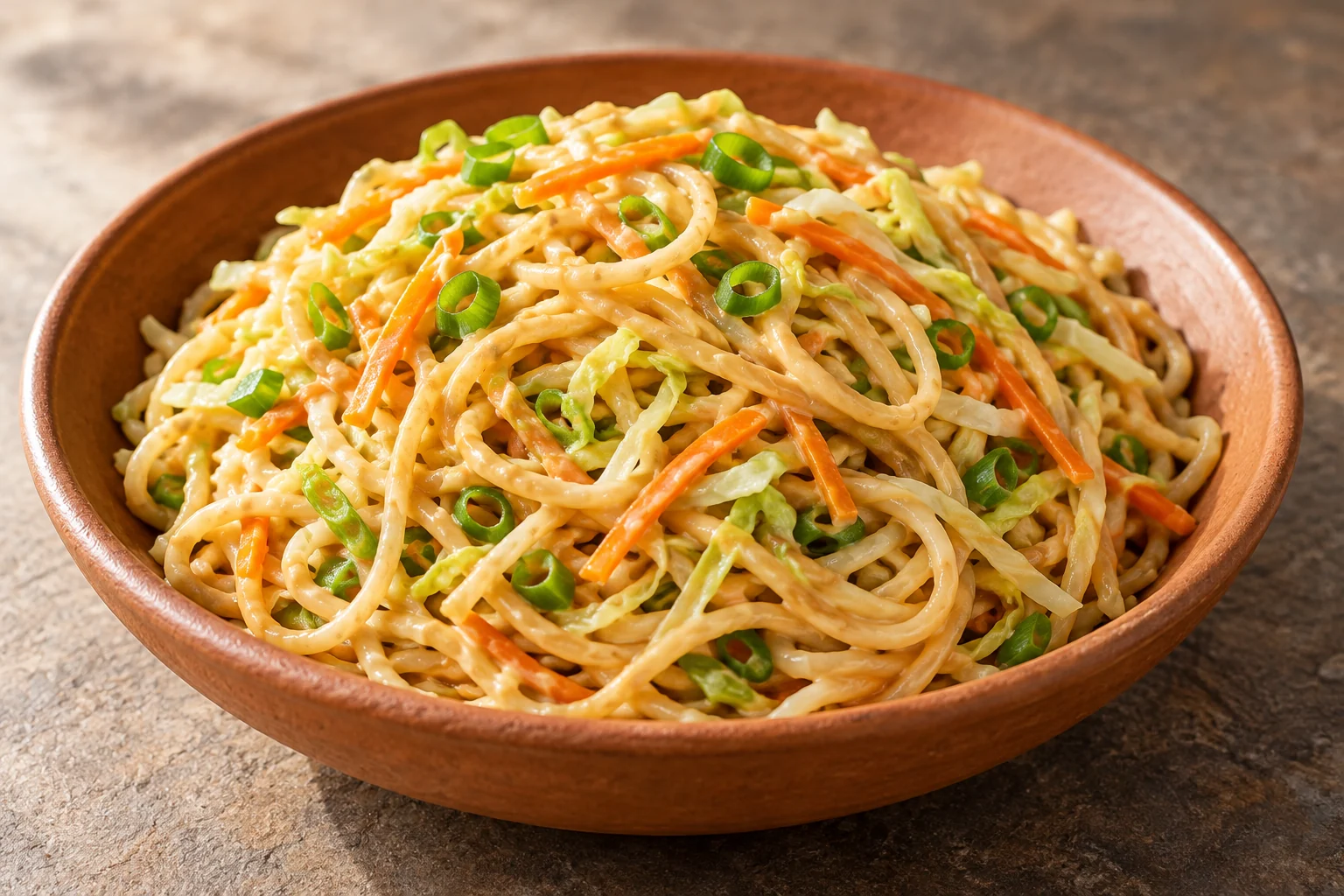
These noodles combine a creamy peanut dressing with crisp raw cabbage and carrot. The sauce must be loose enough to coat the strands, and the noodles must be drained well enough not to dilute it. Mixing the dressing separately makes it easier to see its texture before it is hidden among the spaghetti and vegetables.
Peanut-sesame cabbage noodles makes 4 servings, with 35 min estimated total time. View the standalone recipe page.
Choose a peanut butter that matches the description
Use smooth salted peanut butter and read the complete ingredient list. The estimate uses a representative USDA smooth salted profile rather than claiming every jar has identical sugar or fat. Stir separated peanut butter in its jar before weighing it; a scoop of mostly oil is not the same ingredient portion. Products containing milk or other animal ingredients do not meet the vegan screen. This recipe contains peanuts, soy and wheat, so a plant-based label must never be read as an allergy-safety promise.
Cook and cool the strands deliberately
Cook the dry spaghetti until just tender according to its package. Very firm noodles can feel tough when cool, but overcooked noodles break during tossing. Drain, rinse briefly with cold drinking water and drain again until water is no longer dripping freely. Do not add unmeasured oil to keep the pasta separate; the dressing will coat it soon. The published version uses plain cooking water without added salt, keeping the written ingredient list and preparation consistent.
Expect the dressing to tighten first
Whisk peanut butter with soy, lime, ginger and half the warm dressing water. The mixture may initially become thick and lumpy as the liquids meet the nut paste. Continue stirring rather than immediately adding more peanut butter or oil. Add the remaining water and the measured sesame oil to reach a smooth pourable dressing. Scrape the sides and bottom of the bowl. Warm water assists mixing, but it should not be so hot that handling the bowl becomes uncomfortable.
Cut vegetables to follow the noodles
Very finely shred the cabbage and cut carrot into thin matchsticks. Thick cabbage wedges or chunky carrot pieces tend to fall away from the noodles instead of mixing through them. A sharp knife works well; if using a mandoline, follow its guard instructions. Add scallion rings last with the other vegetables. The raw vegetables are intended to remain crisp, so they do not go into the pasta cooking water. Wash produce and keep its preparation area separate from any raw meat being handled nearby.
Lift and turn, then check the bowl bottom
Use two broad utensils to lift the noodles and fold them through the vegetables. Rotate the bowl and scrape up dressing from underneath until no concentrated paste remains. A five-minute rest lets the coating settle, followed by one more toss before dividing into four portions. Do not assume a top garnish of peanuts is included; this version has none. Refrigerate promptly if not serving right away and use within three to four days. Chilled dressing becomes firmer, so stir thoroughly before considering any recipe change.
Common questions
Why does the sauce slide to the bottom?
The noodles or vegetables may be carrying excess rinse water, or the dressing may not have been whisked smooth. Drain well and mix the dressing separately, then lift and turn the full batch rather than stirring only its surface.
Can I make these gluten-free with rice noodles?
That changes both the pasta ingredient and its cooking behavior; regular soy sauce also contains wheat. A gluten-free version requires checking both components and recalculating the nutrition, not merely changing the collection label.
Technique & food-safety references
These primary references support the technique, safety and storage guidance. The recipe and cooking explanations are original Recipe Pinboard content.


