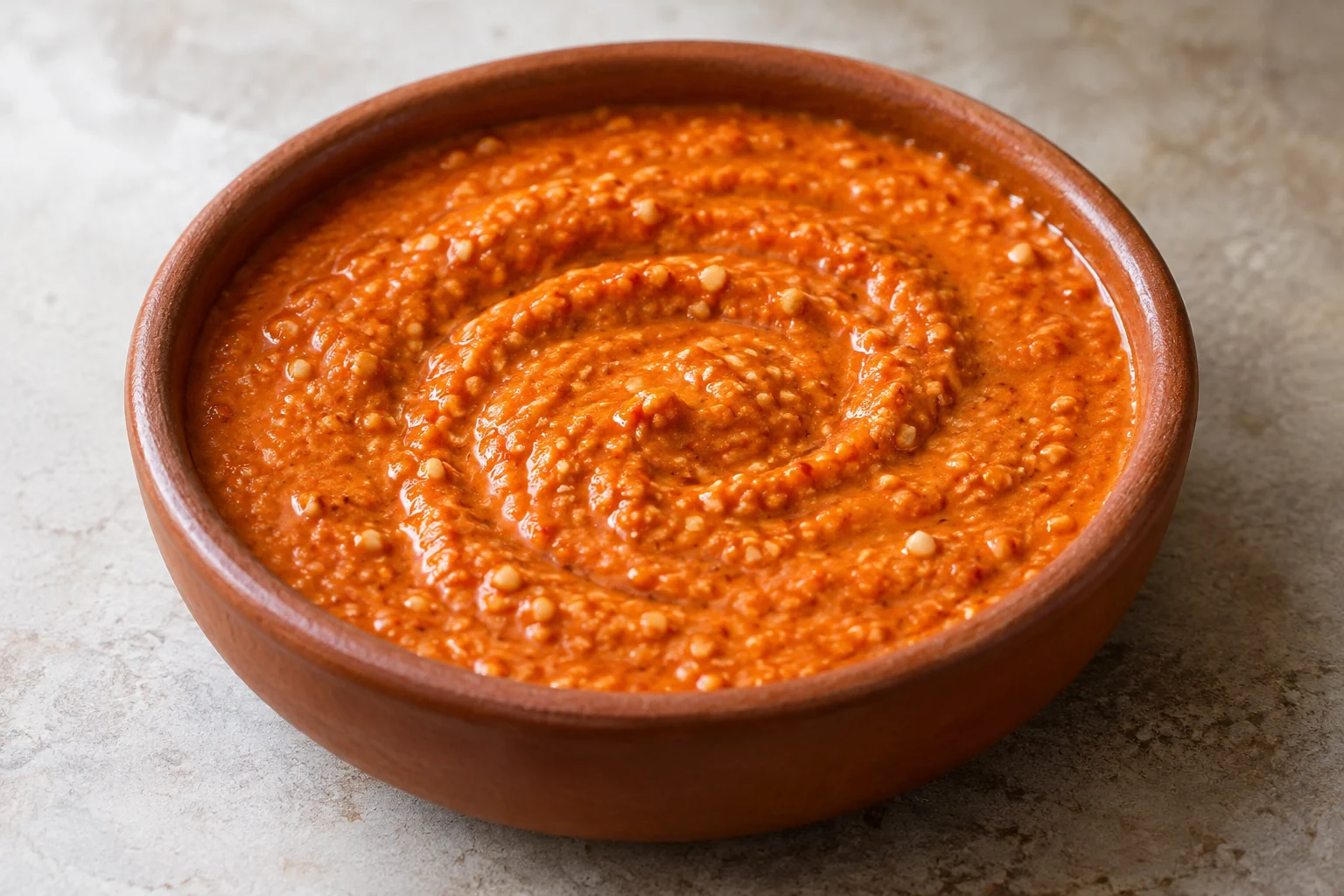
Roasted peppers already contain plenty of moisture, so the most useful work happens before the food processor starts. Draining the peppers, cooling the almonds and adding oil last produce a thick sauce with a little nut texture. This is an original pepper-and-almond condiment, with neither bread nor an implied traditional regional formula.
Roasted pepper & almond sauce makes 8 servings, with 20 min estimated total time. View the standalone recipe page.
Start with the drained weight
The 300 g pepper quantity means peppers lifted out of their packing liquid, drained and lightly patted dry. It is not the weight printed on the unopened jar. Brine varies among brands, so check sugar, vinegar and all flavorings on the actual jar. An oil-packed product changes the fat calculation and should not be silently substituted. A sieve removes free liquid; a towel removes the film that otherwise thins the finished sauce. Do this before weighing, not after blending.
Toast almonds without scorching them
Use moderate rather than fierce heat and move the nuts frequently. The goal is a warm almond aroma and a slightly deeper color, not black spots. A heavy pan can keep browning them after the burner is off, which is why they are transferred to a plate. Let them cool for the stated five minutes. Warm nuts release oil readily under the blade and can turn pasty before the peppers have been evenly incorporated.
Build a fine base before adding oil
Pulse almonds and garlic first so the garlic cannot hide in large pieces. Stop when the almond pieces are fine but still loose. Add the wet peppers and vinegar next, and scrape the sides only with the machine switched off. A small processor bowl handles this amount better than a large blender whose blades spin above the mixture. Add the measured oil last and blend briefly; longer processing is not automatically a smoother or better result.
Read the spoon trail
A spoon drawn through the sauce should leave a soft ridge that slowly settles. If free liquid pools around it, draining was incomplete; a short rest and a stir can redistribute the mixture, but adding extra almonds changes the recipe and nutrition. If it is coarse rather than watery, scrape down and pulse again. This formulation deliberately retains tiny almond granules. A perfectly glossy, sieved restaurant puree is not the texture target.
Portion and store the finished sauce
Divide the entire batch into eight equal condiment portions. Weighing the finished bowl after subtracting the empty bowl weight is more reliable than assuming every spoonful weighs the same. The nutrition estimate includes all measured almonds and oil, but no bread, pasta or roasted vegetables served beside it. Refrigerate promptly in a covered container and use within three to four days. This moist garlic-containing sauce is not a shelf-stable preserve; do not store it under oil at room temperature.
Common questions
Can I use fresh peppers instead of jarred?
Fresh peppers need roasting, peeling and draining, which changes preparation time and edible yield. Use a separately weighed roasted amount, and recalculate if the ingredient profile or oil changes. The published estimate uses the specified drained jarred peppers.
Why does the sauce become firmer in the refrigerator?
Cold temperatures change the feel of the oil and the almond mixture continues to hydrate. Stir it before serving. Adding unmeasured oil to loosen it would change both portion size and the estimated fat content.
Technique & food-safety references
These primary references support the technique, safety and storage guidance. The recipe and cooking explanations are original Recipe Pinboard content.