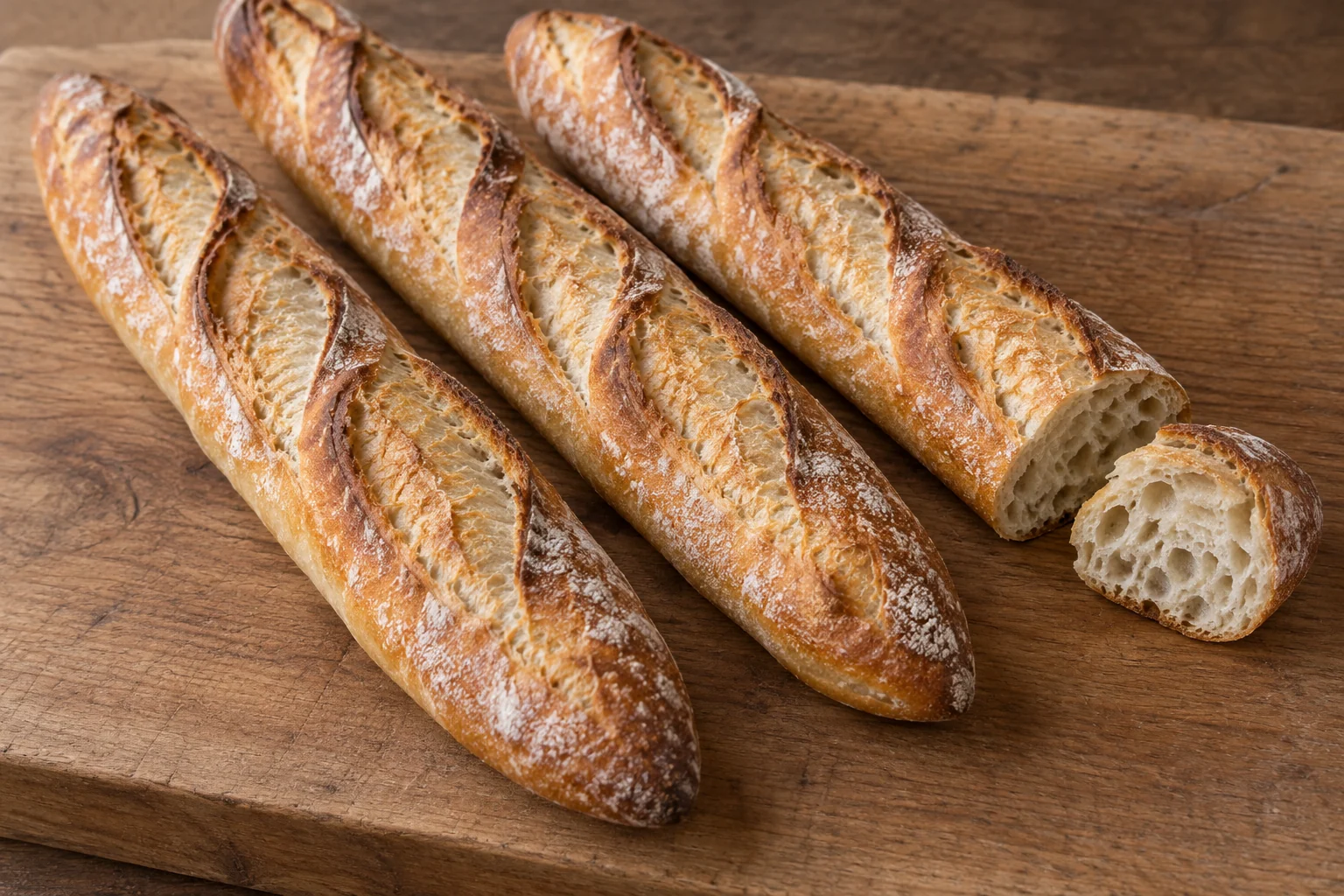
A poolish is a small yeast preferment made before the final dough. Here its flour and water are measured portions of the complete recipe, not extra ingredients added on top. The overnight wait develops a bubbly mixture that joins the remaining flour the next day. Four narrow loaves make shaping and oven loading manageable, but the long schedule still includes folding, proofing, baking and cooling before the first slice.
Poolish mini baguettes makes 8 servings, with 21 hr 30 min estimated total time. View the standalone recipe page.
Measure the tiny yeast amount accurately
The poolish uses only a fraction of a gram of active dry yeast, so a precision scale is part of this recipe's equipment. A heaped pinch is not an equivalent measurement. Keep the covered mixture at the stated cool room temperature and watch for expansion and bubbles. A fully collapsed, sharply depleted mixture is past the intended stage. The schedule allows twelve to fourteen hours, but unusually warm conditions can accelerate fermentation. Start when you can check the preferment the following morning rather than leaving it unattended far beyond the planned window.
Track flour and water through both stages
The poolish flour and water are already included in the totals. Add only the specified final-dough amounts, keeping the handling flour separate. Scrape the preferment bowl thoroughly so the complete mixture enters the dough. The final yeast is a second measured portion, not a repeat of the full recipe quantity. This bookkeeping prevents a surprisingly wet or stiff dough caused by counting preferment ingredients twice. A scraper is useful for moving tacky dough without repeatedly reaching for extra flour outside the measured allowance.
Fold during the rise instead of flattening afterward
The two sets of folds organize the dough while it is still fermenting in the bowl. Lift an edge, stretch only as far as it moves comfortably and fold it across the center, working around the bowl. Cover again so the surface remains supple. Later, divide the airy dough gently rather than pressing it completely flat. The covered rest after pre-shaping allows the short logs to relax. If they resist lengthening, another brief rest is more useful than pulling hard enough to tear their surfaces.
Make narrow loaves with a sealed underside
Shape from the center toward the ends, keeping pressure even and avoiding a swollen middle with thin tails. Seal the seam and place it underneath on the baking sheet. Leave enough room that the loaves expand independently. Their final proof is judged by puffiness and the slow return of a light indentation. Score just before loading, using shallow overlapping diagonal cuts along the top. The blade is a sharp kitchen tool, so keep fingers clear and make deliberate strokes rather than sawing repeatedly at the dough.
Use steam safely and let the crumb settle
The separate metal pan supplies oven steam during the early bake; it is not a food ingredient. Never pour boiling water into glass or onto the oven floor. Keep your face back, protect your hands and close the door promptly after loading. The loaves need to brown well rather than simply dry to a pale crust. Once baked, move them to a rack and allow the full cooling interval. Cutting immediately releases moisture from a crumb that has not settled and can make the interior seem gummy.
Common questions
Can all four loaves go on a smaller sheet?
Only if they have adequate space without touching or hanging over the edges. Crowding changes their shape and crust development. If two batches are necessary, keep the waiting loaves refrigerated while the first batch bakes, then allow another complete bake interval. The posted total assumes one sufficiently large sheet.
Is this sourdough bread?
No. The poolish is made with measured commercial yeast and is used in full for this batch. It is not a maintained sourdough starter. Flour and yeast nutrients are counted from their canonical amounts, with no guessed fermentation discount or claim that this method changes gluten eligibility. The bread contains wheat.
Technique & food-safety references
These primary references support the technique, safety and storage guidance. The recipe and cooking explanations are original Recipe Pinboard content.


