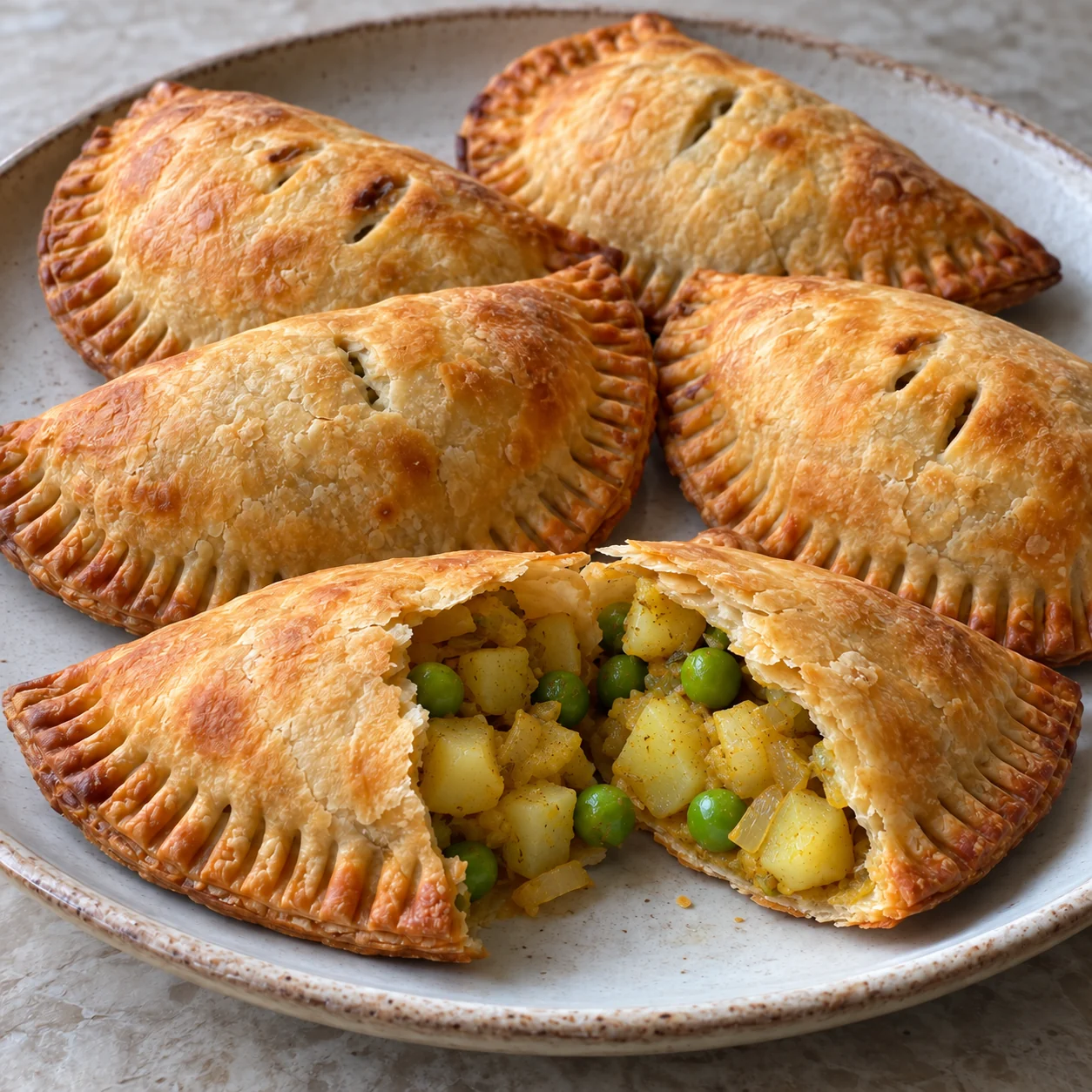
A good turnover depends on the meeting point between filling and pastry. The potato needs to be soft, the peas hot and the mixture dry enough to hold inside a folded circle. This original olive-oil dough makes eight half-moon turnovers, with one per serving. The two-hour schedule in the full card includes dough resting, filling cooling, assembly, baking and a short rest before eating.
Baked potato & pea turnovers makes 8 servings, with 2 hr estimated total time. View the standalone recipe page.
Rest the dough while the filling cooks
Mix the flour and half the salt, then add forty grams of oil and one hundred fifteen grams of water. Work only until the dough is smooth and cohesive, then cover it for twenty minutes. This pause makes rolling less of a struggle. Keep the remaining water and oil separate for the filling and final brushing; using every liquid in the dough would destroy the intended ratio. There is no butter or egg in this pastry. It should become a sturdy, tender enclosure rather than the many lifted layers of a laminated puff pastry.
Cut the potatoes small enough to soften evenly
Use peeled raw potato weight and aim for quarter-inch cubes. Large chunks may remain firm while the smaller ones break down, making the turnover difficult to fill. Soften the onion in the measured oil, briefly stir in the ground spices, then add potato, water and salt. A covered skillet holds enough steam for the potato to cook without draining. Stir occasionally and test a cube with a fork. Add the frozen peas once the potato is tender, then cook uncovered until the filling is hot and there is no puddle left in the pan.
Cool and divide before rolling eight circles
Crush a few potato pieces so the filling holds together while most cubes remain visible. Spread it in a shallow dish for fifteen minutes of cooling. King Arthur's filled-pastry guidance likewise calls for a cooled filling before assembly; here the measured dough and filling are different, but that handling principle is useful. Divide the entire filling into eight portions, not eight generous guesses followed by leftovers. Divide the dough equally too, then roll each piece between parchment into a six-inch circle. If a circle springs back, cover it briefly and roll another while it relaxes.
Keep the seam clean and release trapped air
Place filling on one half, leaving a clean border. Potato or oil smeared across the edge can stop the two dough surfaces from sticking. Fold the empty half over, gently push out air around the filling and press the edges together. Crimp with a fork firmly enough to seal without cutting through. Make a small vent on top so steam can escape in the oven. Brush all eight turnovers with the final five grams of oil. The thin coating is part of the measured recipe; an additional generous drizzle would change the estimate.
Bake through and let the filling settle
Arrange the pastries with space around them on the lined tray. Bake at 400°F / 200°C for thirty to thirty-five minutes, checking for golden surfaces and a hot center reaching 165°F / 74°C. A pale underside may need a few extra minutes, particularly on a thick or insulated tray. Cool for ten minutes before biting into the potato filling. Flour must be cooked, so avoid tasting raw scraps during shaping. Refrigerate leftovers within two hours and use within three to four days. Reheat to 165°F / 74°C; an oven also helps restore some surface crispness.
Common questions
Why did a turnover leak?
Check for wet filling, trapped air or filling caught in the seam. Cook off loose liquid, cool the mixture, keep the border clear and add a vent. Overfilling one pastry also makes a secure seal harder.
Why does my pastry spring back or become tough?
Cover the dough and let it rest briefly before rolling again; forcing a tight dough can tear it. Roll between parchment instead of adding flour, and stop kneading once smooth. Extra flour and prolonged working can make the pastry tougher.
Technique & food-safety references
These primary references support the technique, safety and storage guidance. The recipe and cooking explanations are original Recipe Pinboard content.


