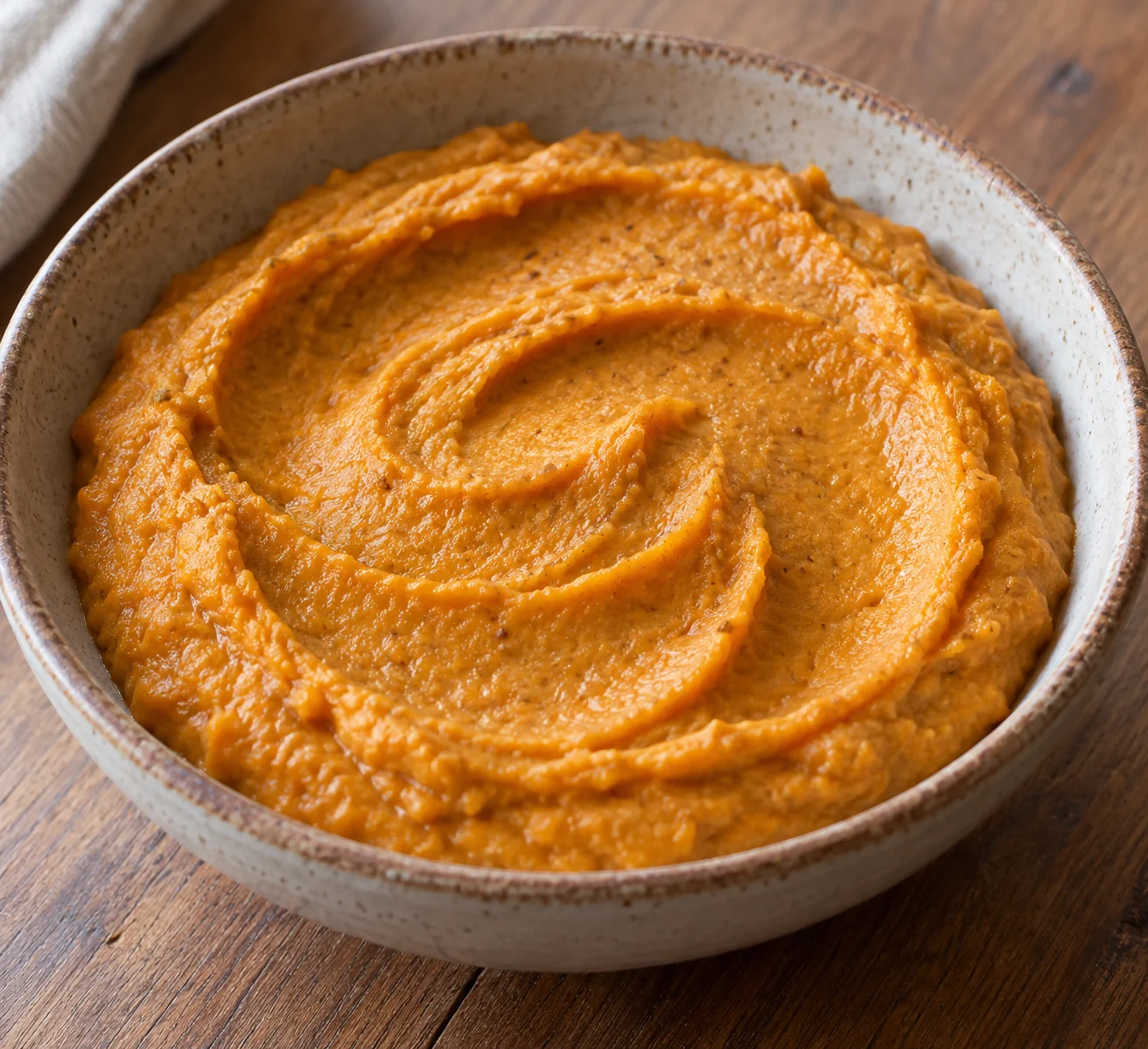
Pumpkin and white beans make a savory spread with a soft orange color and a naturally thick body. This version briefly warms the pumpkin with garlic and cumin before blending, then adds lemon after cooling. The recipe does not require roasting a fresh pumpkin or peeling individual bean skins. Its main decisions concern ingredient state, gentle heat and processor texture, with eight portions taken from the complete finished mixture.
Pumpkin & white bean spread makes 8 servings, with 30 min estimated total time. View the standalone recipe page.
Use the specified canned ingredients
Plain canned pumpkin is already cooked and smooth, which makes the preparation predictable. Pumpkin pie filling includes sweeteners and spices and is not equivalent. The bean quantity refers to drained and rinsed cannellini beans, weighed after that preparation rather than including their canning liquid. Let surface water drain away before weighing so it does not unnecessarily loosen the spread. Fresh pumpkin and home-cooked beans can vary greatly in moisture; this particular formula and nutrition estimate use the named canned ingredients. Read their labels for any added flavors or incompatible ingredients.
Bloom the seasoning without scorching it
Warm the measured olive oil gently, then stir in finely chopped garlic. The goal is to soften its raw edge without creating dark crispy pieces. Add cumin only for the short interval stated, keeping it moving through the oil. Ground spices can catch quickly in a small pan, especially if the burner extends beyond the base. Have the pumpkin ready before beginning. Adding it promptly reduces the temperature and distributes the seasoning through a larger mass. A blackened garlic fragment will not disappear in flavor merely because it is blended later.
Thicken the pumpkin just slightly
Stir the pumpkin over low heat for the brief cooking stage, scraping the base and corners. It should heat evenly and become a little more cohesive, not reduce into a stiff paste. This is a savory spread, so there is no caramel or jam endpoint to chase. Transfer the whole mixture to a shallow bowl, including every bit of flavored oil. Spread it out enough to release heat during the ten-minute cooling interval. A narrow deep container holds heat longer and makes it harder to judge when processing is comfortable and safe.
Blend by scraping, not by adding liquid
Combine the cooled pumpkin mixture, beans, lemon and salt in a food processor. Work in short runs, stopping the blade before scraping material from the sides toward the center. The pumpkin supplies moisture, so this formula does not include additional water. If the blade misses a thick pocket, redistribute that pocket rather than immediately pouring in unmeasured liquid. A small amount of bean texture is acceptable. Do not use a sealed personal blender for a hot mixture; trapped heat and pressure are avoidable when the cooling step is respected.
Rest, portion and refrigerate
Scrape the complete batch into a clean container and divide it into eight equal shares. Finished weight may vary slightly with evaporation during warming, which is why the yield is expressed as a fraction of the batch. The oil is already incorporated; an extra decorative drizzle would be additional food. Serve with separately counted bread or vegetables if desired. Refrigerate promptly within two hours and use within three to four days. Keep a clean spoon for serving, and return the container to the refrigerator rather than leaving it out through a long meal.
Common questions
Why does the spread taste flat when cold?
Cold food can seem less aromatic than a warm spoonful. Stir the chilled spread before serving so the seasoning is evenly distributed. The measured lemon and salt are already included; any further additions alter the formula and should be treated as adjustments.
Can I skip rinsing the beans?
The stated weight and profile are for drained, rinsed beans. Using beans with their packing liquid changes moisture and seasoning. For this recipe, follow the specified preparation and weigh afterward instead of estimating a portion of an unopened can.
Technique & food-safety references
These primary references support the technique, safety and storage guidance. The recipe and cooking explanations are original Recipe Pinboard content.


