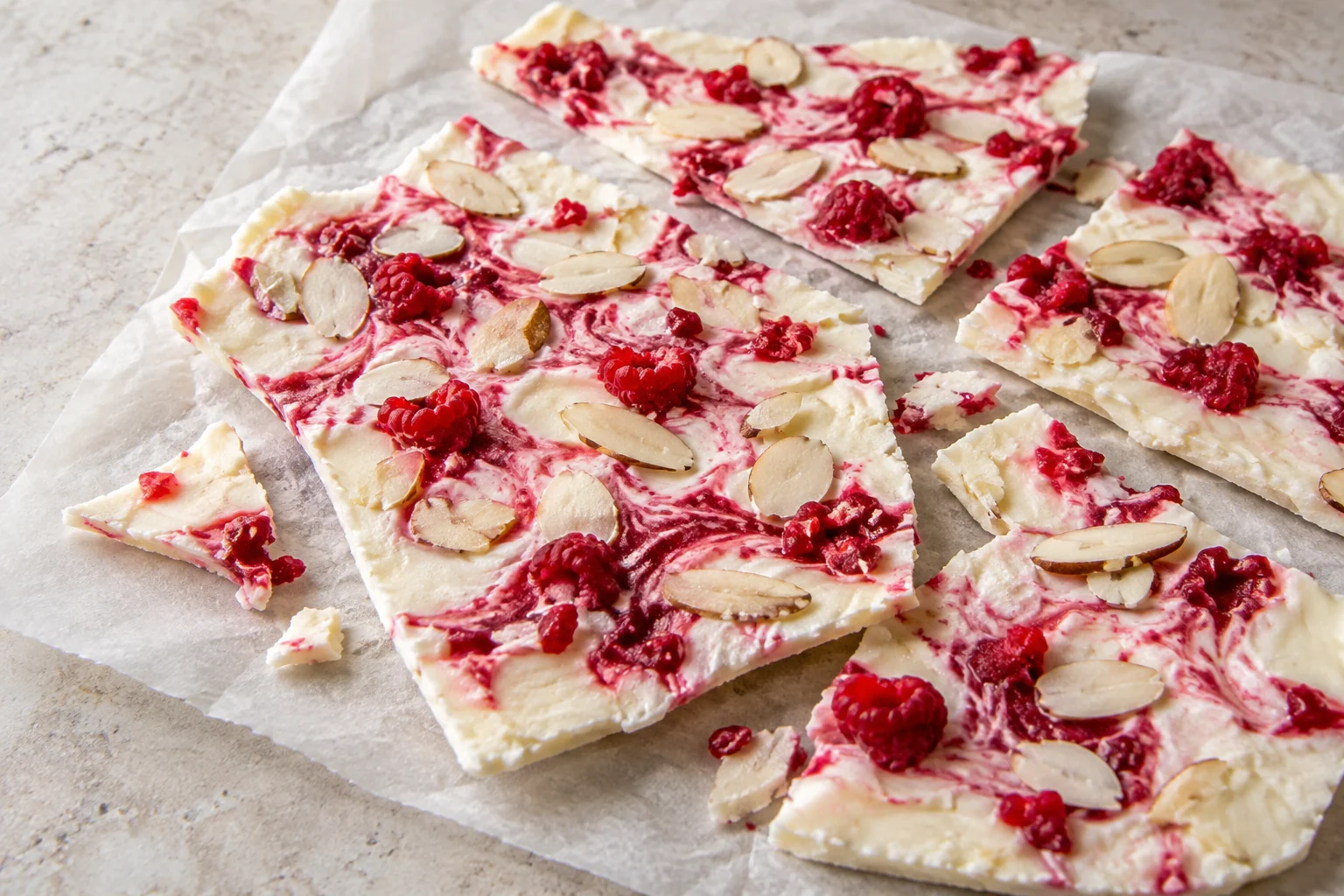
Frozen yogurt bark is a thin sheet that breaks into pieces, not a churned ice cream. Yogurt, fruit and maple syrup freeze together on a lined tray, with almonds pressed into the surface. Thickness determines how easily it freezes and bites. A level freezer space and a tray that fits are therefore worth checking before the yogurt container is opened.
Raspberry & almond frozen yogurt bark makes 8 servings, with 4 hr 15 min estimated total time. View the standalone recipe page.
Choose a tray and line it before mixing
Use a rimmed tray with enough area for the stated rectangle, or divide the same mixture between two smaller trays while keeping the thickness similar. Clear a level space in the freezer first. A sloping tray makes one end thick and the other almost transparent. Parchment should cover the entire area where yogurt will sit, with an edge available to lift later. This lining is functional: a frozen dairy sheet can cling tightly to an unlined metal surface and break into crumbs when scraped off.
Use thick plain yogurt and dry fruit
Whole-milk Greek yogurt supplies the intended body. Thin drinking yogurt or a sweetened flavored product changes both freezing behavior and the nutrient calculation. Stir the maple syrup evenly through the yogurt before spreading. Rinse fresh raspberries gently and dry them thoroughly; water trapped on the fruit becomes separate icy patches. Crush them lightly with a fork so no large mound stands far above the sheet. The goal is scattered fruit and shallow red swirls, not a thick wet raspberry layer covering the entire surface.
Spread evenly and attach the almonds
Move the yogurt outward with the back of a spoon or an offset spatula, checking the middle as well as the edges. A thick mound in the center can remain soft long after the perimeter has frozen. Scatter the measured sliced almonds and press them lightly into the surface so they adhere when the bark is broken. Do not add extra nuts simply to make every white patch disappear. The published eight-portion estimate counts the stated almond quantity, and a heavily covered sheet would be a different recipe.
Freeze for texture, not just a cold surface
Allow at least four hours and check that the center is firm through its full thickness. A cold top does not necessarily mean the underside has set. Lift the parchment carefully and portion the sheet before breaking it into serving pieces. Equal-area portions are a practical guide when the layer and toppings are evenly distributed; dramatically uneven topping piles make them less equivalent. For biting, allow only a brief softening period. This dessert is expected to be firmer and more tart than commercially churned frozen yogurt.
Protect the frozen pieces during storage
Pack portions between parchment in an airtight freezer container so they do not freeze into one solid stack. Return unused pieces to the freezer promptly rather than leaving the serving tray out throughout a meal. Freezing does not sterilize the dairy or fruit, and melted bark must still follow the time limits in the recipe. The suggested two-week storage period is a quality target, not a claim that every freezer or package prevents deterioration equally. Keep the freezer at the stated temperature and avoid repeated softening and refreezing.
Common questions
Why is the bark very icy?
Thin yogurt, wet fruit, an uneven thick layer or repeated thawing can all contribute. Use the specified yogurt, dry the berries and freeze the sheet level.
Can I replace almonds for an allergy?
A substitution needs its own ingredient and cross-contact review. This recipe contains almonds and dairy and makes no allergen-safety claim.
Technique & food-safety references
These primary references support the technique, safety and storage guidance. The recipe and cooking explanations are original Recipe Pinboard content.