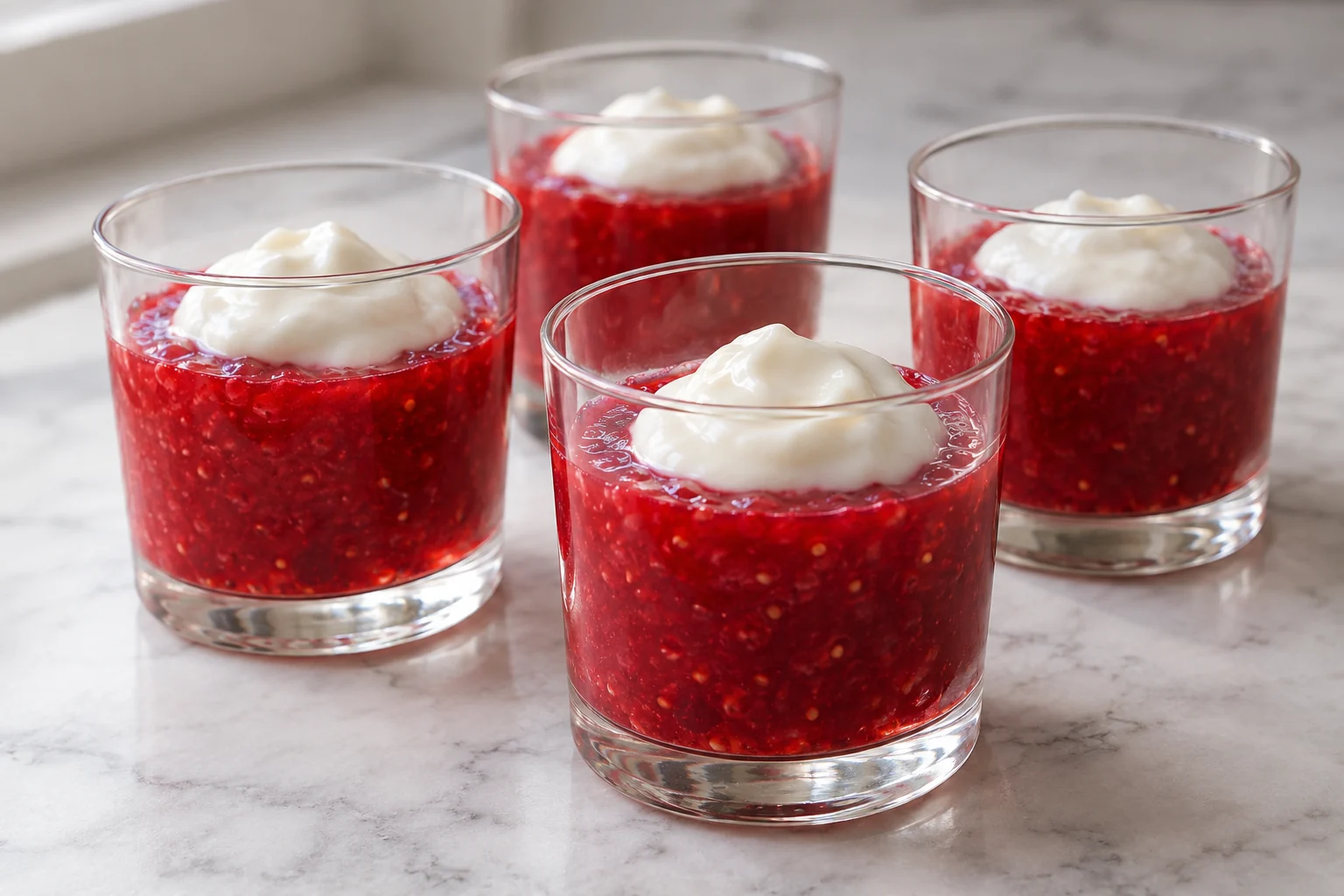
These cups retain the raspberry pulp and seeds, so the jelly is opaque and fruit-filled rather than a clear strained gel. A measured spoonful of plain yogurt finishes each serving. The dessert takes only a short period of active preparation, but the nine-hour total includes at least eight hours in the refrigerator. Set out four heatproof cups with enough headroom for the topping before heating the fruit. This recipe uses powdered animal gelatin and therefore has no vegetarian or vegan tag.
Raspberry and lemon jelly cups makes 4 servings, with 9 hr estimated total time. View the standalone recipe page.
Bloom the powder across cold water
Measure the gelatin by weight and check that it is plain unsweetened powder of the strength described in the card. Sprinkle it evenly over the cold blooming water instead of dumping a mound into the middle. Leave it for five to ten minutes so the granules hydrate throughout. A dry center inside a thick clump is harder to dissolve later. Gelatin sheets differ in size and strength, so replacing twelve grams of powder with an arbitrary number of sheets is not a reliable shortcut for this formulation.
Keep all the raspberry pulp
Simmer the berries with the remaining water and sugar until they soften, then mash them thoroughly. Retain the seeds and every bit of pulp; this is intentionally different from a strained raspberry jelly. A fine sieve would remove part of the weighed fruit and change both texture and the ingredient-based estimate. Scrape fruit from the saucepan's sides back into the mixture. The purée should be broken down enough to divide evenly, without large intact berries collecting in one cup. Lemon juice is measured separately and added off the heat.
Dissolve gently without another boil
After the fruit has come off the heat for the short pause, stir in lemon juice and the entire bloomed gelatin mixture. Keep stirring until no granules remain on the spoon or around the bowl's scraped edges. Do not bring the mixture back to a hard boil after adding gelatin. The liquid should stay warm enough to dissolve the hydrated granules while avoiding unnecessary prolonged heating. This is also the point to prepare the serving tray, because moving four filled cups individually creates more opportunities for spills than carrying them together.
Allow the full refrigerated set
Divide the complete fruit mixture evenly among the cups. Let them stand for the brief fifteen-minute cooling interval, then refrigerate loosely covered until cold and cover fully afterward. Keep the refrigerator at 40°F or below. The eight-hour minimum is part of the recipe, not an optional delay for appearance. Different gelatin strengths and fruit acidity can affect the final firmness, so an unusually soft batch may need longer. These cups are designed for spooning, with no need to add extra powder merely to force them into a firm unmolded shape.
Add the yogurt only before serving
Stir vanilla into all the plain whole-milk yogurt and divide it equally across the four set jellies. Each cup receives forty grams of yogurt plus its share of vanilla. The white topping should sit on the set surface rather than being mixed into still-warm fruit. Keep the finished cups chilled and use within three days. The estimate includes every topping portion and all the gelatin; no fruit garnish, cream or extra sweetener is assumed. Check packaged labels for the conditional gluten-free tag, while remembering that milk and animal-derived gelatin remain present.
Common questions
Why are there gelatin lumps?
Powder piled too thickly may not hydrate evenly, or the fruit mixture may have cooled before the gelatin dissolved. Bloom across the water's surface and check the warm mixture carefully before portioning. Do not strain out lumps and then claim the original gelatin quantity remains fully incorporated.
Can I make these vegetarian with agar?
Agar behaves differently in heating and setting and is not a direct weight-for-weight substitute. This recipe and its calculation use animal gelatin. A vegetarian version needs a separately formulated method rather than a renamed ingredient in the same instructions.
Technique & food-safety references
These primary references support the technique, safety and storage guidance. The recipe and cooking explanations are original Recipe Pinboard content.


