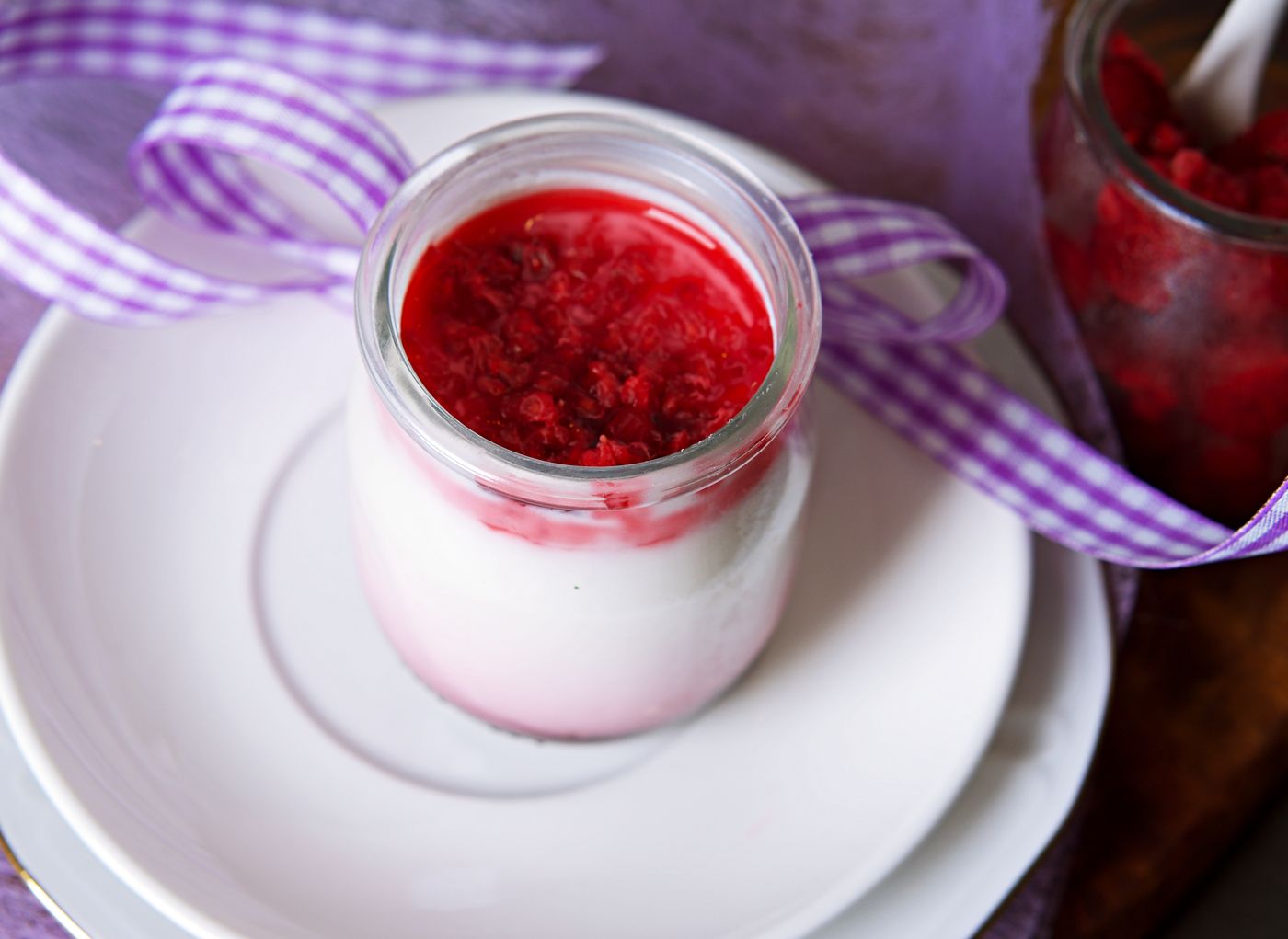
Raspberry vanilla panna cotta asks you to manage a small amount of gelatin carefully, then leave the refrigerator to do most of the work. This recipe makes six jars and takes about 285 minutes, including a twenty-minute cooling pause and at least four hours of chilling. The vanilla base contains 400 ml heavy cream and 200 ml whole milk. Raspberry sauce is prepared separately and added only after both components are cold.
Raspberry vanilla panna cotta makes 6 servings, with 4 hr 45 min estimated total time. View the standalone recipe page.
Bloom the measured gelatin in cold water
Put the 3 tbsp cold water in a small bowl and sprinkle 7 g powdered unflavored gelatin evenly over the surface. Leave it for five minutes. Spreading the powder rather than tipping it into one heap gives more granules access to moisture. The hydrated gelatin will look swollen and soft; that change is expected.
Measure the gelatin accurately and use the powdered form specified. Extra powder can create a firm, rubbery result, while less may fail to support the cream. Leaf gelatin and vegetarian gelling products are not direct spoon-for-spoon substitutions. Have six small, clean, heat-safe serving jars ready on a stable tray before warming the dairy.
Warm the dairy without boiling it down
Combine the cream, milk, 65 g granulated sugar and 1 tsp vanilla in a saucepan. Warm until steaming, stirring to dissolve the sugar, but do not boil. Scrape around the pan’s bottom so undissolved sugar does not remain in a concentrated layer. Vigorous boiling is unnecessary and can reduce the liquid amount from the intended recipe balance.
Take the pan off the heat and add the softened gelatin. Stir until it is completely dissolved, checking for any small translucent lumps. Knox’s technical guidance emphasizes hydration followed by gentle dissolution; the two stages serve different purposes. Once the mixture is smooth, avoid aggressive whisking that fills the surface with bubbles and makes the jars look foamy.
Portion evenly and respect the setting time
Divide the warm mixture among the six jars, leaving space for the raspberry topping. Use a jug or ladle for control and wipe any drips from the rims. A tray helps keep the jars level during transfer, but confirm it fits in the refrigerator before filling them. Tilted jars will set with tilted surfaces.
Cool for the recipe’s twenty minutes, then refrigerate for at least four hours. Do not leave the filled jars out until bedtime simply because you plan to serve tomorrow. The center should become softly set and move together when the jar is nudged. Check gently without repeatedly dipping a spoon into the surface you intend to top.
Cook and cool the raspberry sauce separately
Simmer 200 g raspberries with the separate 30 g sugar and 1 tbsp lemon juice for five minutes. Mash the fruit as it softens. You can leave the seeds for a rustic sauce or strain for a smoother finish; either option uses the same ingredients. If straining, press the fruit gently through the sieve without forcing all the seeds through.
Let the sauce cool, then chill it. It may seem loose while hot and become thicker as it cools. Avoid extending the simmer until it becomes a sticky jam, because that is harder to spoon in a delicate layer. Keep the fruit sauce out of the vanilla mixture; combining them early would change both the appearance and the planned setting conditions.
Top the set jars and serve them cold
Spoon the chilled sauce over the set panna cotta shortly before serving. Pour close to the surface rather than dropping it from a height, which can dent a delicate set. These are jar-served desserts, so there is no need to loosen or invert them as though they were molded panna cotta intended for a plate.
Keep the covered jars refrigerated at 40°F (4°C) or below and plan to serve within a day or two for quality, using the dairy’s package limits if sooner. Limit time out of refrigeration to two hours, or one hour above 90°F. A cold dessert that has failed to set still requires the same safe handling; softness is not a reason to leave it on the counter.
Common questions
Why are there gelatin lumps in the panna cotta?
The powder may not have bloomed evenly, or the softened gelatin may not have dissolved completely in the warm dairy. Sprinkle over cold water first, wait five minutes and stir into the warm mixture off the heat. Check for lumps before portioning.
Can I use agar to make this vegetarian?
Agar behaves differently from gelatin and needs a separately developed heating and quantity plan. This recipe specifies 7 g powdered gelatin, which is animal-derived. Do not promise the same soft set by replacing it gram for gram with agar.
Technique & food-safety references
These primary references support the technique, safety and storage guidance. The recipe and cooking explanations are original Recipe Pinboard content.