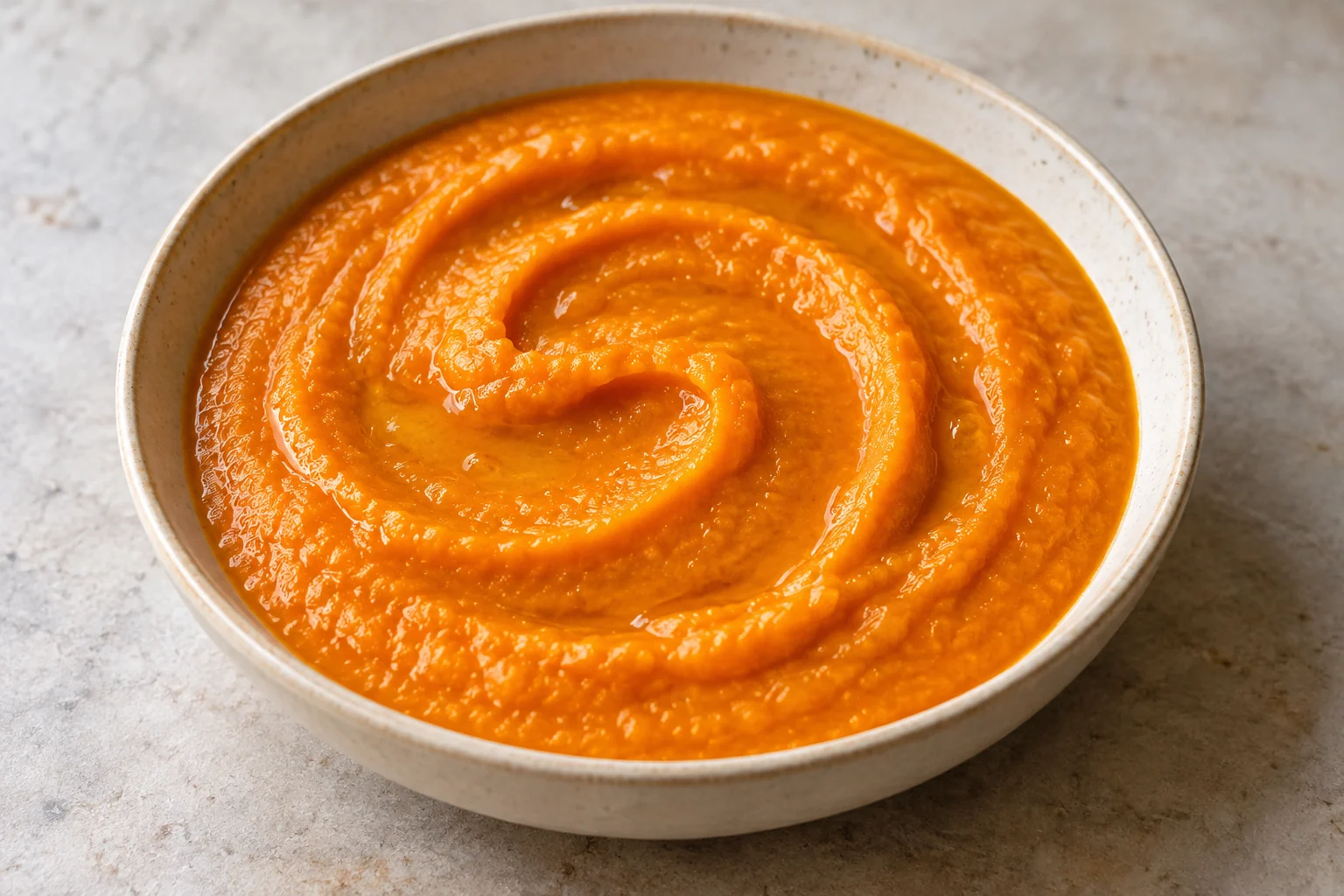
Roasted carrot and ginger sauce works when the carrots provide body and sweetness without leaving gritty pieces in the finished spoonful. This version is a thick condiment for vegetables, grains or simply cooked protein. Its eight portions are deliberately small: it is a sauce, rather than eight bowls of soup.
Roasted carrot & ginger sauce makes 8 servings, with 55 min estimated total time. View the standalone recipe page.
Cut for tenderness before chasing color
Peel and weigh the carrots before slicing them. An 8 mm slice gives the heat a manageable distance to travel; a few large chunks mixed among thin coins will make judging the tray difficult.
Turn the carrots after their first roasting stage and check a thick slice with a fork near the end. It should offer very little resistance. Brown edges alone are insufficient: a browned but firm carrot will still feel granular after blending. Extend the roasting if necessary, lowering the heat if the edges threaten to burn.
Let garlic soften and ginger stay bright
Whole peeled garlic cloves enter later than the carrots because small pieces would scorch during the full roast. Tuck them among the vegetables where they can soften without sitting alone on an exposed corner of the tray. Transfer the cloves along with the carrots, including the measured oil left on the baking sheet.
The ginger takes the opposite route. Grating it finely and adding it after roasting keeps a clear, fresh warmth in the finished sauce. Cut across long fibers before grating if the root is particularly stringy. Ground ginger would produce a different flavor and should not replace the fresh root gram for gram.
Give the blender a workable mixture
The measured water helps the blades circulate through the carrots. Start in a tall container if using an immersion blender, and keep its head below the surface to limit splashes. Tilt the container only enough to reach stubborn pockets.
For a countertop machine, follow its instructions for warm ingredients and let this mixture stop steaming first. A sealed personal blender is unsuitable for hot contents. Work in smaller batches if the jar cannot circulate the purée. Longer blending is useful only after the carrots are tender; a powerful motor cannot replace adequate cooking.
Adjust texture without burying the carrot
The finished sauce should fall slowly from a spoon, leaving a soft ridge that settles. Let it stand briefly before deciding it is too thick, since trapped air can make a freshly blended sauce appear unusually fluffy. If necessary, blend in extra water in small spoonfuls; this changes consistency without adding more oil or sharpness.
Taste a little alongside the food you plan to sauce. Lemon can seem forceful in a concentrated spoonful but balanced against rice or roasted vegetables. The listed amount is the starting formula. Avoid reflexively adding sugar: first check whether the carrots were fully roasted and whether too much extra lemon was added.
Portion, chill and reheat with care
Spoon the sauce underneath roasted cauliflower, over a grain bowl or beside warm flatbread. These accompaniments are optional and are not included in its serving calculation. For a colder, pourable dressing, thin only the portion needed rather than diluting the entire batch. Stir chilled sauce before assessing its thickness.
Transfer leftovers promptly to a shallow covered container and refrigerate within two hours, or one hour in temperatures above 90°F. Use within three to four days. If reheating, bring the sauce to a boil while stirring; use a low-sided pan carefully because thick purées can splutter. Lemon does not make this a shelf-stable sauce.
Common questions
Why does the sauce still feel gritty?
Check tenderness first: the thickest roasted slice should mash readily with a fork. Fibrous ginger and a blender that cannot circulate the mixture can also contribute. Finely grate the ginger and pause to scrape rather than adding a large amount of oil.
Can I serve it cold?
Yes. Chill it promptly, then stir before serving. Cold sauce may feel thicker, so loosen a small portion with water if needed. Its storage limit remains the same whether you serve it warm or chilled.
Technique & food-safety references
These primary references support the technique, safety and storage guidance. The recipe and cooking explanations are original Recipe Pinboard content.