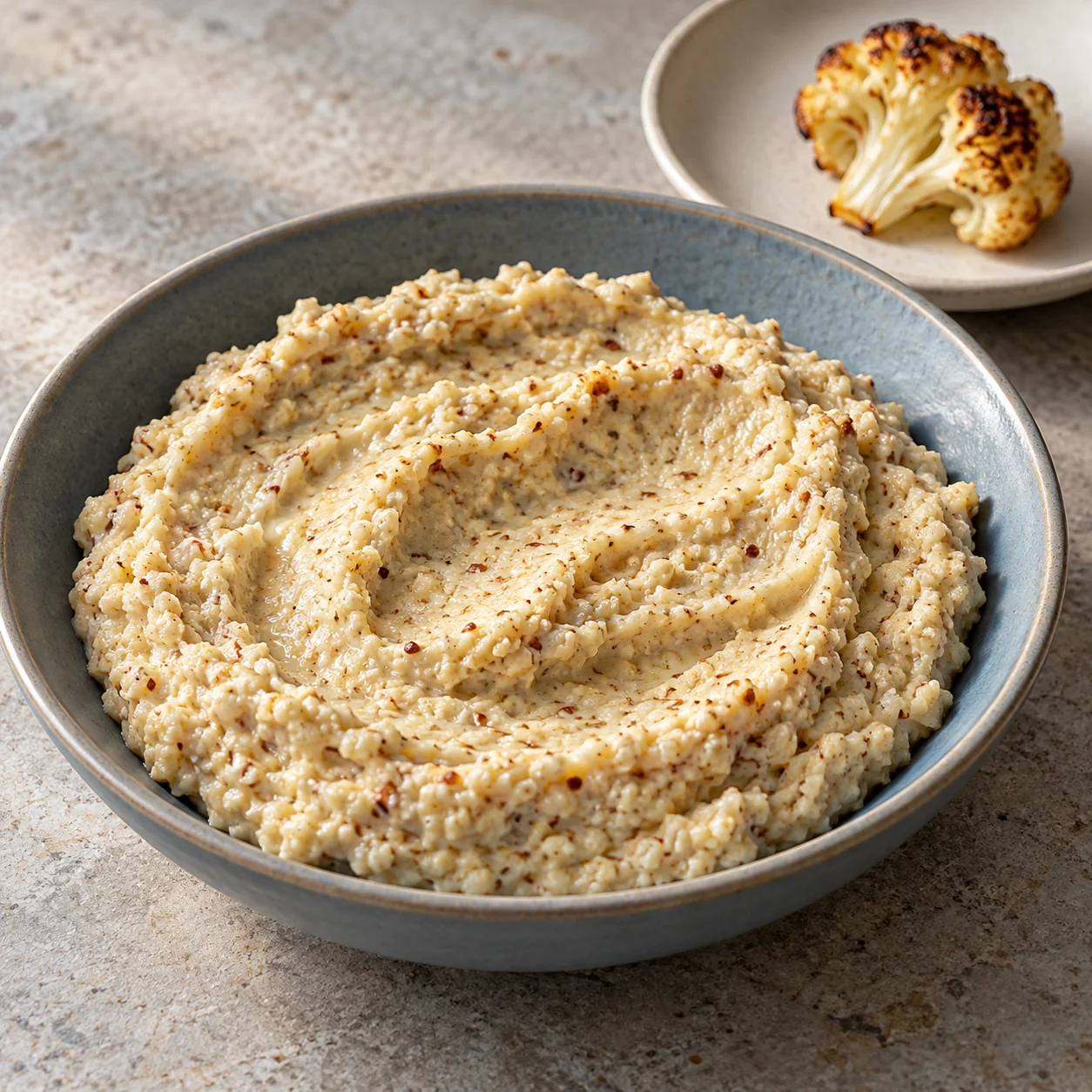
This spread gets its body from roasted cauliflower and finely ground almonds. It should be thick enough to sit on a spoon, with a little nut texture rather than the perfectly smooth surface of a dairy dip. The recipe card above gives the complete amounts. The key decisions are how small to cut the cauliflower, when to stop roasting and how to blend without making a dry paste.
Roasted cauliflower & almond spread makes 8 servings, with 1 hr 10 min estimated total time. View the standalone recipe page.
Cut florets and stems to similar size
Separate the cauliflower into small florets and slice the tender stem into pieces that will soften at roughly the same rate. A large stem chunk can remain firm after the delicate floret tips have browned. Wash the vegetables and dry them before adding oil. Surface water delays browning and can pool under a crowded mound. Spread the pieces across the tray rather than leaving them in a heap. The measured salt and most of the oil belong to this roasting stage, not to a decorative finish.
Aim for browned tips and tender interiors
Roast in the fully heated oven and turn the pieces halfway through. Look for golden patches and test a thicker stem with a knife. A dark surface alone is not proof that the center is soft enough to blend. If the tray has a few smaller finished pieces, move them toward the cooler center while larger pieces continue cooking. Avoid pushing the entire tray to a very dark brown: that flavor becomes concentrated when the vegetables are blended into a small amount of spread.
Grind almonds before adding vegetables
Put the plain almonds into the processor first and pulse until they resemble a fine meal. This separate step gives the blade access to the nuts before the soft cauliflower cushions them. Stop short of making almond butter, scraping the bowl with the machine off as necessary. The skins may leave tiny brown flecks, which are expected. Do not replace the raw almonds with a salted flavored snack mix without recognizing that seasoning, oil and nutrition will change. The retained estimate uses the specified almond profile.
Blend in stages and retain the measured oil
Let the roasted cauliflower cool briefly, then add it with the remaining ingredients. Follow the processor's guidance for warm food and avoid sealing steaming food in an unsuitable blender. Pulse first, scrape down, then process until the mixture is spreadable. Transfer the oil and soft browned pieces from the roasting tray as well; leaving them behind changes the batch from the calculated ingredients. The measured water helps the blade circulate. A little fine almond texture is part of this recipe, so endless blending is unnecessary.
Portion before adding accompaniments
Scrape the bowl thoroughly and divide the whole batch into eight equal servings. Serve the spread warm or chilled, but refrigerate it promptly in shallow covered containers within two hours of preparation. Use within three to four days. Crackers, bread and dipping vegetables are separate foods and are not included in the panel. A chilled serving will often feel firmer; stir it before deciding whether to loosen it. The recipe contains almonds and its diet tags never imply that it is safe for someone with a nut allergy.
Common questions
Why does the spread seem watery?
Cauliflower that steamed in a crowded tray may retain more water than cauliflower roasted in one layer. Allow visible surface steam to dissipate during the stated cooling period before blending. Add only the measured water initially and avoid pouring in liquid simply because the processor briefly struggles.
Why are there hard pieces after blending?
Check whether they are almond fragments or undercooked cauliflower stems. Almond fragments can be reduced with further processing. Firm vegetable pieces needed more roasting before blending. Next time cut stems smaller and test them with a knife instead of judging only the floret color.
Technique & food-safety references
These primary references support the technique, safety and storage guidance. The recipe and cooking explanations are original Recipe Pinboard content.


