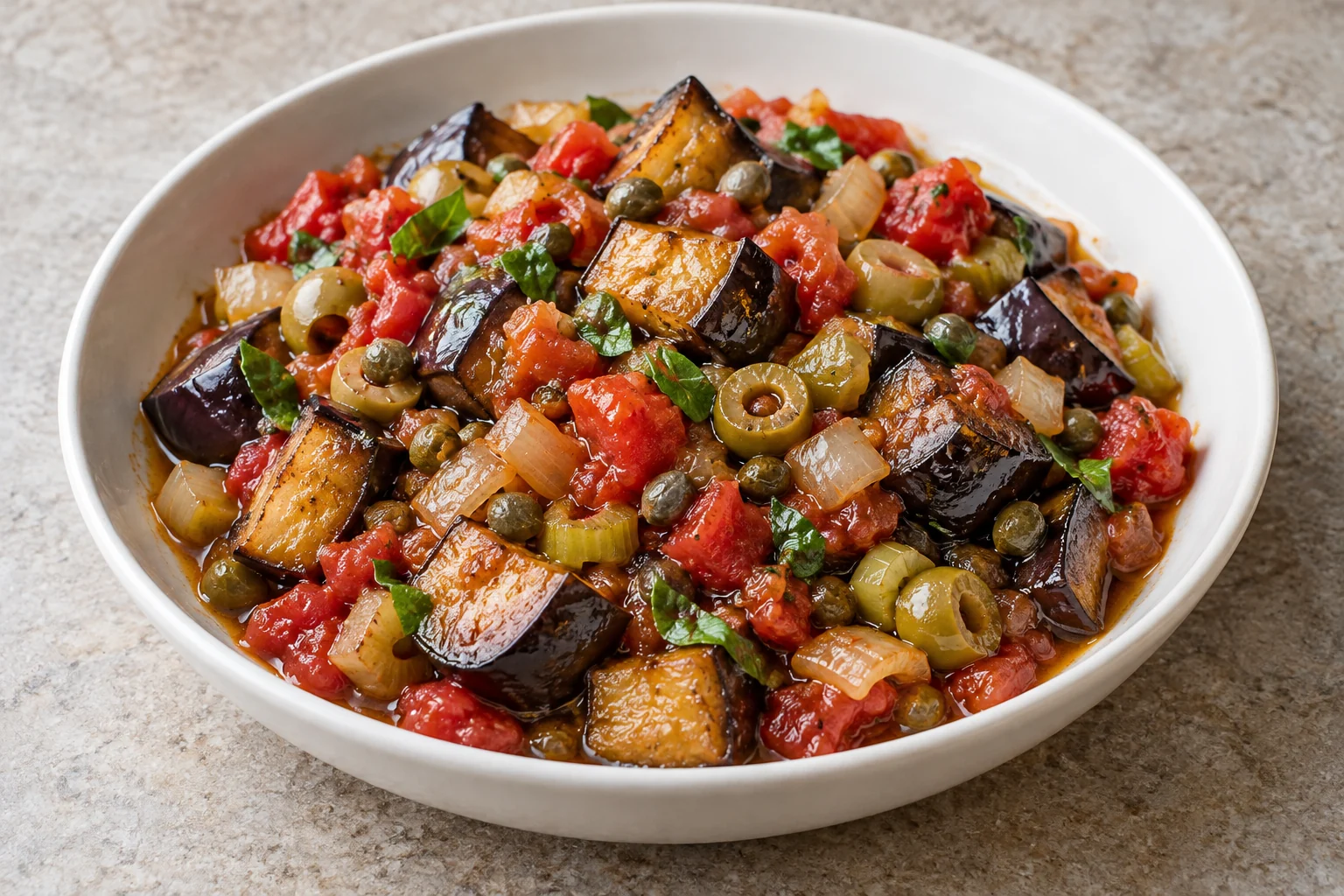
Caponata needs enough sauce to connect the vegetables without turning them into a uniform mash. In this version, roasting handles the eggplant while a skillet softens the celery and onion. The two components meet only near the end, so you can judge each texture separately. The small quantity of sugar rounds the vinegar rather than making a sweet sauce.
Roasted eggplant caponata makes 6 servings, with 1 hr 5 min estimated total time. View the standalone recipe page.
Roast the eggplant before adding tomatoes
Cutting evenly matters more than making perfect cubes. A few very small pieces will dry out while thick pieces remain spongy. Spread the 600 g of eggplant over a large tray so hot air can reach the edges, and distribute the measured oil by tossing thoroughly. Look for browned faces and flesh that yields easily when pressed with a fork. Browning alone does not prove tenderness: a dark outside can still conceal a springy center. If that happens, keep roasting and check the largest pieces first.
Give celery its own softening time
Celery takes longer to soften than a ripe tomato. Starting it with the onion gives both vegetables time against the warm pan before the tomatoes release water. Dice the celery small enough that it becomes part of the relish instead of a crunchy interruption. Keep the heat moderate and stir when edges begin to color. The objective is a softened aromatic base, not a pile of browned onion. If the pan catches, lower the heat; do not compensate by pouring in an unmeasured quantity of oil.
Reduce the sauce without crushing the vegetables
Fresh tomatoes vary in juiciness. Cook them uncovered until a spoon drawn across the skillet leaves a brief clear trail rather than immediately filling with thin liquid. This is the moment to add the vinegar, sugar, olives and capers. Their concentrated flavors should be dispersed before the delicate eggplant arrives. Fold with a broad spatula, lifting from underneath instead of beating in circles. A little broken eggplant can thicken the sauce, but recognizable cubes are part of the intended texture and help the dish remain a relish.
Taste after the short rest
Straight from the pan, hot vinegar vapor can make the dish seem sharper than it will at serving temperature. Give it the stated ten-minute rest before making a judgment. The measured olives and capers also contribute salt, so use plain-brined products and drain them consistently. Heavily seasoned olive marinades would change the flavor, ingredient screen and nutrition assumptions. Serve one sixth as an appetizer. The photograph illustrates the mixture, not a calibrated portion or the full batch, and any bread served alongside is additional to the recipe card.
Make ahead without treating it as a preserve
The vinegar is a flavor ingredient, not a validated preservation process. Transfer leftovers to shallow containers promptly instead of leaving a deep skillet on the counter until completely cold. Keep refrigerated at 40°F (4°C) or below and use within three to four days. You can serve it cold, or gently warm the amount you intend to eat; reheated leftovers should reach 165°F (74°C). Freezing is possible, but thawed eggplant can lose its distinct edges, so expect a softer topping rather than the original cube structure.
Common questions
Why is my caponata watery?
The tomatoes probably needed longer uncovered cooking before the eggplant was folded in. Reduce the tomato base separately next time. For the current batch, simmer gently and fold sparingly so evaporating liquid does not come at the cost of crushed vegetables.
Must eggplant be salted and drained first?
This recipe does not include a separate salting stage. It uses evenly cut eggplant, measured oil and a spacious hot tray. Adding a salting-and-rinsing stage would change the timing and salt assumptions, so follow the stated method for this batch.
Technique & food-safety references
These primary references support the technique, safety and storage guidance. The recipe and cooking explanations are original Recipe Pinboard content.