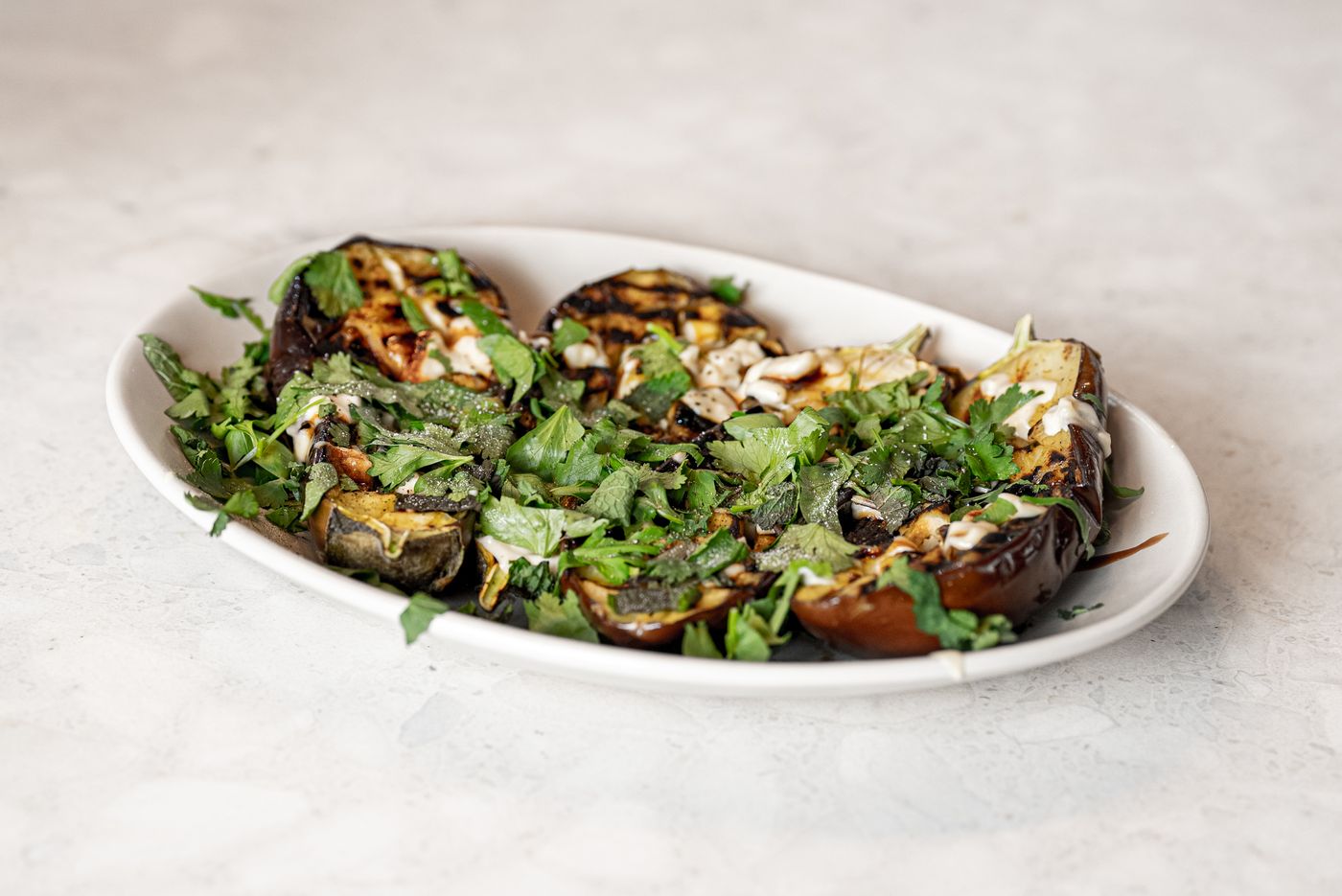
This eggplant plate depends on a fully softened center rather than surface color alone. The tahini sauce and pine nuts are prepared while the rounds roast, but neither needs to be cooked on the tray. Keeping those jobs separate helps you stop each component at its useful endpoint and arrange the platter while the eggplant is still warm.
Roasted Eggplant Rounds with Tahini and Pine Nuts makes 4 servings, with 50 min estimated total time. View the standalone recipe page.
Cut consistent rounds and leave room on two trays
Use 800 g eggplant cut into rounds about 2 cm thick. A narrow end piece may cook faster than the broad middle slices, so compare thickness as you work. Arrange the rounds across two lined trays rather than overlapping them. Space makes it easier to turn each piece without tearing its softened center.
Brush both faces with the measured 45 g olive oil and distribute 4 g salt and the black pepper across them. Eggplant can seem thirsty as the oil disappears into the surface, but repeatedly pouring on more changes the measured recipe. Work with a brush and divide the existing amount before deciding that one side has been missed.
Give the centers time to become completely soft
Roast in the preheated 425°F (220°C) oven for thirty to thirty-five minutes, turning after twenty minutes. Support a round with a broad spatula as you turn so its surface does not peel away. Check both trays because oven position and airflow can affect how quickly exposed edges become deeply golden.
Near the end, test a thick center with a small knife or fork. It should give easily rather than feel springy or resistant. Brown edges alone are not the finish line if the middle still has a firm, spongy bite. Continue roasting as needed while monitoring the darker pieces; different eggplant diameters make the timer an estimate.
Whisk the tahini mixture through its thick stage
Stir the tahini in its container before measuring if oil has separated from the paste. Measure 60 g into a bowl and combine with lemon juice, grated garlic, cool water and the remaining 1 g salt. Scrape the bottom of the bowl as you whisk so a dense layer of tahini is not left beneath a looser top.
The mixture may become stiff at first. Keep whisking until the measured liquids are fully incorporated and the sauce becomes smooth and pourable. Do not add another scoop of tahini to correct an intermediate thick stage. A prepared, seasoned squeeze sauce is different from plain tahini and would change the salt and liquid balance of this recipe.
Toast the pine nuts where you can watch them
Put the 30 g pine nuts in a dry frying pan over medium-low heat for two to three minutes, shaking often. Spread them rather than leaving a deep pile at the center. Small nuts can color quickly, so this is a task to watch directly instead of doing while your attention is inside the oven turning two trays.
Transfer them to a cool plate as soon as they are golden. Leaving them in the hot pan keeps exposing them to residual heat after the burner is off. Keep the toasted nuts dry until assembly; mixing them into tahini early would soften their surface and make them harder to distribute over the finished platter.
Build the platter close to serving
Arrange the 30 g arugula on a serving platter and place the warm eggplant rounds on top. Drizzle the tahini mixture across the rounds, then scatter the pine nuts, chopped parsley and torn mint. Distribute the herbs over the whole platter rather than letting one end receive all the mint and another only parsley.
This makes four portions, with sauce, nuts and greens included in the stated recipe. Serve promptly for contrast between warm eggplant and fresh herbs. Refrigerate leftovers in a shallow covered container within two hours. For advance preparation, keep sauce, nuts and greens separate; reheated eggplant can still be pleasant but will not have freshly roasted edges.
Common questions
Why is the eggplant brown outside but still chewy?
The centers may need more cooking time or the slices may be unevenly thick. Check the thickest rounds for easy tenderness rather than stopping as soon as the edges turn golden.
Did I ruin the sauce when the tahini became thick?
An initial stiff stage can happen as the liquids mix in. Finish incorporating the listed lemon juice and water and keep whisking before judging the final consistency; use plain tahini and stir its separated oil back in first.
Technique & food-safety references
These primary references support the technique, safety and storage guidance. The recipe and cooking explanations are original Recipe Pinboard content.