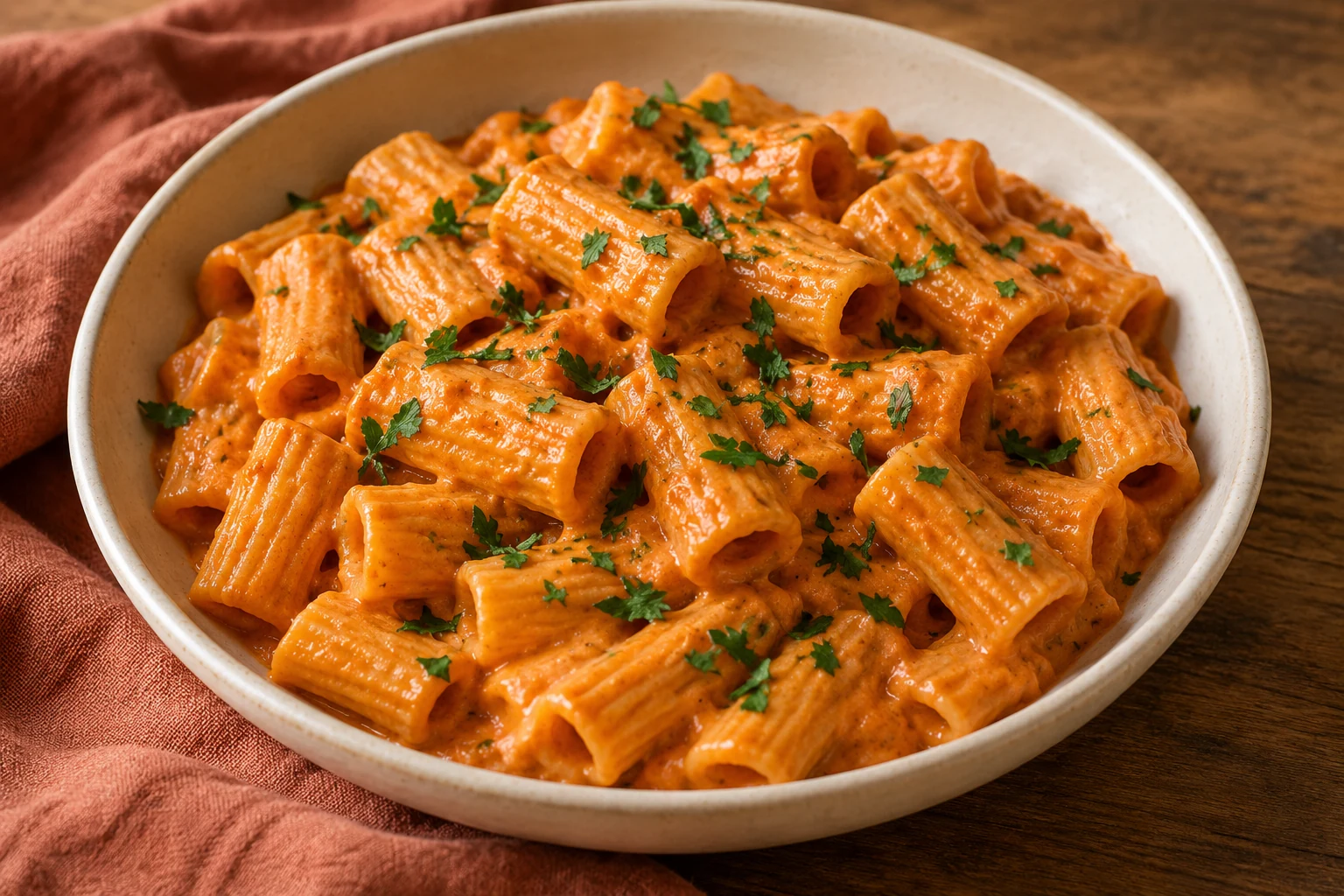
White beans supply the body of this orange-red pasta sauce, while jarred roasted peppers provide its main flavor. The ingredients are blended before the sauce is simmered, so smoothness is established in the blender and final thickness is adjusted in the saucepan. The rigatoni’s ridges and hollow centers give the coating places to collect.
Roasted pepper pantry pasta makes 4 servings, with 25 min estimated total time. View the standalone recipe page.
Drain the peppers and beans as specified
Drain the jarred roasted red peppers in brine and weigh 200 g after draining. Rinse and drain the cannellini beans. Keep the measured half cup of vegetable broth as the starting liquid. Discard pepper packing liquid and bean rinse water rather than blending either into the sauce.
The peppers are already roasted and the canned beans already cooked. There is no need to add a roasting or dried-bean cooking stage to this pantry method. Prepare the garlic cloves and chopped parsley, then read the dry rigatoni package so the pasta and sauce can finish at roughly the same time.
Blend thoroughly while the mixture is still cool
Combine the peppers, beans, olive oil, garlic, broth, salt and pepper in the blender. Blend until there are no obvious pepper strips, intact beans or garlic pieces. If material sticks above the moving mixture, stop the machine before scraping down the sides according to its instructions.
Assess a small spoonful before moving to the saucepan. A rough mixture will not necessarily become smooth just because it simmers. Additional blending at this stage is easier to manage than transferring hot sauce back and forth later. The desired result is a uniform sauce rather than rigatoni surrounded by whole white beans.
Simmer gently and stir across the base
Pour the blended sauce into a wide saucepan and simmer gently for six to eight minutes. This stage heats the ingredients together and cooks the blended garlic. Stir often, reaching the base and corners, because a bean-thickened sauce can catch underneath even while its surface appears quiet.
Keep the heat low enough to control sputtering. A thick purée releases steam in bursts, so vigorous boiling can throw hot sauce outside the pan. The goal is an even gentle simmer, not a race to remove as much water as possible before the pasta arrives.
Reserve water and adjust after adding the rigatoni
Cook the pasta by its package and reserve a cup of cooking water before draining. Add the rigatoni to the warmed sauce and toss first, then assess how it moves. The pasta itself changes the apparent thickness, so adjusting an empty saucepan of sauce is not the final test.
Add reserved water a little at a time until the sauce travels between the tubes and coats their ridges. Stop before it becomes a separate thin pool underneath. Lift pasta from the bottom during tossing so the interior of the pan gets attention, and stir in the chopped parsley at the finish.
Serve before the coating tightens
Divide the pasta while the sauce still moves easily, scraping the pan so each serving gets its share of the pepper-bean mixture. A sauce that seems slightly loose in the warm pan can thicken as the pasta stands. Avoid leaving the finished rigatoni over heat while other parts of dinner catch up.
Refrigerate leftovers promptly in shallow containers and use within three to four days. Reheat to 165°F, stirring through the center and adding a little water if the coating has become too dense. Warm gradually enough to prevent sticking, but verify the temperature rather than relying on a few bubbles at the container’s edge.
Common questions
Why is the sauce grainy?
It may not have been blended thoroughly enough, especially around the blender walls. Check for bean or pepper fragments before heating and blend longer with safe stops for scraping.
Why did the pasta become dry after sitting?
The bean-based coating thickens and pasta takes up moisture. Add the reserved water gradually during the original toss and serve promptly rather than holding the finished pasta on the burner.
Technique & food-safety references
These primary references support the technique, safety and storage guidance. The recipe and cooking explanations are original Recipe Pinboard content.