Roasting gives this soup its first layer of texture and flavor; simmering red lentils provides its body. The two stages are sequential, so the stated fifty minutes is a planning estimate rather than a deadline. Lentil tenderness matters more than the clock, especially because they cook in an acidic tomato mixture.
Roasted tomato & lentil soup makes 6 servings, with 50 min estimated total time. View the standalone recipe page.
Roast a loose layer of vegetables
Halve the two pounds of ripe tomatoes and cut the onion into wedges. Toss them with the peeled garlic cloves, olive oil, salt and pepper on a rimmed tray. Spread the pieces so the onion and garlic are not hidden under a dense stack of tomatoes.
At 425°F (220°C), the stated twenty-five minutes should soften the vegetables and develop some light browning. Check exposed garlic and thin onion edges as the tray cooks. Deeply blackened pieces bring bitterness to a blended soup, where their flavor will be distributed throughout rather than remaining easy to avoid on a plate.
Bring the roasting juices into the pot
Transfer the vegetables and their juices to a pot. Use care when lifting the rimmed sheet, since hot tomato liquid can slide suddenly. Those juices belong in the soup; leaving most of them on the tray changes both the liquid balance and the roasted-tomato contribution.
Add the rinsed dry red lentils, vegetable broth and smoked paprika. The lentils are not canned or already cooked in this recipe. Rinsing removes surface debris, but it does not replace their simmering time. Stir through the pot before bringing it to a simmer so lentils are not left in a compact layer underneath the vegetables.
Check softness instead of enforcing the time window
Simmer for the suggested eighteen to twenty-two minutes, stirring occasionally along the base. Taste a small cooled spoonful of lentils before blending. They should be soft through the center, with no firm or chalky bite remaining. Red lentils breaking down is useful here because the soup is intended to become partly smooth.
The USA Pulses cooking guide notes that acidic ingredients such as tomatoes can slow lentil cooking. If yours remain firm, allow additional simmering and check that there is enough liquid to keep the bottom from sticking. Blending hard lentils does not solve incomplete cooking; it only makes the hard pieces smaller.
Blend partly smooth, then adjust the thickness
Take the pot off active heat before using the immersion blender, and keep its blade submerged as the card directs. Start with short pulses in different areas rather than trying to lift the running blade through the surface. Stop the motor before repositioning above the soup to reduce the risk of hot splashes.
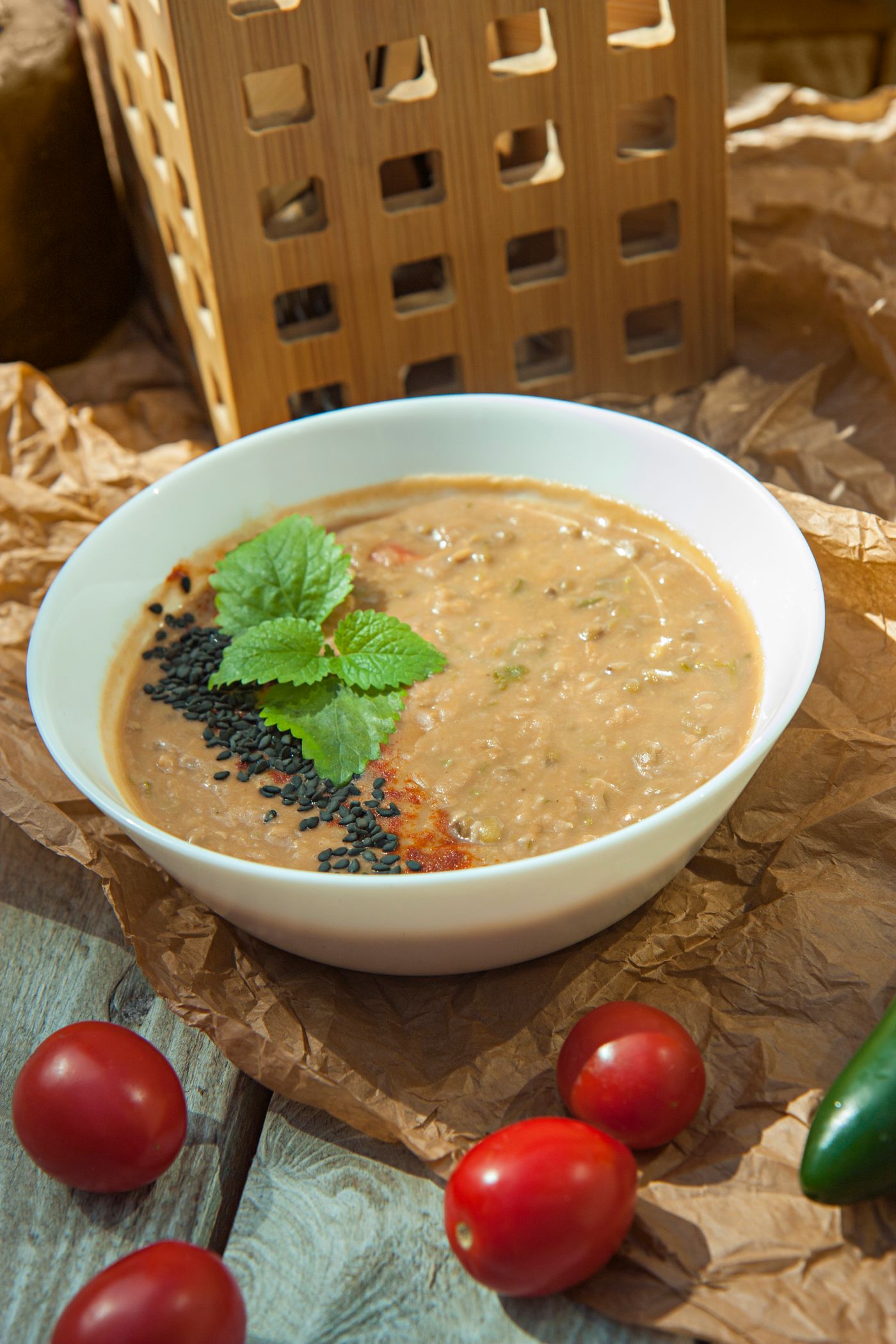
Leave some texture rather than automatically making a completely uniform purée. Once blended, assess a spoonful: the lentils should give the broth body without making it stand in a solid mound. The recipe allows water for thinning, so add it gradually and stir before deciding whether the soup needs more.
Add the distinct garnish and manage thickening later
Divide among bowls and add the black sesame seeds and fresh mint. Both are part of the ingredient list, and adding them at the finish keeps them visible and distinct from the blended tomato base. The mint should be clean and ready before ladling so the soup need not wait while you prepare it.
Refrigerate leftovers promptly in shallow containers and use within three to four days. Lentil soup often thickens as it stands; loosen a portion with water while reheating, stirring the bottom frequently. Reheat to 165°F and bring soup to a rolling boil. Do not leave the full pot on the counter until completely cool.
Common questions
Why are my lentils still firm after twenty-two minutes?
Tomato acidity can slow softening, and lentil products vary. Continue simmering until the centers are tender, checking liquid and stirring so the base does not scorch.
Can blending fix grainy, undercooked lentils?
No. The lentils need to soften through cooking first. Blend only after a cooled sample tastes tender, then use the blender to choose texture rather than conceal a hard center.
Technique & food-safety references
These primary references support the technique, safety and storage guidance. The recipe and cooking explanations are original Recipe Pinboard content.