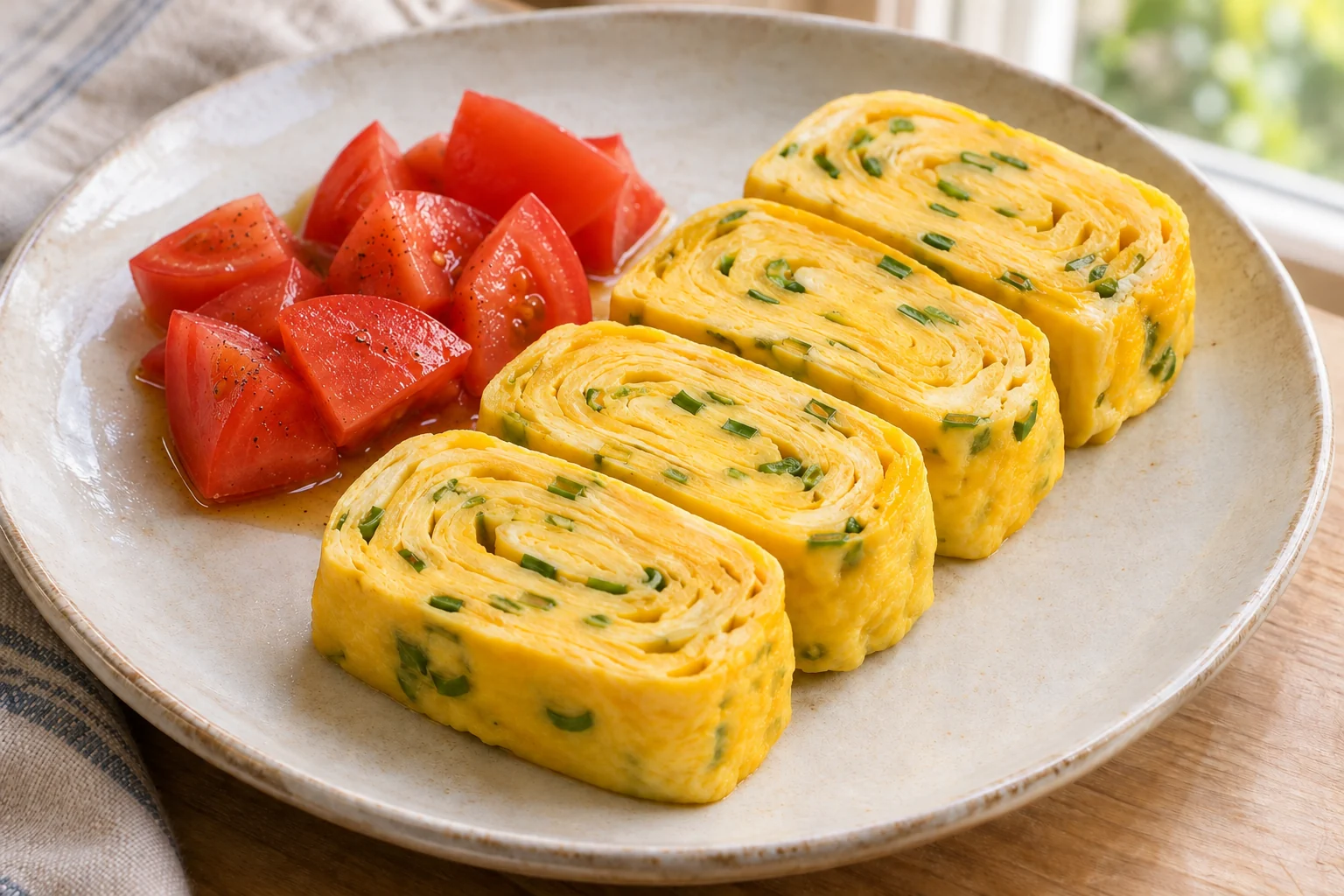
A rolled omelet is built a thin layer at a time. Each new sheet of egg attaches to the existing roll before being wrapped around it, creating the visible layers in the slices. This version uses a regular small nonstick skillet, finely sliced scallions and a simple tomato salad. Keep the heat moderate and the egg portions small enough to spread thinly. The finished center must be fully set, even though the layers are rolled while their surfaces are still slightly tacky.
Scallion rolled omelet with tomato salad makes 3 servings, with 40 min estimated total time. View the standalone recipe page.
Mix gently and prepare the pan allocation
Beat the eggs with water, soy sauce, sugar and scallions only until the whites and yolks combine. Excess foam makes it harder to pour a smooth thin sheet. Slice the scallions very finely so large pieces do not tear a layer as it folds. Divide the egg mixture into two batches before cooking, then reserve the measured oil for each roll. A brush helps spread a thin film without repeatedly pouring an uncertain amount into the skillet. Make the tomato salad first so the rolling process can have your full attention.
Start with a thin first layer
Warm the small skillet over medium-low heat and brush it lightly with part of the oil allocation. Pour in one-quarter of the first egg batch and tilt promptly so it reaches across the base. If egg sets instantly in thick ripples, the pan is too hot. If it barely firms, give it a little more heat rather than flooding the pan with the next portion. Once the surface is nearly set, use a flexible spatula to fold or roll it into a loose log. The first fold does not need to look perfect.
Let fresh egg flow beneath the roll
Move the first log to one edge and brush the newly exposed pan with a little more measured oil. Pour the next egg portion onto the open surface, briefly lifting the log so a thin stream runs underneath it. That connection helps the new layer attach. Wait until the exposed sheet is nearly set, then roll the existing log back over it. Repeat in the same direction of travel across the pan. Use small controlled movements instead of trying to flip the whole roll high into the air.
Finish the center before resting
After the fourth layer, turn the completed roll gently over low heat so every side receives some contact. Insert a thin thermometer into the center from an end and confirm at least 160°F. The surface may be firm while an inner fold remains undercooked, so checking matters. Repeat the process with the second egg batch and its oil allocation. If the pan has become hotter during the first roll, briefly reduce the burner before starting the next one. Dark brown patches are a sign to moderate the heat, not a requirement for flavor.
Slice across the layers and keep salad separate
Rest each roll for three minutes before cutting it into six pieces with a sharp knife. Wipe the blade if egg sticks to it rather than sawing aggressively through the soft layers. Divide four pieces per serving and add a third of the tomato salad, including its dressing and juices. The salad uses sesame oil, not a sesame-seed garnish. Serve promptly. Refrigerate leftovers within two hours and use within three to four days; reheat the omelet to 165°F. Store the salad separately so its liquid does not soak the egg slices.
Common questions
Why do the egg layers tear when I roll them?
They may be too thick, too dry or stuck to an overheated pan. Use small portions, a light measured oil film and moderate heat. Roll when the surface is nearly set but still able to attach to the next layer.
Do I need a rectangular tamagoyaki pan?
No. The card uses an eight-inch round nonstick skillet. The ends may be less square, but thin layers and careful rolling still produce a coherent log. Keep the pan size close to the stated size for manageable layer thickness.
Technique & food-safety references
These primary references support the technique, safety and storage guidance. The recipe and cooking explanations are original Recipe Pinboard content.


