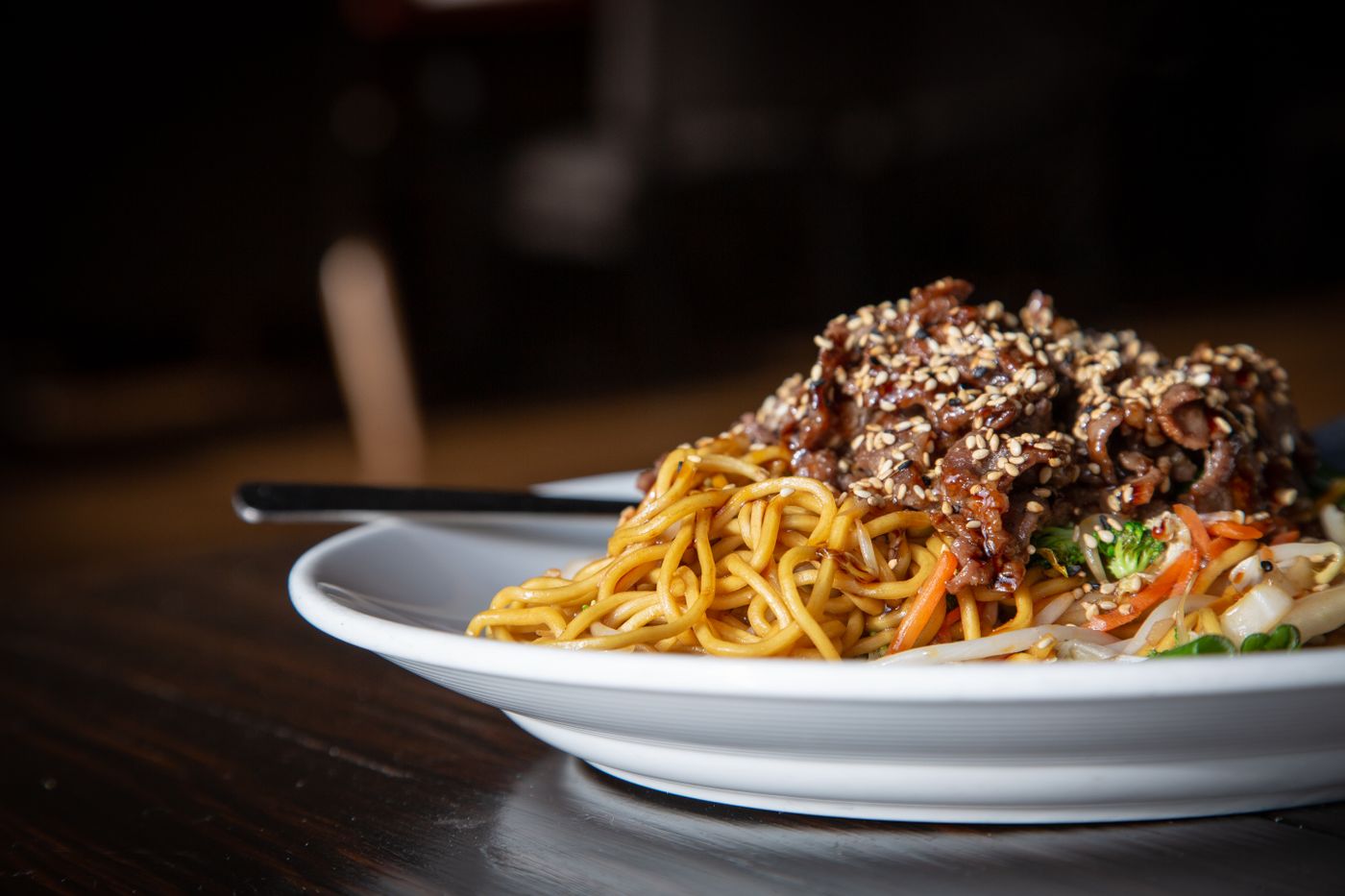
A noodle dinner is easier to control when the steak and vegetables have different jobs. In this four-serving, 40-minute recipe, a whole 500 g sirloin is seared and rested, then sliced over quick-cooked noodles and vegetables. The final pan toss lasts only a minute or two. That makes preparation, noodle draining and matching vegetable cuts more important than trying to fix everything with extra heat at the end.
Sesame Steak Noodles with Crunchy Vegetables makes 4 servings, with 40 min estimated total time. View the standalone recipe page.
Mix the sauce and toast the sesame first
Combine soy sauce, oyster sauce, rice vinegar, brown sugar and 45 ml water in a bowl. Stir so the sugar is distributed before the sauce reaches the noodles. Toast the 20 g sesame seeds in a dry pan over medium heat for about 2 minutes, moving them around to prevent a single hot patch from scorching.
Tip the toasted seeds onto a plate immediately. A pan retains heat after the burner is turned off, so leaving seeds inside it can take them past the intended light toast. Keep the 10 g toasted sesame oil separate; it will coat the drained noodles, while the neutral oil is divided between cooking the steak and the vegetables.
Sear the sirloin as a whole steak
Pat the 2 cm-thick sirloin dry and season with 2 g salt. Heat 15 g neutral oil in a heavy pan over medium-high heat and sear for about 5–7 minutes per side. This step does not involve tossing raw beef strips through the vegetables. Keeping the steak whole gives you a clear center in which to check temperature.
When the center reaches 145°F / 63°C, transfer the steak to a clean board and rest at least 3 minutes. Let it wait while you finish the noodles rather than slicing immediately. Cut thinly across the grain near serving time. The steak becomes a topping, so it does not need another prolonged cook in the stir-fry pan.
Cook and drain the noodles according to their package
While the steak cooks, boil the 250 g dry thin wheat-and-egg noodles in unsalted water. Their package directions take priority over a universal time; the recipe suggests a usual range of 4–6 minutes. Check a strand rather than assuming all brands have the same thickness or texture.
Drain thoroughly, then toss with the toasted sesame oil. Shake off the cooking water before adding oil, since trapped water will still enter the final pan. Have the vegetables ready by this point so the noodles are not left as a tightly compressed mound while you begin a lengthy chopping session. Gently loosen strands when transferring them.
Cut the vegetables for a short, even stir-fry
The carrot should be in thin matchsticks, cabbage finely shredded and bok choy thinly sliced. Pay particular attention to the thicker bok choy stems. A large chunk of stem will remain hard during the same 3–4-minute cook that is enough for thin cabbage and leaves. Prepare the garlic and ginger separately for their later addition.
Heat the remaining 15 g neutral oil in a wok or large frying pan. Stir-fry the vegetables for 3–4 minutes, moving them through the hot surface. Add garlic and ginger for 30 seconds. The pan needs room for this stage and the noodles that follow; a crowded small saucepan is a poor substitute for a broad frying surface.
Toss briefly, then finish with sliced beef
Add the noodles and mixed sauce to the vegetables and toss over the heat for 1–2 minutes. Lift and fold with suitable utensils so the sauce reaches the lower strands instead of coating only the top. The goal is an evenly seasoned mixture with vegetables still distinct, not a long simmer in a pool of liquid.
Divide among four plates and place the sliced rested steak above the noodles. Scatter on all the toasted sesame seeds. If sauce remains watery, check the original draining and pan crowding rather than automatically adding more oyster sauce. More salty sauce cannot remove excess water, and extended cooking will soften the vegetables further.
Common questions
Why have my noodles turned into a sticky clump?
Drain them near the time they are needed, toss with the measured sesame oil and loosen gently before the final pan toss. Overcooking and a long wait in a compressed pile make separation harder.
Should I stir-fry the steak again with the noodles?
The recipe serves the safely cooked, rested steak in slices on top. Keeping it out of the final toss limits unnecessary additional cooking.
Technique & food-safety references
These primary references support the technique, safety and storage guidance. The recipe and cooking explanations are original Recipe Pinboard content.