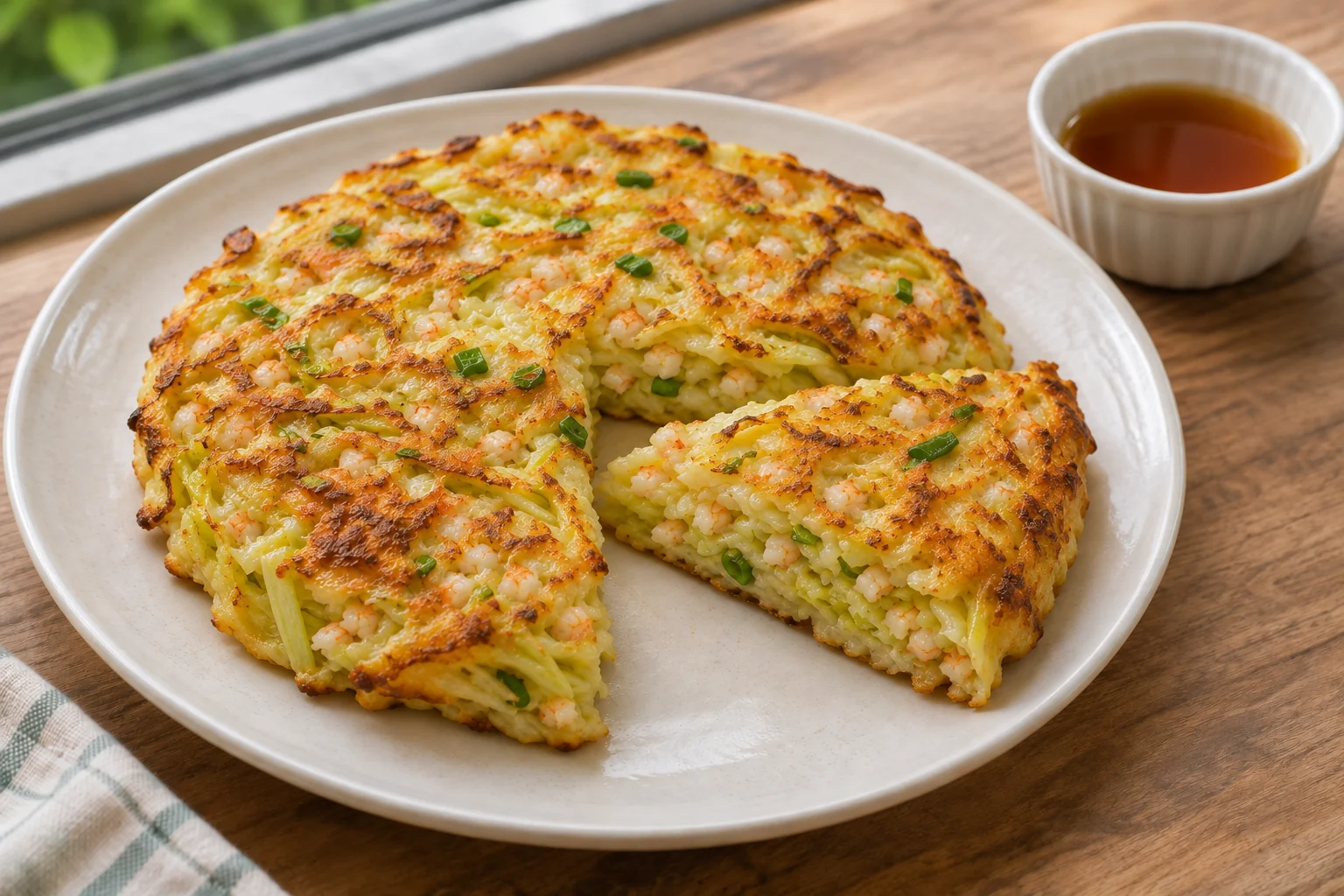
These savory pancakes take inspiration from cabbage-based Japanese griddle cooking while using a simple flour-and-egg batter and a separate soy-lime sauce. Their thickness makes heat control more important than speed. A golden surface can appear long before the center has cooked, so keep the pancakes reasonably broad, cover the pan and check the middle. Four separate cooking batches are included in the total time, with a warm oven ready to hold the earlier pancakes.
Shrimp and cabbage skillet pancakes makes 4 servings, with 1 hr 30 min estimated total time. View the standalone recipe page.
Cut the filling small enough to distribute evenly
Shred the cabbage finely and shorten any very long strands. Large stiff pieces make the batter harder to spread and can pull a pancake apart when it turns. Finely chop the peeled shrimp rather than leaving whole curls on top; small pieces distribute through the cabbage and cook more evenly. Slice scallions thinly and grate the ginger so no large fibrous pocket interrupts a bite. Keep shrimp cold during preparation, use clean utensils after handling it and avoid tasting the uncooked batter. Have the measured pan oil divided before heating the skillet.
Mix lightly and divide the batter before cooking
Whisk the flour, eggs and water just until combined, then fold in the vegetables and shrimp. Vigorous beating is unnecessary and can make the flour mixture tougher. Divide everything into four portions while the ingredients are still evenly distributed. If a little liquid gathers while portions wait, fold it back into that portion rather than leaving it behind in the bowl. Keep the uncooked portions refrigerated between batches. Bring only the next portion to the stove when the skillet is ready, rather than letting all the seafood mixture stand beside the warm burner.
Control both diameter and depth
Spread one portion into the specified round, keeping its center no thicker than the edges. A tall mound browns underneath while trapping a cool, wet center. Medium-low heat gives the cabbage time to soften without scorching the exterior. Covering the skillet helps heat reach the upper surface, but it does not replace the later temperature check. If the underside becomes dark quickly, turn the burner down rather than flipping repeatedly in a panic. Let the first side develop enough structure that a broad spatula can slide underneath without the pancake folding over itself.
Turn carefully and verify the middle
Two broad spatulas provide support across the pancake. Alternatively, slide it onto a plate and invert it carefully into the skillet, keeping hands away from the hot pan and oil. After the second side cooks, insert a thin thermometer into the center from the side. Look for at least 165°F, opaque shrimp and no wet flour batter. Color at the edge is not a reliable center measurement. Transfer the finished pancake to a rack in the holding oven; the rack limits trapped steam underneath. Repeat with the measured oil allocation for each remaining pancake.
Keep sauce separate until serving
Stir the honey thoroughly into the soy-lime mixture so sweetness is not concentrated at the bottom of the bowl. Serve the sauce separately or spoon each portion over its pancake immediately before eating. Adding it while pancakes wait softens their browned surfaces. Use the warm oven only for the cooking-batch interval, and serve promptly once the last pancake is ready. Refrigerate leftovers within two hours in shallow containers, use within three to four days and reheat to 165°F. A covered skillet can warm the center gently before a brief uncovered finish.
Common questions
Why is my pancake brown outside but wet inside?
It is likely too thick or cooking over excessive heat. Spread the portion evenly, use medium-low heat and a lid, and continue until the center reaches the stated endpoint. Do not judge readiness by crust color alone.
Can I make two giant pancakes instead of four?
That changes thickness, turning difficulty and the time needed to heat the center. Follow the four-pancake size for the stated method. Smaller, consistently shaped portions are easier to turn and check reliably.
Technique & food-safety references
These primary references support the technique, safety and storage guidance. The recipe and cooking explanations are original Recipe Pinboard content.


