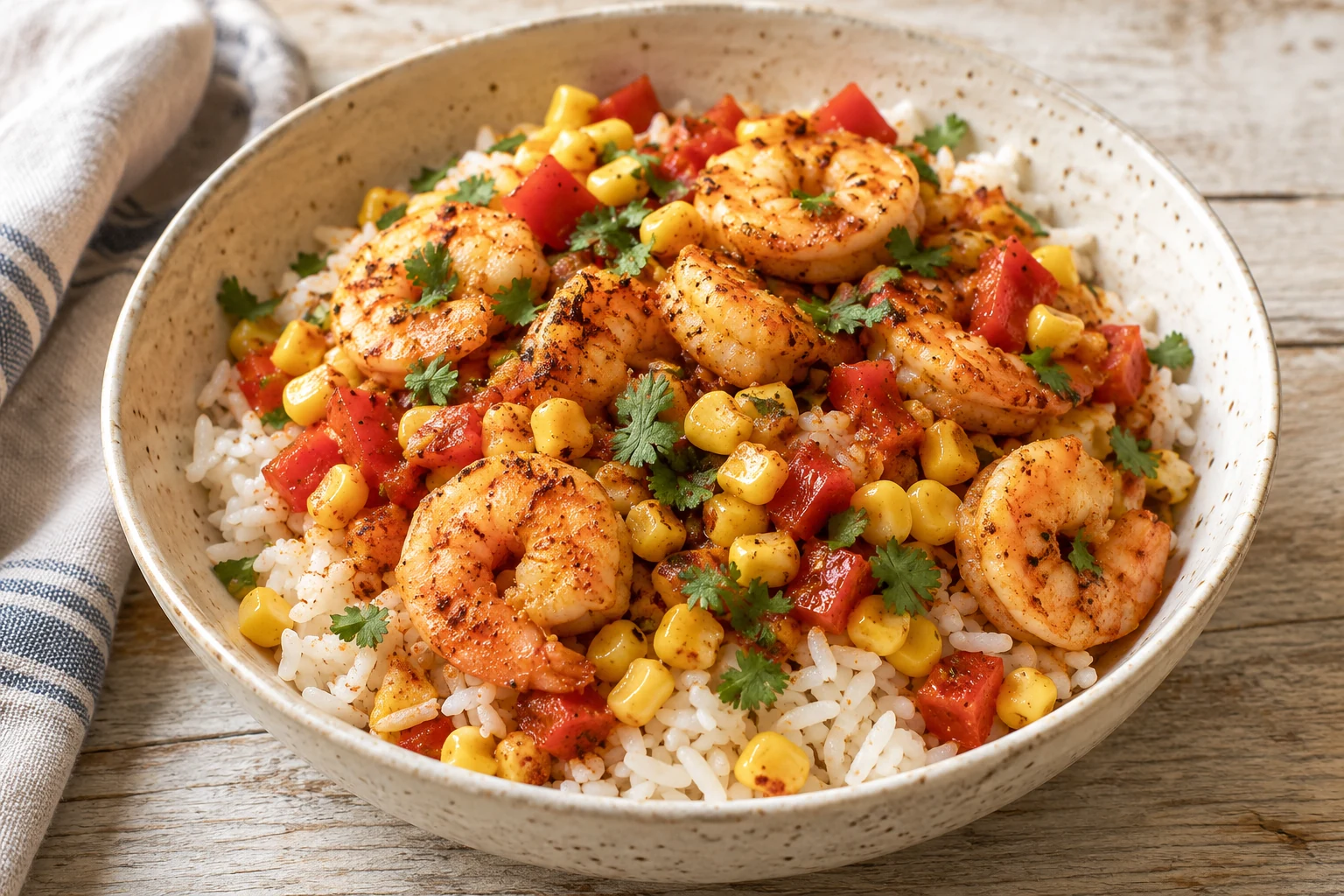
The rice is the longest-running component of these bowls, while the shrimp need only a short skillet stage. Starting the rice first lets the pepper and corn cook during its covered simmer. Hold the shrimp until the other components are nearly ready, then assemble with lime juice and cilantro while the seafood is freshly cooked.
Shrimp & corn rice bowls makes 4 servings, with 30 min estimated total time. View the standalone recipe page.
Start with the specified long-grain white rice
Measure one cup of dry long-grain white rice and two cups of water. Bring them to a boil, cover and reduce the heat to low for the stated fifteen to eighteen minutes. Keep the lid in place so steam stays available to finish the grains. The rice package is the useful reference if that particular product gives different directions.
Allow the five-minute rest before fluffing. Use that interval to finish the shrimp rather than repeatedly checking and stirring the rice. A covered rest is part of the recipe’s schedule, not idle time that can simply be skipped to get the bowls assembled sooner.
Let corn moisture clear before the shrimp stage
Dice the bell pepper evenly and cook it with the frozen corn in the first tablespoon of oil. The six-to-eight-minute stage should leave both hot and tender. Stir to redistribute kernels from the colder center of the pile, following any cooking instructions on the corn package as well.
Frozen corn can release water as it heats. Transfer the cooked vegetables to a bowl and inspect the empty skillet; let any remaining liquid evaporate before starting the shrimp. That small transition helps the spice coating contact a hot surface rather than immediately dissolving into a puddle.
Coat the shrimp evenly and avoid a crowded pile
Use raw peeled, deveined shrimp as listed. Dry their surfaces before tossing them with the remaining tablespoon of oil, smoked paprika and salt. An even coating helps distribute the seasoning across the four bowls instead of leaving a few heavily spiced pieces among many plain ones.
Cook over medium-high heat with enough space to turn the shrimp. The approximate two minutes per side is a starting point because the ingredient list does not specify their size. Lower the heat if the paprika begins to scorch; blackened spice is not a reliable sign that the thickest shrimp is cooked.
Check the seafood before assembling
The flesh needs to be pearly and opaque throughout, including the thickest section. FDA gives 145°F as the general seafood endpoint when checking with a thermometer. A pink exterior alone does not establish that the center is ready, especially when the shrimp are larger than those implied by a short cooking estimate.
Remove cooked shrimp from the heat promptly. There is no instruction to simmer them in sauce or stir-fry them with the rice afterward. Fluff the rested rice, distribute the vegetables, and place the shrimp over the bowls. This preserves their separate textures rather than turning dinner into a second skillet cooking stage.
Finish with lime and store in shallow portions
Drizzle the juice from the lime over the assembled bowls and scatter the chopped cilantro. The card uses lime juice at the finish rather than a raw-shrimp marinade. Distribute it over the rice and vegetables as well as the shrimp so one bite does not receive all the acidity.
Chill leftovers promptly in shallow containers and use within three to four days. Keep portions loose enough to reheat evenly instead of compressing rice under a dense mound of seafood. Reheat to 165°F throughout and stop when ready; the rice may tolerate extra heating better than the shrimp, so check both rather than watching only the grains.
Common questions
Why cook the shrimp last?
Their short cooking stage makes them easy to overcook while waiting for rice. Having rested rice and cooked vegetables ready lets the shrimp go straight from the skillet into the bowls.
Can I use the same timing for any rice?
No. The source now specifies long-grain white rice. Other rice types have different water and time requirements, so the fifteen-to-eighteen-minute schedule is not universal.
Technique & food-safety references
These primary references support the technique, safety and storage guidance. The recipe and cooking explanations are original Recipe Pinboard content.