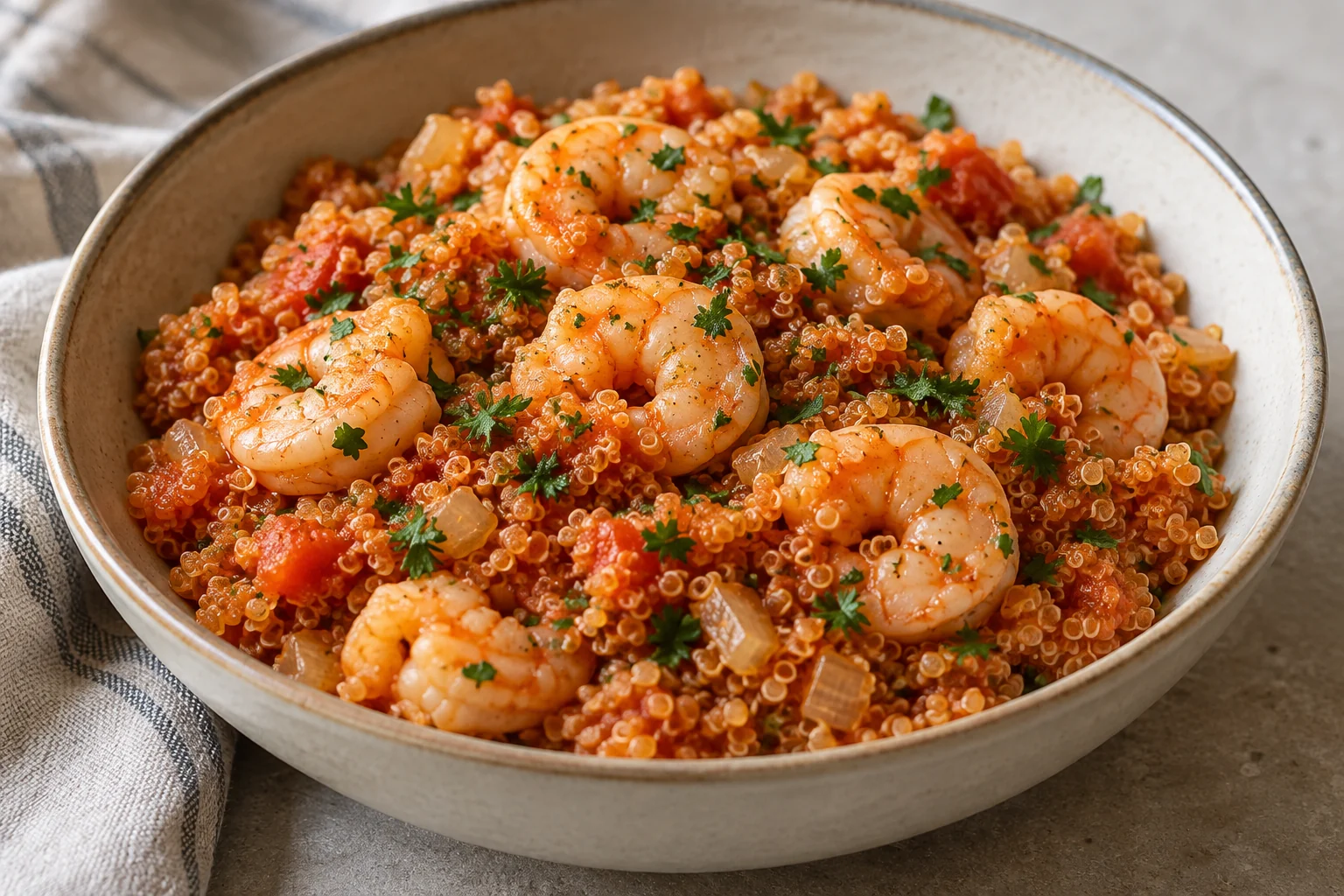
The key to this pot is staging. Quinoa needs a gentle simmer to absorb the tomato liquid, while shrimp need only a brief final cook. Adding both at the beginning would ask the seafood to tolerate the grain cooking time. A covered rest at the end helps the quinoa settle without requiring prolonged stirring that can damage the shrimp and loosen the grains.
Shrimp, tomato & quinoa pot makes 4 servings, with 45 min estimated total time. View the standalone recipe page.
Measure dry quinoa and prepared shrimp
The ingredient list specifies dry quinoa before cooking and edible shrimp after peeling and deveining. Those weights cannot be swapped for cooked quinoa or whole shell-on shrimp without changing the portions and calculations. Rinse quinoa in a fine sieve and drain it well; a coarse colander can lose grains. Thaw frozen shrimp in the refrigerator in a container that catches liquid. Keep them cold while the onion and quinoa cook, then pat them dry so their surface water does not unnecessarily dilute the pot.
Let the tomato contribute its liquid
Crushed tomatoes provide both solids and moisture. The measured plain water is therefore smaller than the liquid quantity you might use for a pot of quinoa cooked alone. Do not add a full separate grain-cooking allowance on top of the tomatoes. Stir the ingredients together before covering so dry grains are not stranded above the liquid line. A wide saucepan gives the shrimp a reasonably even layer later; a narrow deep pot makes that final arrangement more crowded and less consistent.
Hold a gentle covered simmer
Once the mixture simmers, lower the heat enough to maintain quiet cooking rather than a violent boil. The lid helps keep moisture available to the quinoa. Repeatedly lifting it lets steam escape, while vigorous stirring can scrape tender grains into a paste. Check near the end of the stated interval: the grains should be nearly tender before the shrimp enter. If the bottom is catching, reduce the heat promptly. Burned tomato on the base cannot be fixed simply by mixing it through the rest of the pot.
Steam the shrimp only at the finish
Arrange the shrimp over the almost-cooked quinoa and replace the lid. Their size and starting temperature affect how quickly they finish. Inspect several of the largest pieces and use a thermometer where practical to verify the required internal temperature. Opaque flesh is a useful visual cue, but appearance does not replace the full safety check. Stop cooking once the shrimp are ready rather than waiting for them to form very tight rubbery curls. Keep any raw-seafood utensils away from the serving bowl.
Rest, fold and divide the finished pot
The final covered rest gives moisture time to redistribute through the grains. Fold in the lemon juice and parsley gently, lifting from below instead of beating the pot with a spoon. Divide both the quinoa and shrimp evenly into four servings; giving one person nearly all the shrimp would not match the published serving estimate. Spread leftovers into shallow containers for prompt chilling. Seafood and cooked grains should not sit warm for a long serving period, and reheated leftovers need the temperature stated in the card.
Common questions
Can I use precooked shrimp?
The method is written for raw shrimp. Precooked shrimp would need a different final heating stage and may become tough if cooked for the full interval.
Why is the quinoa still firm?
It may need a longer gentle simmer before the seafood is added. Check heat, lid fit and grain tenderness; do not use longer shrimp cooking as the solution.
Technique & food-safety references
These primary references support the technique, safety and storage guidance. The recipe and cooking explanations are original Recipe Pinboard content.