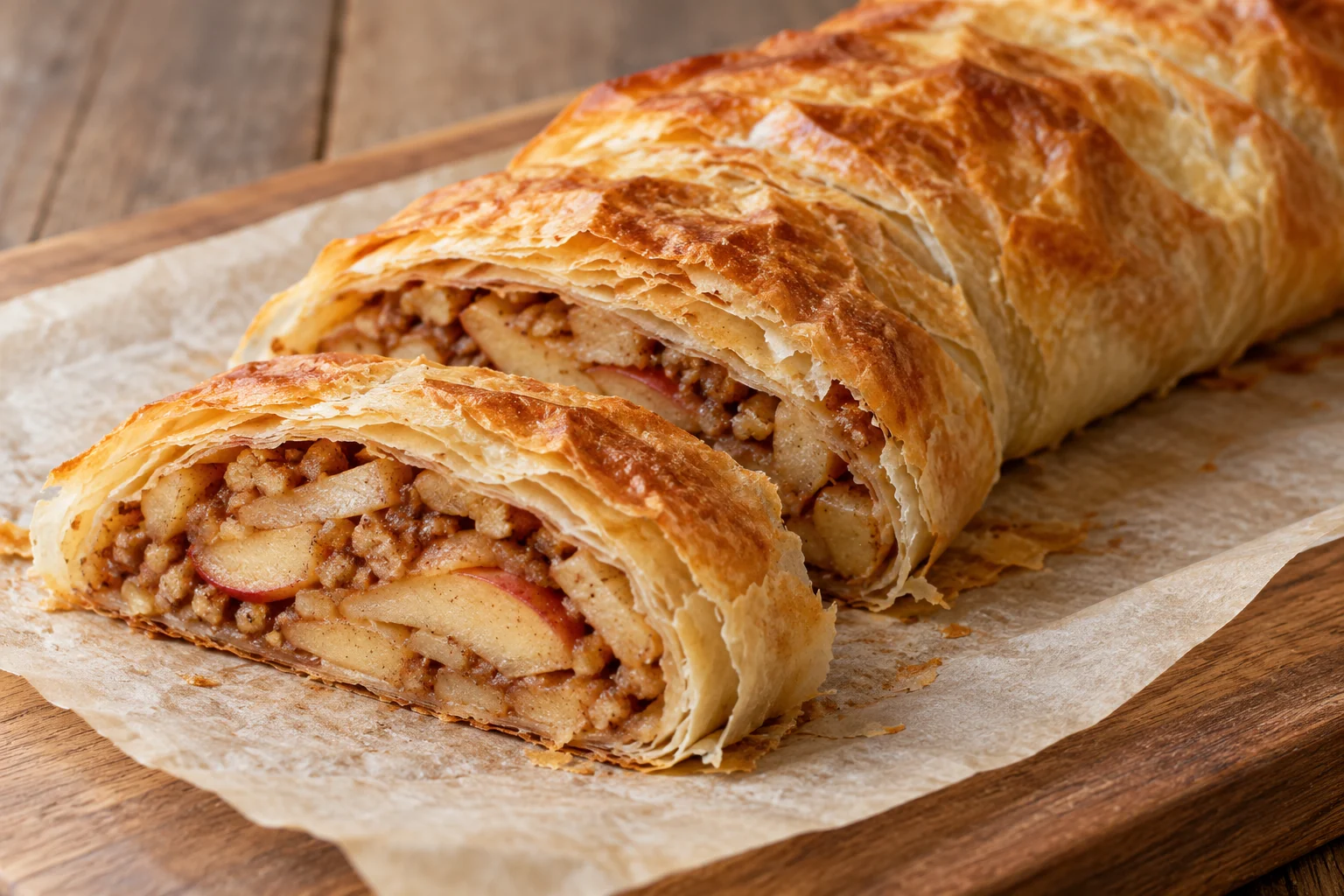
This strudel uses a homemade stretched dough rather than purchased puff pastry. A relaxed dough and a cooled, concentrated filling make the thin sheet easier to handle. Skin-on apples, walnuts and toasted crumbs form the center, with every measured ingredient retained. Allow time for the full dough rest and final cooling; rushing either stage makes the pastry more difficult to shape or slice.
Skin-on apple and walnut strudel makes 10 servings, with 3 hr 30 min estimated total time. View the standalone recipe page.
Knead thoroughly and let the dough relax
Mix the main flour portion with warm water, oil, vinegar and salt, then knead until smooth and elastic. Keep the reserved rolling flour separate. The oil used to coat the resting dough is included in the measured total, so there is no need to grease the bowl again. Cover closely and rest for a full hour. If the dough fights every attempt to roll it, pause and cover it again rather than pulling harder. Bread flour provides the specified flour profile and strength; changing to another flour changes handling.
Reduce apple juices instead of discarding them
Thin slices cook more evenly than large chunks and bend readily inside the roll. Retain the edible skins and all released juice. Cook the filling in a wide skillet so moisture can evaporate until the liquid coats the fruit rather than pooling around it. This concentrates the filling without squeezing out counted ingredients. Spread it in a shallow dish and give it at least thirty minutes to cool. Warm filling can soften the thin dough before it reaches the oven. Toast the measured crumbs separately and let those cool too.
Stretch on a cloth without trimming away dough
Dust a clean smooth cloth with the reserved flour and begin with a rolled rectangle. Slide the backs of your hands under the dough and stretch gently in small movements, working around the sheet. Avoid poking upward with fingertips. The target is a broad thin rectangle through which the cloth is faintly visible. Give thick edges extra attention instead of cutting them off. Small holes can be overlapped during rolling; a few imperfections are less troublesome than tearing the entire sheet by trying to stretch one area too far.
Keep the filling band and roll supported
Drizzle part of the melted butter over the sheet rather than dragging a brush across its fragile surface. Distribute the cooled crumbs, which help manage moisture around the apples. Place the filling in a band near a short edge, leaving a border for folding. Fold the sides inward and use the cloth to lift and roll the dough around the filling. Support the log during transfer to parchment. A gentle curve helps it fit a baking sheet; forcing a sharp bend can split the filled pastry.
Bake through the layers and cool before slicing
Brush with the remaining measured butter and bake until the exterior is golden and the wrapped layers have cooked through. If your oven colors unevenly, rotate the sheet carefully during baking. Leave the strudel on its sheet for thirty minutes afterward: the filling remains hot and loose at first, and immediate slicing can crush the delicate layers. Cut into ten equal portions with a sharp serrated knife and gentle strokes. Refrigerate leftovers within two hours, use within three to four days and reheat to 165°F. Storage will soften the crisp exterior.
Common questions
Why did my stretched dough tear?
Insufficient resting, sharp fingernails or pulling one small area too hard can cause tears. Rest resistant dough, stretch over the backs of your hands and work around the whole sheet. Small holes can be covered by overlapping layers.
Can I pour off the apple liquid to save time?
This recipe retains the juice and reduces it into the filling. Pouring it away discards sugar and other ingredients included in the estimate. Use the wide skillet and allow the scheduled cooking and cooling time.
Technique & food-safety references
These primary references support the technique, safety and storage guidance. The recipe and cooking explanations are original Recipe Pinboard content.


