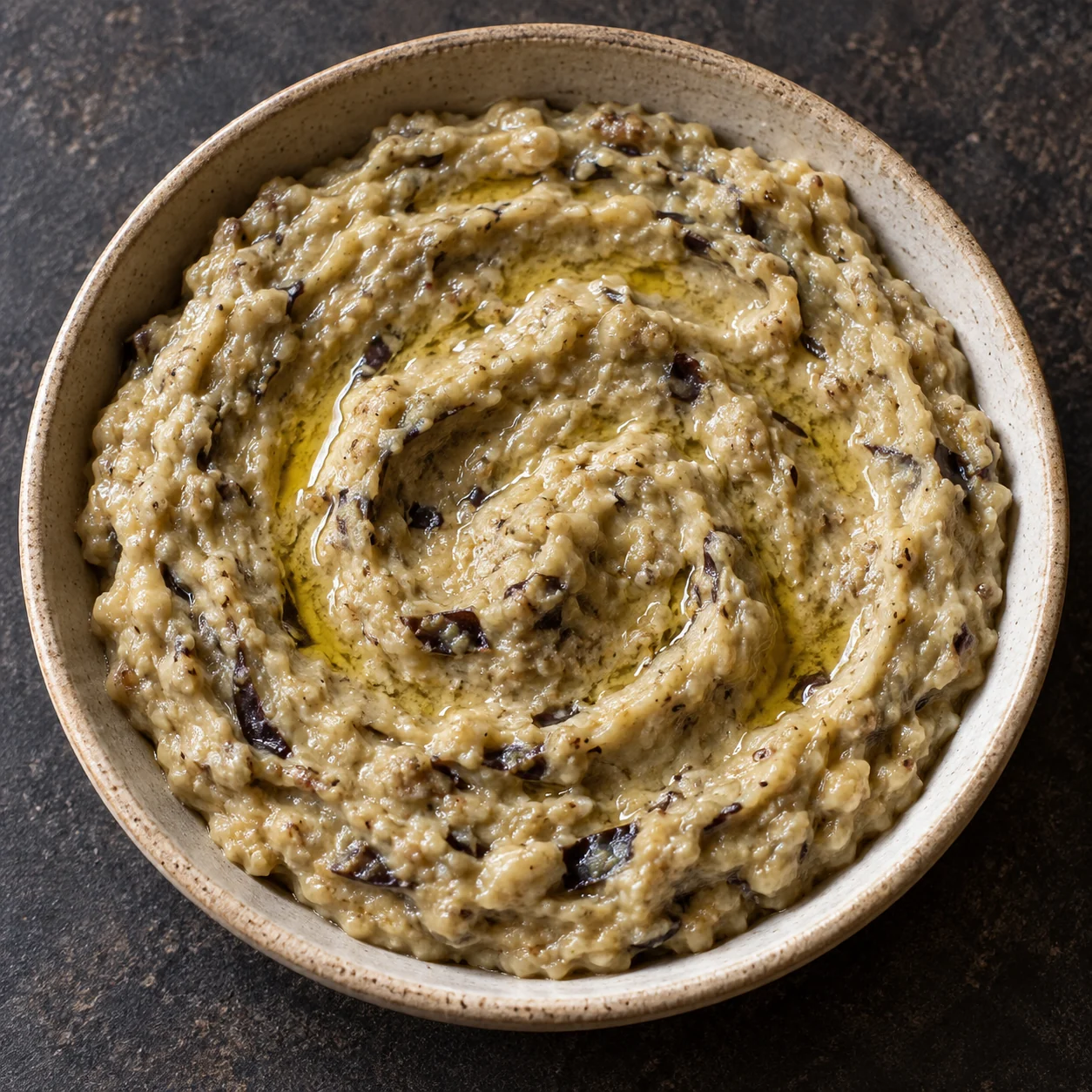
This eggplant spread keeps the roasted skin as well as the soft flesh. That choice gives the finished bowl darker flecks and a more rustic texture than a peeled eggplant dip. Tahini supplies body, lemon sharpens the flavor and cumin adds warmth. The complete card above makes eight portions and allows eighty minutes for preparation, roasting and cooling before blending.
Roasted eggplant & tahini spread makes 8 servings, with 1 hr 20 min estimated total time. View the standalone recipe page.
Weigh the edible eggplant before roasting
Remove the stem, then weigh six hundred grams of raw eggplant with its skin still attached. The nutrition calculation uses that raw edible amount; it does not guess how much raw eggplant produced a cooked scoop. Choose firm fruit with sound skin and rinse it before cutting. Halve lengthwise so each piece has a broad cut face against the tray. If several smaller eggplants make up the weight, their thinner halves may soften earlier than one large globe eggplant. Start checking early, but let the texture determine when roasting ends.
Roast until both flesh and skin yield
Rub the cut faces with half the measured oil and place them face down on a lined rimmed tray. The Mediterranean Dish's oven guidance supports this orientation and a hot oven for thoroughly softened flesh. Here, the skin is deliberately retained, so check it too: a spoon should press through easily without meeting a tough leathery layer. Allow forty to fifty minutes at 425°F / 220°C, adding short increments if necessary. Avoid a broiler or open flame for this version; the goal is tender edible skin rather than a black charred shell intended for removal.
Keep the juices and cool before processing
Let the eggplant stand for ten minutes so handling it is manageable. Chop flesh and skin together into smaller pieces, then scrape everything into the processor, including tray juices. This recipe does not drain the eggplant. Its consistency will therefore reflect the moisture in the particular fruit. Chop any long strips of skin before blending so they do not wrap around the blade or remain as large ribbons. Never pack very hot food into a sealed blending vessel; follow the appliance's instructions and allow more cooling time if required.
Stir the tahini before weighing it
A jar of tahini may separate into thick sesame solids below a layer of oil. Stir the jar thoroughly before weighing sixty grams, or the batch can end up unusually oily or stiff. Add lemon, garlic, cumin, salt and the remaining measured olive oil. Start with short pulses, scrape the sides, then process only until spreadable. Fine skin flecks are expected. A glass-smooth finish is not the target. If the mixture seems loose while warm, let a spoonful cool before deciding it needs a change; tahini contributes more noticeable body as the spread cools.
Serve a measured share and store it promptly
Scrape the processor carefully so the measured oil and sesame paste stay with the batch. Divide the finished spread into eight equal portions by weight if consistent servings matter. The image shows the spread alone; bread, vegetables or other accompaniments would need their own nutrition accounting. Chill leftovers promptly in a shallow covered container, keeping the refrigerator at 40°F / 4°C or below, and use within three to four days. Plain tahini contains sesame. Check prepared tahini products and spice labels rather than treating a vegan or gluten-free tag as an assurance about allergens or shared equipment.
Common questions
Can I peel the eggplant instead?
Peeling creates a different texture and removes some of the ingredient included in this estimate. For the card as written, roast the skin until tender and retain it. A peeled variation needs its own edible-weight accounting.
Why does my spread taste bitter?
Check the tahini separately before combining; sesame pastes vary in bitterness. Scorched skin can also contribute harshness. Use sound eggplant and roast for tenderness, avoiding an intentionally blackened exterior in this skin-on version.
Technique & food-safety references
These primary references support the technique, safety and storage guidance. The recipe and cooking explanations are original Recipe Pinboard content.


