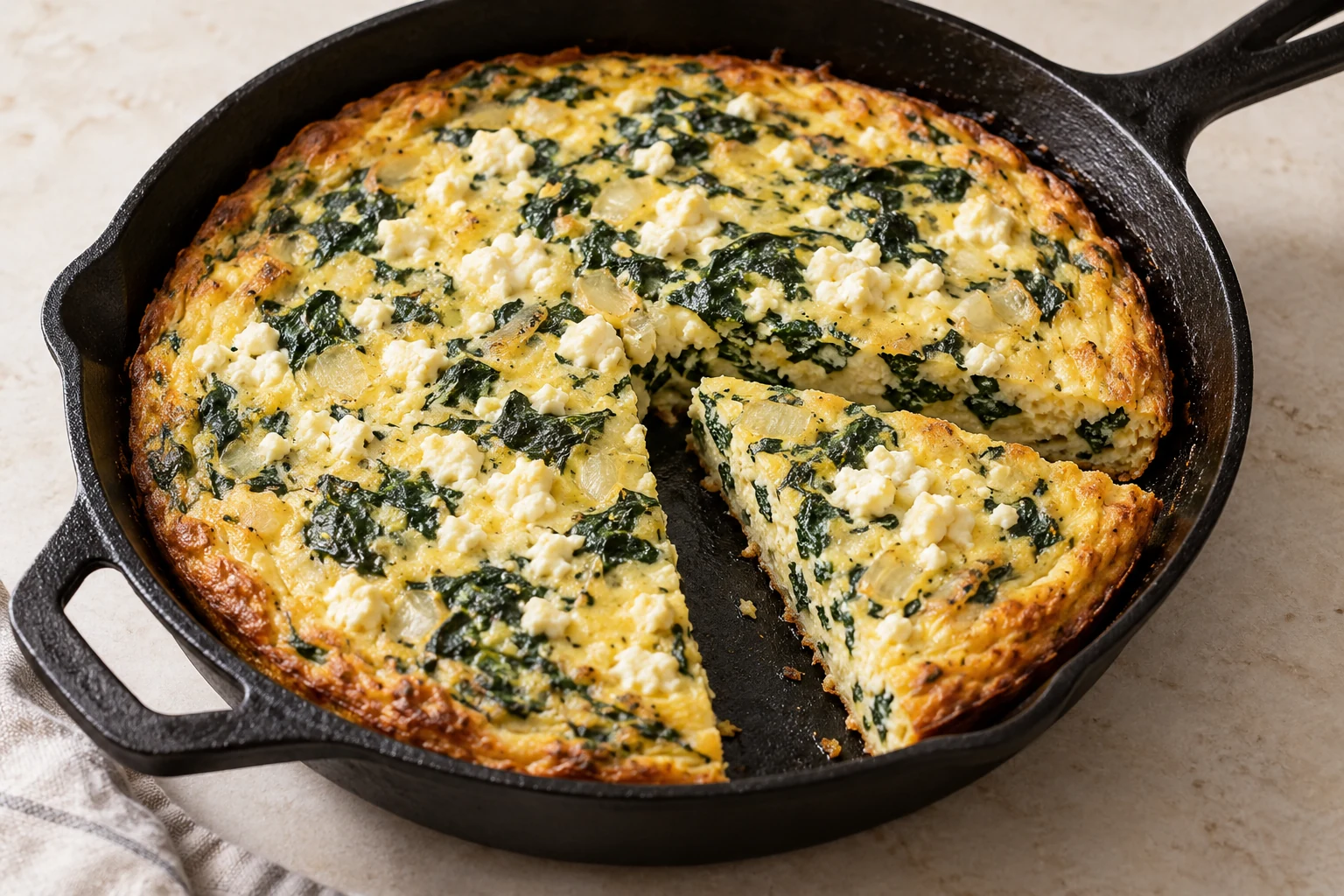
This breakfast skillet is a cohesive whisked-egg bake that slices into portions. Onion and spinach cook first, then the eggs get a short stovetop start and an oven finish. The useful control points are vegetable moisture, a ten-inch oven-safe skillet and an actual center-temperature reading rather than surface color alone.
Spinach & feta breakfast skillet makes 4 servings, with 25 min estimated total time. View the standalone recipe page.
Use the egg weight and the intended pan
The recipe specifies 400 g of shelled eggs, approximately eight large eggs, with 60 g whole milk. Weigh the eggs without shells if following the gram-based quantities closely. Whisk with the measured salt and pepper until yolks and whites are combined; you are making a uniform egg mixture, not trying to whip a tall foam.
Choose a ten-inch skillet explicitly suitable for the 375°F (190°C) oven, including its handle. Diameter affects the depth of the egg layer: a smaller pan makes a deeper center, while a larger one makes thinner edges. Either change affects how useful the ten-to-fifteen-minute oven window will be.
Soften the onion and wilt the spinach
Heat the olive oil and cook the diced onion over medium heat for five minutes. Keep the dice even enough to soften during this brief stage, since a hard onion chunk is noticeable inside a tender slice of egg. Stir occasionally so the onion does not brown heavily in one spot.
Add the baby spinach and stir until wilted. Watch for water collecting underneath the leaves. Let obvious excess moisture evaporate before adding the eggs, rather than pouring the mixture into a small pool. The milk is the measured liquid addition; leftover washing water should not become an accidental second one.
Spread the vegetables before pouring
Distribute the onion and wilted spinach evenly over the skillet base. Once the eggs begin setting, there is less opportunity to move a dense pile of greens without breaking the emerging structure. A level vegetable layer helps each slice contain both spinach and onion.
Pour in the egg mixture, then scatter the crumbled feta across the top. Keep the cheese dispersed instead of depositing it all in the middle. Cook on the stove for two minutes as written. The edges can begin setting, but this stage is not intended to cook the whole skillet through before it enters the oven.
Check the center during the oven finish
Transfer the skillet to the preheated oven and begin checking within the ten-to-fifteen-minute range. Use a thermometer in the central egg mixture, keeping its tip away from the hot pan bottom. The required internal temperature for this egg dish is 160°F (71°C).
The edges will generally set before the middle, so judging only the rim can lead to an underdone center. Conversely, leaving the pan in the oven until every surface is deeply browned can make the edges unnecessarily firm. Stop once the center has safely set rather than treating extra browning as the principal goal.
Remember the handle, rest and portion
Use oven mitts when removing the skillet, and remember that its handle stays hot on the counter or stovetop. Place it on a heat-safe surface and make the hot handle obvious to anyone helping serve. Allow the stated three-minute rest before slicing so the egg bake is easier to lift cleanly.
Refrigerate leftover slices promptly in shallow containers and use within three to four days. Reheat to 165°F, checking the center of a slice rather than just its surface. Warm only the portion you need; repeated heating makes the texture firmer and is unnecessary when the remaining slices can stay chilled.
Common questions
Why is the center watery?
Possible causes include spinach liquid left in the pan or an egg center that has not reached temperature. Wilt the greens first, clear excess moisture and verify 160°F in the center.
Can I judge doneness by the browned edge?
No. The center heats differently from the rim, particularly if the pan size changes. Check the central egg mixture with a thermometer instead of extending baking solely for color.
Technique & food-safety references
These primary references support the technique, safety and storage guidance. The recipe and cooking explanations are original Recipe Pinboard content.