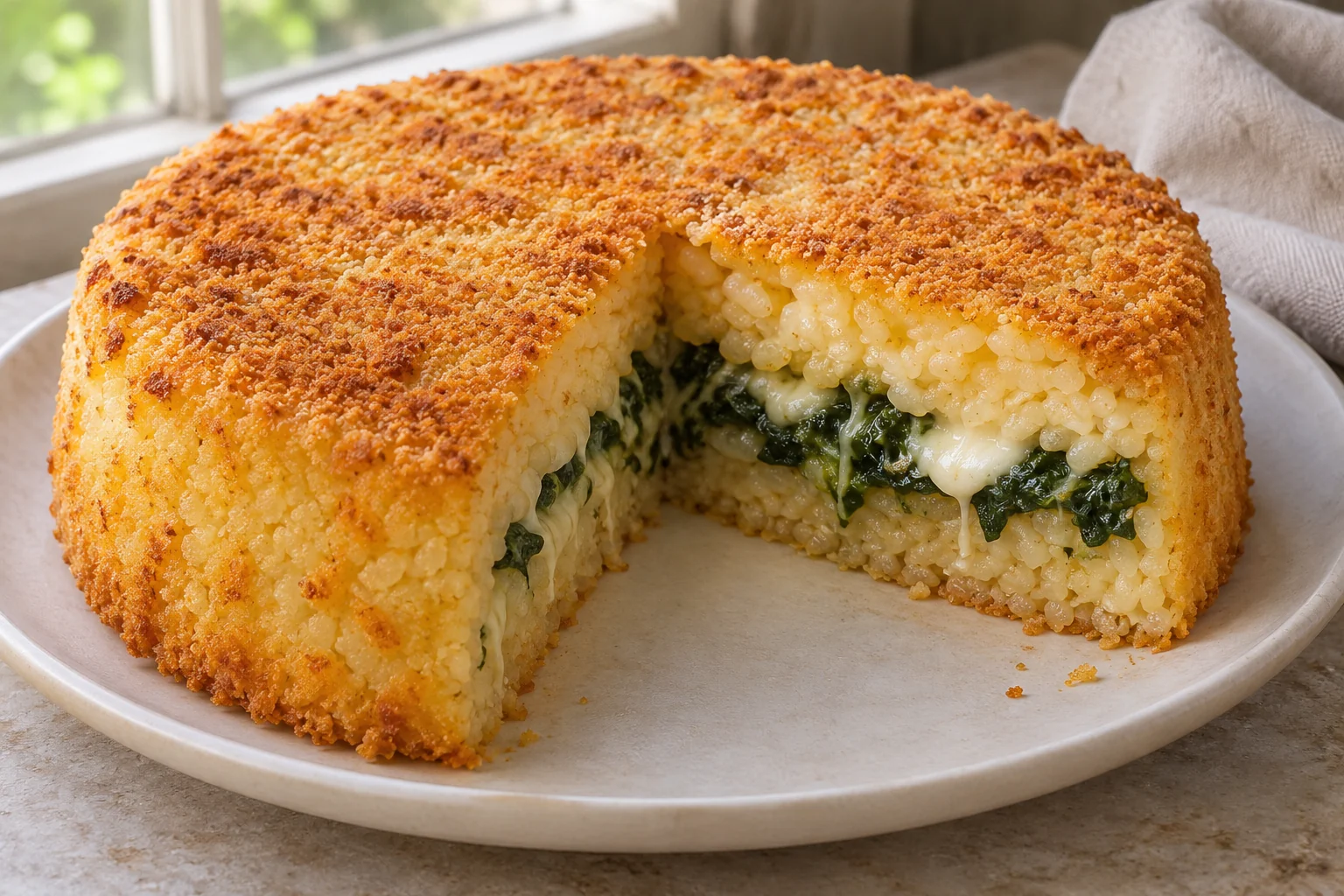
A rice timbale turns a simple grain mixture into a sliceable baked centerpiece. The rice forms an enclosing shell around spinach and cheese, while butter and fine crumbs help the outside release from the pan. Its success depends on three practical details: tender rice, a filling without excess water and a short rest before unmolding. Prepare the pan while the rice becomes lukewarm so assembly can proceed promptly.
Spinach and mozzarella rice timbale makes 6 servings, with 2 hr 20 min estimated total time. View the standalone recipe page.
Cook the rice through before building the mold
Use the specified short-grain rice and measured water in a covered saucepan. Keep the simmer gentle enough that the bottom does not scorch before the top grains soften. The rice should be tender and the water absorbed before its covered rest. Spread it in a shallow dish afterward rather than leaving a deep mound in the warm pot. This brief cooling interval makes it suitable for combining with egg. Continue promptly when it is lukewarm; the process is not an invitation to leave cooked rice on the counter for hours.
Cook moisture out of the spinach
Soften the onion first, then add the washed, chopped spinach and stir as it wilts. Keep cooking until visible loose water mostly evaporates. Do not squeeze away the spinach or pour off a portion of the filling. A wet center can weaken the rice shell and make slices slump. Dice the firm whole-milk mozzarella so it distributes evenly. Fresh cheese floating in brine brings different moisture behavior, so choose the firm type specified on the card and check that it uses vegetarian rennet.
Prepare the pan and press an even shell
Grease the springform pan thoroughly, including the lower corner where its wall meets the base. Tilt it to distribute the crumbs, saving any loose remainder for the surface. Mix egg into the lukewarm rice, then press about two-thirds into the base and partway up the sides. Use the back of a spoon with gentle pressure. The shell needs to be connected, but crushing the grains into a dense paste is unnecessary. Pay attention to the bottom corner, which can become thin when rice is pushed upward.
Enclose the filling and bake on a tray
Spread the spinach inside the rice shell and distribute the mozzarella over it. Keep filling away from the outer edge so the upper and lower rice layers can meet. Cover with the remaining rice and press lightly to close the mold. Add the reserved crumbs and butter dots. Place the springform pan on a rimmed tray before baking; this catches any small leak and makes the hot pan easier to move. Bake until the surface is golden and a thermometer in the center reaches 165°F.
Rest before releasing the ring
Wait fifteen minutes before loosening the edge and opening the springform ring. Removing it immediately can pull apart rice that has not yet settled. Slide a thin utensil around any sticking area rather than tugging the ring upward. Cut six wedges with a sharp knife and lift them with a broad spatula. Cool leftover portions quickly, ideally within one hour, and refrigerate at 40°F or below. Use within twenty-four hours and reheat only once to 165°F throughout. Prompt cooling matters even though the rice has already been baked.
Common questions
Why did the timbale fall apart when unmolded?
Possible causes include an uneven rice shell, watery spinach or removing the ring too soon. Press a connected shell, cook off loose vegetable water and allow the full resting interval before releasing the sides.
Can I assemble it with cold leftover rice?
The card starts with freshly cooked rice and a brief controlled cooling interval. Leftover rice adds storage history and can be difficult to bind evenly. Follow the fresh-rice method rather than extending the life of an uncertain leftover batch.
Technique & food-safety references
These primary references support the technique, safety and storage guidance. The recipe and cooking explanations are original Recipe Pinboard content.


