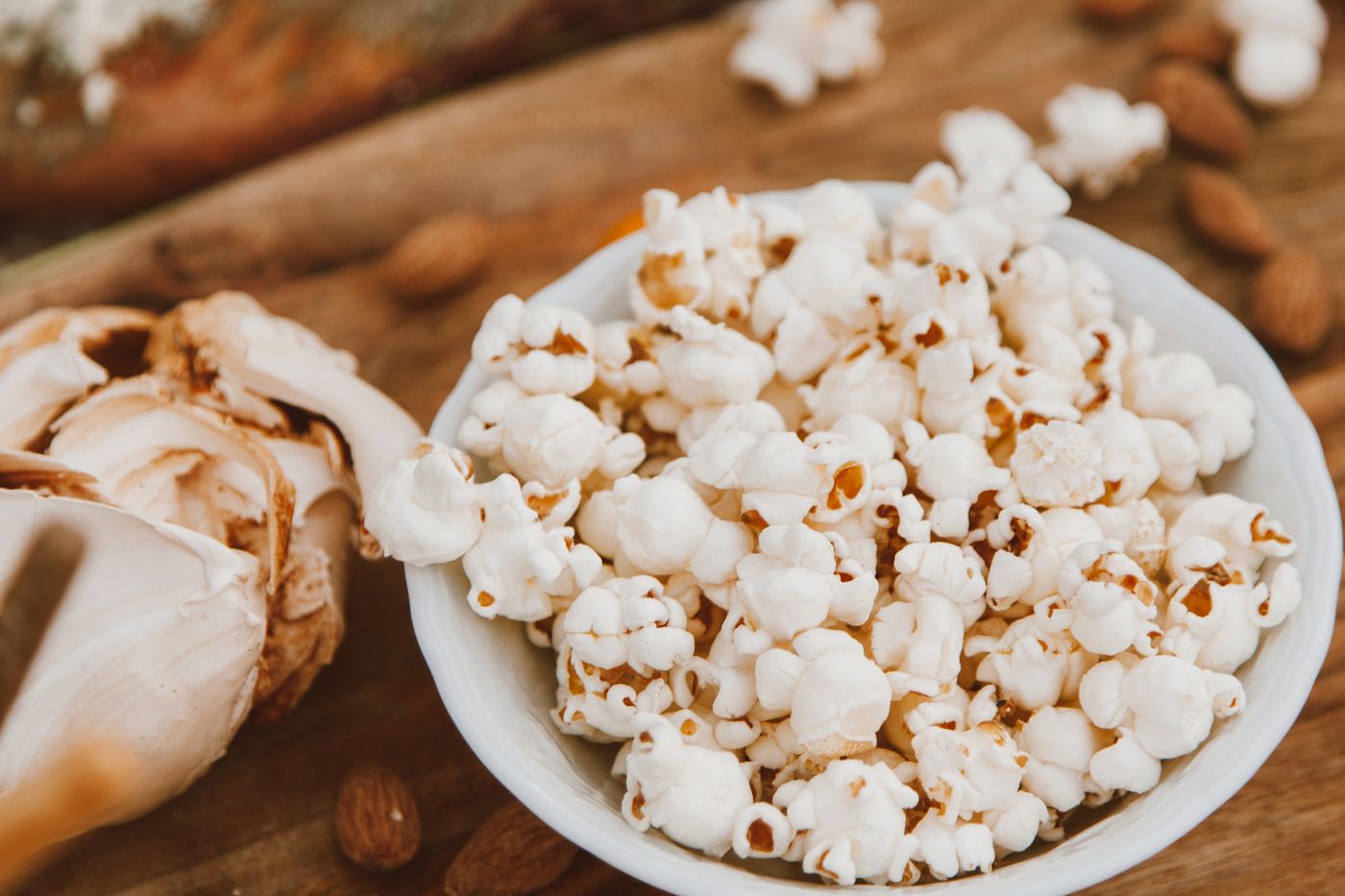
Stovetop buttered popcorn is quick, but the last moments deserve your full attention. This ten-minute recipe makes four servings from 100 g popcorn kernels, 2 tbsp neutral oil, 25 g unsalted butter and ¼ tsp fine salt. The oil handles the hot popping stage, while butter is added afterward for flavor. The most useful signal is the sound of the kernels slowing down, rather than a rigid number of minutes on the burner.
Stovetop buttered popcorn makes 4 servings, with 10 min estimated total time. View the standalone recipe page.
Choose a roomy pot and measure the ingredients
Use a large, heavy pot with a lid and enough empty space for the kernels to expand. The unpopped kernels should fit in an even layer across the bottom rather than a deep mound. A pot can look oversized at the beginning and still be appropriate once popping starts. Have oven mitts and a large serving bowl beside the stove.
Measure all the kernels first, then select three from that amount for the heat test. Those test kernels are part of the 100 g, not extra ingredients. Keep the butter separate from the neutral oil. The Popcorn Board recommends oil for popping and butter afterward because butter is prone to burning at the high heat needed for the kernels.
Heat the oil with three test kernels
Put the 2 tbsp oil and the three kernels into the pot over medium-high heat. Stay nearby and wait for them to pop. This provides a practical signal that the pan has reached popping conditions without relying on the burner setting alone. Different pots and stoves reach that point at different speeds.
If the oil begins smoking, the heat is excessive; take the pot off the burner and let it settle rather than adding the rest of the kernels to smoking oil. Do not splash water into hot oil. A heavy pan helps distribute heat, but it can still overheat if left unattended while you prepare other parts of the snack.
Add the remaining kernels and shake carefully
When the test kernels pop, add the remaining kernels in an even layer and cover. Use oven mitts to hold the pot and lid securely when shaking occasionally. The aim is to redistribute kernels across the hot base, not to toss the entire pot violently or open the lid repeatedly while kernels are flying.
Listen as the popping increases, then begins to slow. Remove the pot from the heat when the gap reaches about two seconds between pops. Waiting for every last kernel risks scorching the large amount of corn that has already popped. The recipe’s ten-minute estimate includes preparation; it is not an instruction to keep the pot over heat for ten full minutes.
Let popping stop before opening and buttering
Keep the pot covered off the burner until popping stops, then lift the lid away from your face so escaping steam travels away from you. Transfer the popcorn to the waiting bowl and leave any unpopped kernels behind. Check for remaining hard kernels before eating; do not assume a quiet pot means every kernel has opened.
Melt the 25 g butter separately and drizzle it over the popcorn while tossing. A few small passes distribute it more evenly than pouring the entire amount into one spot. Add the ¼ tsp fine salt and toss again. Butter-coated areas catch the salt, while large pools at the bottom of the bowl leave some pieces wet and others unseasoned.
Serve promptly and understand what storage changes
Divide the finished batch among four people and eat it while the texture is fresh. Do not cover a still-steaming bowl tightly for later; trapped moisture makes the popcorn softer. If saving a small amount, let the steam escape before placing it in a clean airtight container and follow a short quality window rather than expecting next-day popcorn to match a fresh batch.
Store unused dry kernels in an airtight container in a cool cupboard. Their internal moisture helps them pop, so leaving the bag open can reduce performance over time. A batch with many unpopped kernels may reflect old, dried kernels or uneven heating. Extending cooking until the popped corn burns is not an effective fix for either problem.
Common questions
Can I pop the kernels in butter instead of oil?
Use the listed neutral oil for the hot cooking stage and add the melted butter afterward. Ordinary butter can scorch before the popping is complete. Changing the cooking fat would alter the method and is unnecessary for getting butter flavor on the finished popcorn.
Why is some popcorn buttery while the rest tastes plain?
The butter was probably poured in one place or the bowl was too full to toss effectively. Drizzle the measured butter in several passes while turning the popcorn, then distribute the fine salt the same way. A larger mixing bowl gives you more room without changing quantities.
Technique & food-safety references
These primary references support the technique, safety and storage guidance. The recipe and cooking explanations are original Recipe Pinboard content.