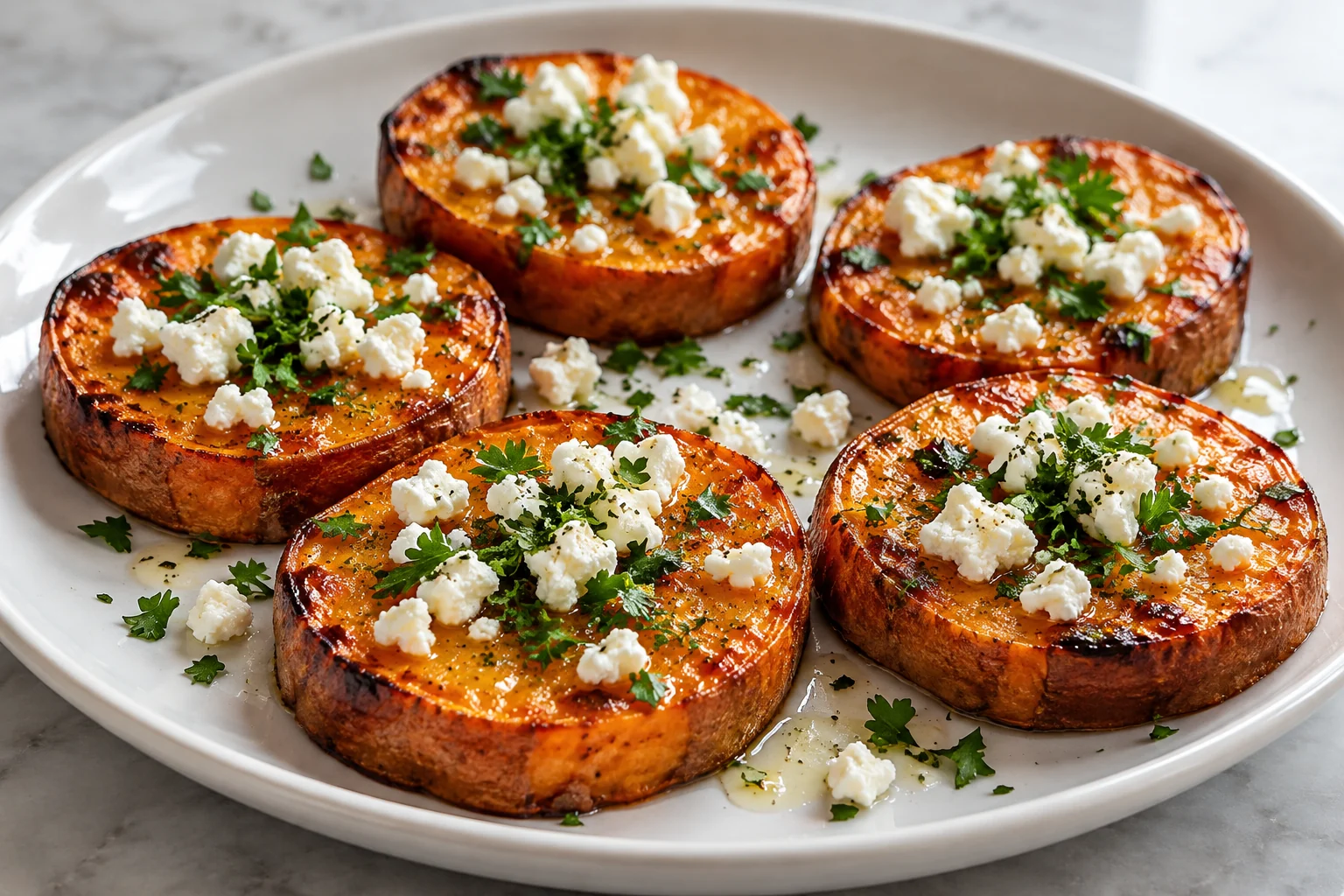
These rounds work as a small appetizer because each piece has a tender sweet-potato base and a modest feta topping. The vegetable must finish roasting before the cheese is added. The complete card above gives the weights and twelve-piece yield; the guidance below focuses on slicing, pan space and turning, the points most likely to produce hard centers or broken rounds.
Baked sweet potato & feta rounds makes 4 servings, with 50 min estimated total time. View the standalone recipe page.
Choose thickness before appearance
Scrub the sweet potatoes and remove damaged ends before weighing the edible amount. Aim for rounds of similar thickness even when their diameters differ. Thickness determines how quickly heat reaches the center; a wide thin slice may finish before a small thick one. Use all the stated edible potato and divide uneven pieces fairly among servings. The recipe yields twelve rounds, with three allocated to each portion. Do not discard extra edible pieces and still assume the calculation describes what was served.
Spread the measured oil across both sides
Toss or brush the rounds so the fifteen grams of oil coat their surfaces lightly. Pooling all the oil under a few slices leaves others dry and makes portions uneven. Arrange the rounds in one layer with small gaps. Overlapping slices trap steam and prevent the exposed surfaces from browning consistently. Use a large enough sheet, or two if needed, while watching each tray because oven positions can produce different degrees of color.
Turn only after the base has firmed
Roast through the first interval before trying to move the rounds. Slide a thin wide spatula underneath rather than pinching the soft center with tongs. If a slice resists lifting, check whether the edge has browned and loosen it carefully. The aim is a tender interior with some roasted color, not a crisp potato chip. After turning, use the longer end of the remaining roasting time when the centers still feel firm under a fork.
Add feta after the potato is tender
Test a thick round before topping: a fork should enter easily. Divide the crumbled feta across all twelve pieces, then return them briefly to the oven. Feta softens and warms but does not form long melted strands like mozzarella. Waiting for that kind of melt can dry the potato and overbrown the cheese. Keep the parsley and lemon mixture for the finish, where it can remain green and provide moisture without making the roasting surface wet.
Account for loose topping and leftovers
Some feta may fall onto the sheet. Lift the rounds with a spatula and distribute edible loose crumbs among the servings, keeping the four-portion calculation meaningful. Serve promptly while the base is warm. Refrigerate leftovers in shallow containers within two hours; use within three to four days and reheat to the card’s safe leftover temperature. The vegetarian tag depends on a suitable rennet source, so check the feta label rather than treating every cheese product as equivalent.
Common questions
Why are the centers still hard?
The slices may be too thick, crowded or uneven. Continue roasting before adding feta, and test the thickest piece. A fixed timer is a starting range; it cannot compensate for substantially different slice thickness.
Can I make tiny bite-size rounds?
Smaller diameter is fine, but changing thickness changes cooking time and changing the number of pieces changes the serving description. Keep the full edible weight and divide the complete batch into four equal portions if you alter the shape.
Technique & food-safety references
These primary references support the technique, safety and storage guidance. The recipe and cooking explanations are original Recipe Pinboard content.


