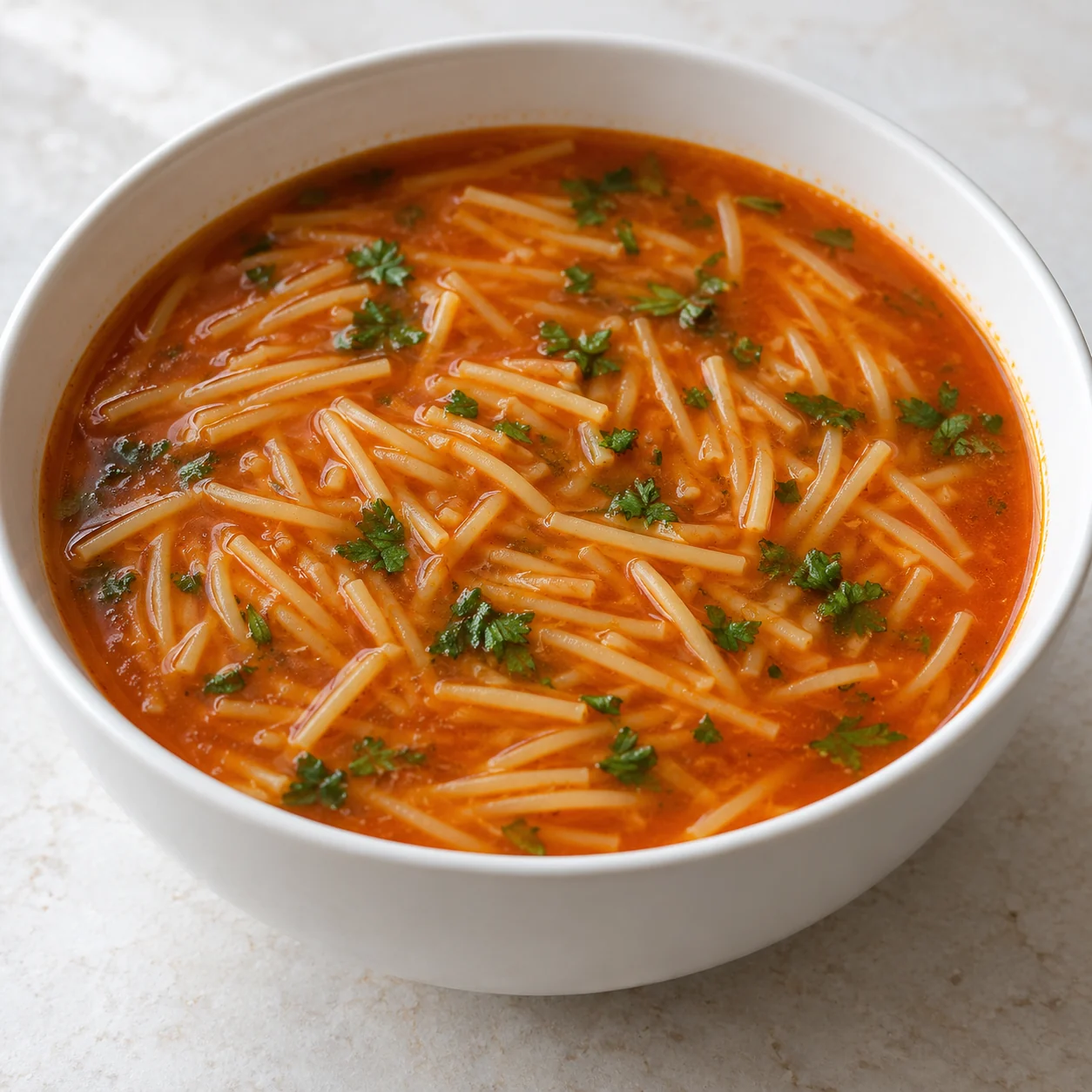
This soup begins with dry wheat noodles stirred through oil until lightly golden. A smooth tomato mixture then stops the toasting stage and becomes the broth in which the noodles finish cooking. The full card makes four bowls, with all cooking liquid retained. Break the pasta and blend the tomatoes before heating the pan: once thin noodles begin browning, there is little spare time to leave them unattended while preparing another ingredient.
Toasted vermicelli & tomato soup makes 4 servings, with 40 min estimated total time. View the standalone recipe page.
Choose wheat noodles and break them evenly
The card uses enriched wheat vermicelli or angel hair, not rice vermicelli. Similar names on different packages do not imply the same ingredient or cooking behavior. Break long strands into short pieces before measuring them into the pan so they can be stirred and later eaten with a spoon. Aim for roughly comparable lengths rather than a mixture of powdery fragments and long spaghetti strands. Check that the chosen pasta contains no egg or other animal ingredient if relying on the vegan tag. Wheat remains present regardless of the short shape.
Blend the broth base before starting the toast
Blend tomatoes, onion and garlic with the initial measured water until smooth. Keep the entire puree; this version does not strain away skins or solids. Scrape the blender so the measured vegetables reach the saucepan rather than staying behind in thick residue. The remaining water goes in later. Having both quantities organized avoids accidentally adding the full amount before the short tomato-cooking stage. The tomato paste supplies concentration without a stock cube, so do not assume additional broth seasoning is already part of the formula.
Stir continuously as the pasta changes color
Warm the oil over moderate heat and add the dry pieces. Move them around the base so those touching the hotter center trade places with those near the edge. Look for an even light-golden color rather than a few very dark strands among pale ones. Thin pasta can progress quickly from toasted to bitter. Lower the heat if it colors before you can redistribute it. The noodles are not being cooked tender at this point; the dry stage adds color, while the later liquid stage hydrates their centers.
Add puree carefully and finish with a simmer
Keep your face back when the wet puree meets the hot oil and noodles. Stir in the paste and seasonings, then complete the short tomato stage before adding the remaining water. Once the soup returns to a gentle simmer, stir occasionally so strands do not settle into a sticky layer against the bottom. Begin checking tenderness toward the early end of the range, especially with very thin angel hair. A hard boil is unnecessary and can reduce the broth faster than intended while the noodles become overly soft.
Serve the broth and noodles together
Stir in the measured cilantro and portion the entire soup among four bowls. Ladle in rounds so early servings do not receive mainly liquid while the final bowl gets a heap of noodles. Serve promptly because pasta continues absorbing broth as it stands. Leftovers will be thicker even when the original soup had a generous liquid level. Chill them promptly in suitable containers and reheat thoroughly. The estimate includes all dry pasta nutrients because this recipe does not discard its cooking liquid, unlike a boiled-and-drained pasta dish.
Common questions
Why does my soup taste bitter?
The dry noodles may have browned too far before the puree was added. Use moderate heat, keep them moving and stop at light gold; a dark toasted color is not required for this preparation.
Can I use a thicker pasta shape?
A thicker shape needs a different hydration time and may change the broth balance. Follow the specified thin wheat noodles for the stated schedule rather than assuming elbows or large shells will finish in the same interval.
Technique & food-safety references
These primary references support the technique, safety and storage guidance. The recipe and cooking explanations are original Recipe Pinboard content.


