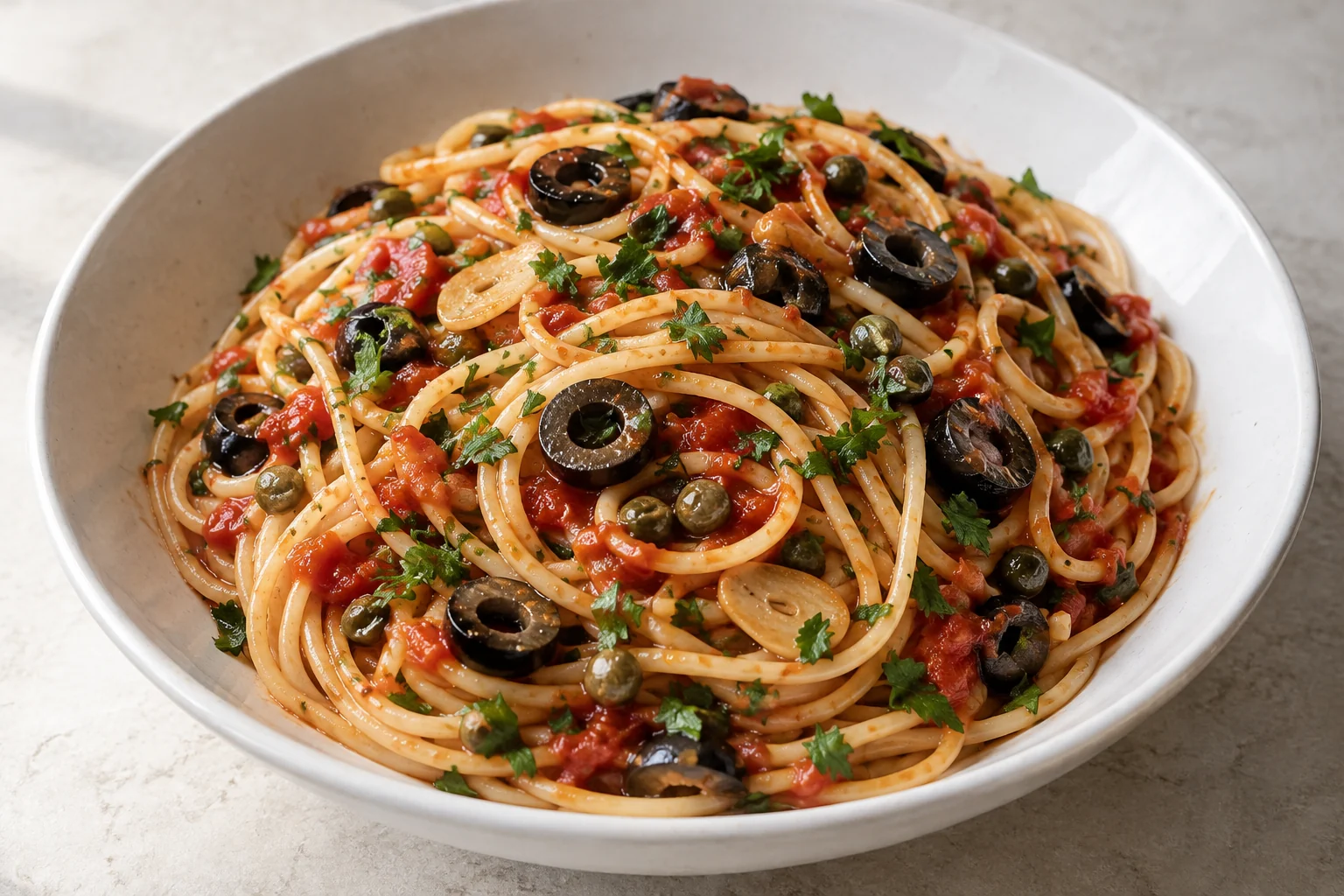
Olives and capers give this tomato sauce a briny flavor without requiring cheese or anchovies. The central task is reducing the crushed tomatoes enough that they coat the spaghetti rather than collecting as a watery puddle beneath it. Reserve a little pasta water for the final toss, but treat it as an adjustment to consistency, not a liquid that must all be added.
Tomato, olive & caper spaghetti makes 4 servings, with 35 min estimated total time. View the standalone recipe page.
Prepare the brined ingredients first
Drain the black olives and weigh the edible pitted pieces. Rinse and drain the capers before weighing the recipe amount. Different jars vary in saltiness and texture, so the fixed salt quantity is modest and the panel does not claim a reliable sodium value. Check labels for additions relevant to your dietary needs. Chop or slice the ingredients before the garlic begins cooking; pausing to find a jar while thin garlic slices sit in hot oil can turn a fragrant beginning into a bitter one.
Warm the garlic without browning it deeply
Put the oil and sliced garlic in the skillet over medium-low heat. The aim is to flavor the oil while the garlic becomes fragrant, not to produce crunchy fried garlic. Thin slices can progress from pale to dark quickly. Add the cayenne briefly, then the wet tomatoes to slow that frying stage. If the garlic has already turned black, restarting this small step gives a better result than trying to cover the bitterness with sugar, which is not part of this recipe.
Reduce the tomato sauce before the pasta arrives
Simmer the sauce uncovered so moisture can escape. Stir across the bottom occasionally and keep the heat low enough to avoid scorching at the edges. A spoon drawn through the sauce should leave a brief trail; it should still flow back together rather than sit as a dry paste. A very wide skillet loses water faster than a small saucepan, so the clock alone cannot determine the finish. Begin the pasta with enough time to bring it to the sauce near the end of this reduction.
Reserve water and toss in small additions
Cook the spaghetti in unsalted water as specified, using the package directions as a starting point for checking tenderness. Before draining, set aside the measured amount of cooking water. Toss the pasta with the reduced sauce over low heat and add only enough reserved water to help it move and coat evenly. Pouring in the whole reserve at once can undo the reduction. The nutrition estimate conservatively counts the full dry pasta input and does not deduct starch that may have left with the discarded cooking water.
Finish with parsley and distribute the solids
Fold in chopped parsley at the end so it stays distinct from the cooked tomato base. When portioning, divide the olives and capers along with the spaghetti instead of leaving most of them in the pan for the last bowl. There is no hidden cheese garnish, bread portion or animal-based sauce in the card. If you add those at the table, they are separate foods. Store leftover pasta promptly in shallow containers and reheat thoroughly; add a little measured water to a separate reheated portion only if needed.
Common questions
Is this the same as a traditional anchovy sauce?
No. This original version deliberately omits anchovies and uses the listed tomato, olive and caper ingredients. Its Vegan screen depends on the complete product labels.
Why does the sauce slide off?
It may be too watery or the pasta may not have been tossed with it over heat. Reduce the sauce first and add reserved water gradually.
Technique & food-safety references
These primary references support the technique, safety and storage guidance. The recipe and cooking explanations are original Recipe Pinboard content.