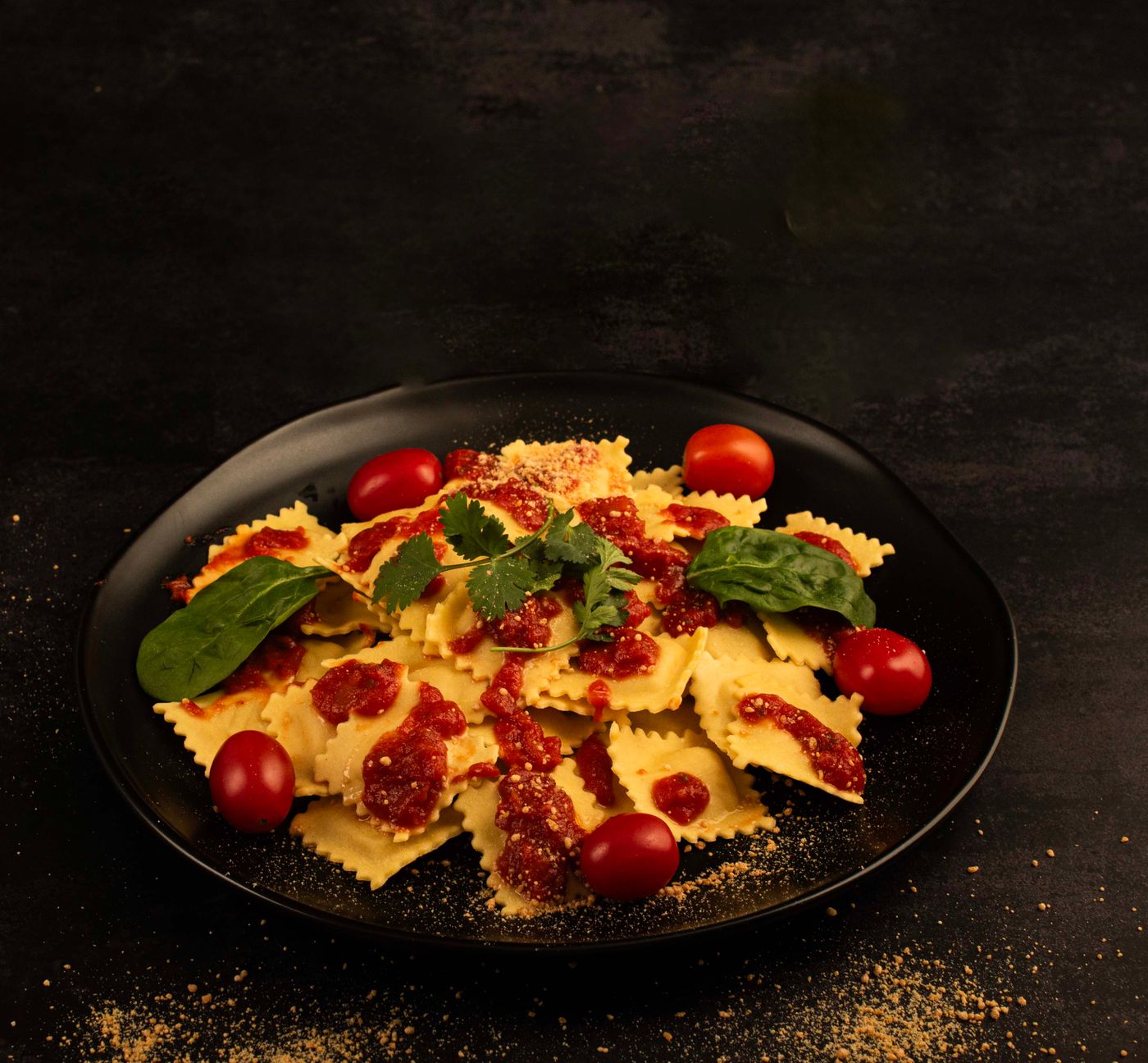
Crushed tomatoes and whole cherry tomatoes do different jobs in this sauce. The can provides a coating from the start, while the fresh tomatoes soften during a short simmer and retain some shape. Refrigerated cheese ravioli and baby spinach join at the end. The recipe serves four from 600 g pasta, so a wide saucepan and a gentle hand help the finished dish stay intact.
Tomato & spinach ravioli makes 4 servings, with 25 min estimated total time. View the standalone recipe page.
Prepare the sauce before the ravioli needs attention
Have the two garlic cloves minced and the 400 g can of crushed tomatoes open. Wash the 200 g cherry tomatoes and remove any stems. They are used whole in this card, unlike a sauce that specifies halves, so the simmer needs enough time to soften their centers and skins.
Check the ravioli packet before you begin. Its cooking time determines when to start the pasta after the sauce is underway. Keep the ravioli refrigerated until then. Measure the 120 g spinach and 40 g Parmesan now, avoiding a last-minute pause while the filled pasta waits in hot water.
Let the two tomatoes become one spoonable sauce
Warm the two tablespoons of olive oil in a wide saucepan and stir the garlic for thirty seconds. It should not sit unattended in hot oil. Add both tomato forms with the measured salt and pepper, and simmer for twelve to fifteen minutes.
Stir occasionally, moving along the bottom so thicker crushed tomato does not catch. The cherry tomatoes should soften, giving way more easily when pressed with a spoon. Press cautiously if checking one: hot juice can escape from a taut skin. There is no need to puree the sauce or crush every tomato into a smooth mixture.
Cook the ravioli gently and keep some water
Use gently boiling salted water and follow the refrigerated ravioli's package directions until the filling is steaming hot, including any manufacturer temperature guidance. Filled pasta benefits from room to move without being battered by a vigorous boil. Floating is not a universal substitute for the packet's doneness instructions.
Reserve the specified 100 ml cooking water before transferring the ravioli. You may need only a little of it. Keep a slotted spoon ready so the parcels can be lifted out rather than poured into a colander, reducing the chance of tearing seams or compressing the pasta under its own weight.
Wilt spinach before introducing delicate pasta
Stir the baby spinach into the finished tomato sauce until just wilted. If the leaves are not labeled ready to eat, wash and drain them first. Removing excess rinse water keeps the final consistency under your control rather than unexpectedly thinning the tomatoes.
Lift the ravioli into the pan and fold through with broad, slow movements. Add a small amount of reserved water if the sauce is too thick to coat them. Stop when the parcels are covered; repeated stirring can release filling and turn the intended tomato coating into a broken-pasta mixture.
Finish the bowls and cool leftovers promptly
Divide among four bowls and sprinkle the Parmesan over the portions. Include the whole softened tomatoes and spinach from the bottom of the pan so each serving gets the same mix of components. Serve while the pasta is hot and the sauce still moves readily around it.
Refrigerate leftovers within two hours, or one hour above 90°F, in shallow covered containers. Use within three to four days and reheat to 165°F, with a little water if necessary. Stir carefully during reheating; a stored raviolo may be more fragile than a freshly cooked one, and extra simmering will not restore its original firmness.
Common questions
Should I halve the cherry tomatoes?
The current card uses them whole and simmers them until softened. Follow that preparation here; halved tomatoes would release their juice sooner and give a different texture.
Why is ricotta leaking into the sauce?
The ravioli may have split during boiling or rough handling. Use a gentle boil, follow the package timing, lift with a slotted spoon and fold only enough to coat.
Technique & food-safety references
These primary references support the technique, safety and storage guidance. The recipe and cooking explanations are original Recipe Pinboard content.