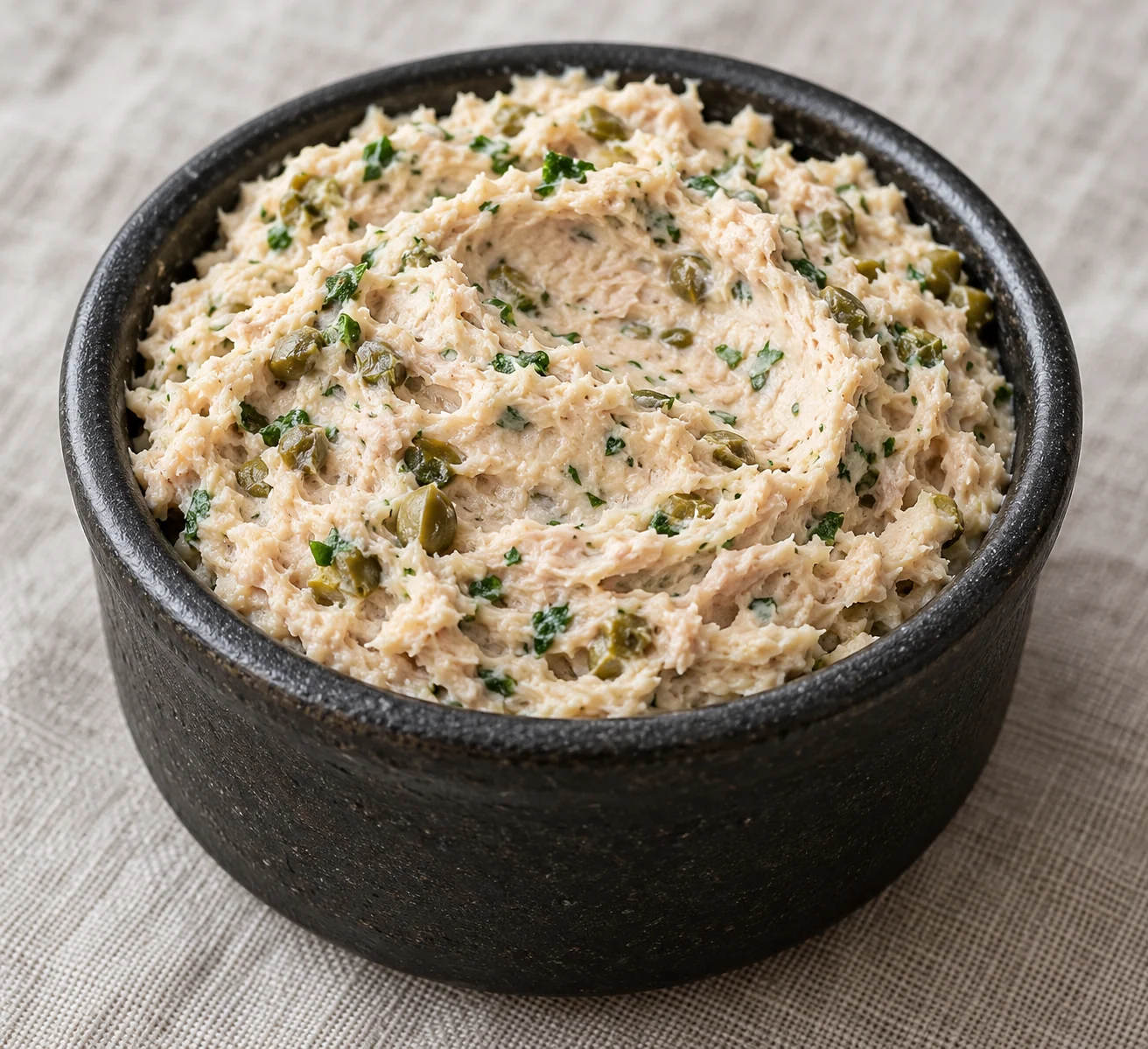
Tuna butter becomes spreadable through a different process from a mayonnaise salad. Soft butter binds finely broken fish, then firms again in the refrigerator. The capers supply small salty bites and lemon lightens the flavor without turning the mixture into a loose dip. This version uses drained light tuna packed in water, measured after draining, and is designed to be served in modest portions after chilling.
Tuna & caper butter spread makes 8 servings, with 3 hr estimated total time. View the standalone recipe page.
Weigh the drained fish, not the can
The printed can weight includes packing liquid and is not the amount of fish required here. Drain the tuna, break apart compacted pieces and weigh the solids before starting. Keep them refrigerated while the butter softens. Water-packed light tuna matches the retained nutrition reference; oil-packed fish brings a different amount of retained fat even when drained. Do not pour discarded packing water into the processor to loosen the mixture. That would change both texture and the intended relationship between tuna and butter.
Soften butter without melting its structure
Cube the butter to make its warming more even and allow about thirty minutes, adjusting for the room. It should yield to a finger or spoon while remaining an opaque solid. A glossy puddle is too warm for this method and can produce a greasy spread that separates before chilling. Beat the butter first so the fish does not hide hard lumps. If the kitchen is unusually cold, allow extra softening time rather than forcing the processor to grind cold cubes against delicate fish.
Pulse to control texture and temperature
Add the tuna, lemon and pepper in the order in the card, using short pulses and frequent scraping. Stop when large flakes and butter pieces have disappeared but a little fish texture remains. A long continuous run warms the motor bowl and can melt the butter around its edge. This is a small batch, so a very large processor may leave ingredients stranded below its blade line. Scraping deliberately is more useful than increasing speed. Keep the complete measured mixture, including what clings to the spatula.
Fold in the capers and allow a real chill
Chop capers so their flavor is distributed instead of concentrated in one oversized bite. Folding them in with the parsley preserves small visible flecks. Spread the mixture into a shallow container, smooth it and cover it before refrigerating. Two hours is part of the recipe, not an optional delay: the butter needs time to set and the flavors to distribute. The finished spread should hold spoon marks. It will not have the loose texture of a creamy dip straight from a warm processor.
Soften only the portion you are serving
Scoop out the amount needed and leave the rest cold. Ten to fifteen minutes at room temperature generally makes a small portion easier to spread without requiring the whole container to sit through a meal. Count that time toward the cumulative room-temperature limit. Butter is not a protective seal that makes fish safe in a cupboard. Use the refrigerated spread within two days, keep utensils clean and avoid returning used serving portions to the main container. Bread or crackers are separate foods outside this recipe's estimate.
Common questions
Why are there pale hard pieces in the spread?
They are likely butter that was still cold when blended. Let the affected portion soften briefly under controlled conditions, then mash or pulse just enough to remove the lumps. Do not melt the whole batch in a microwave; alternating melted edges and cold centers makes an even texture harder to recover.
Can I use oil-packed tuna instead?
That would be a different formulation. This recipe specifies drained water-packed light tuna so the fish weight and nutrient reference agree. If choosing another product, account for its label and retained oil separately rather than assuming that draining removes all additional fat. No allergen-safe claim is implied by the gluten-free ingredient screen.
Technique & food-safety references
These primary references support the technique, safety and storage guidance. The recipe and cooking explanations are original Recipe Pinboard content.


