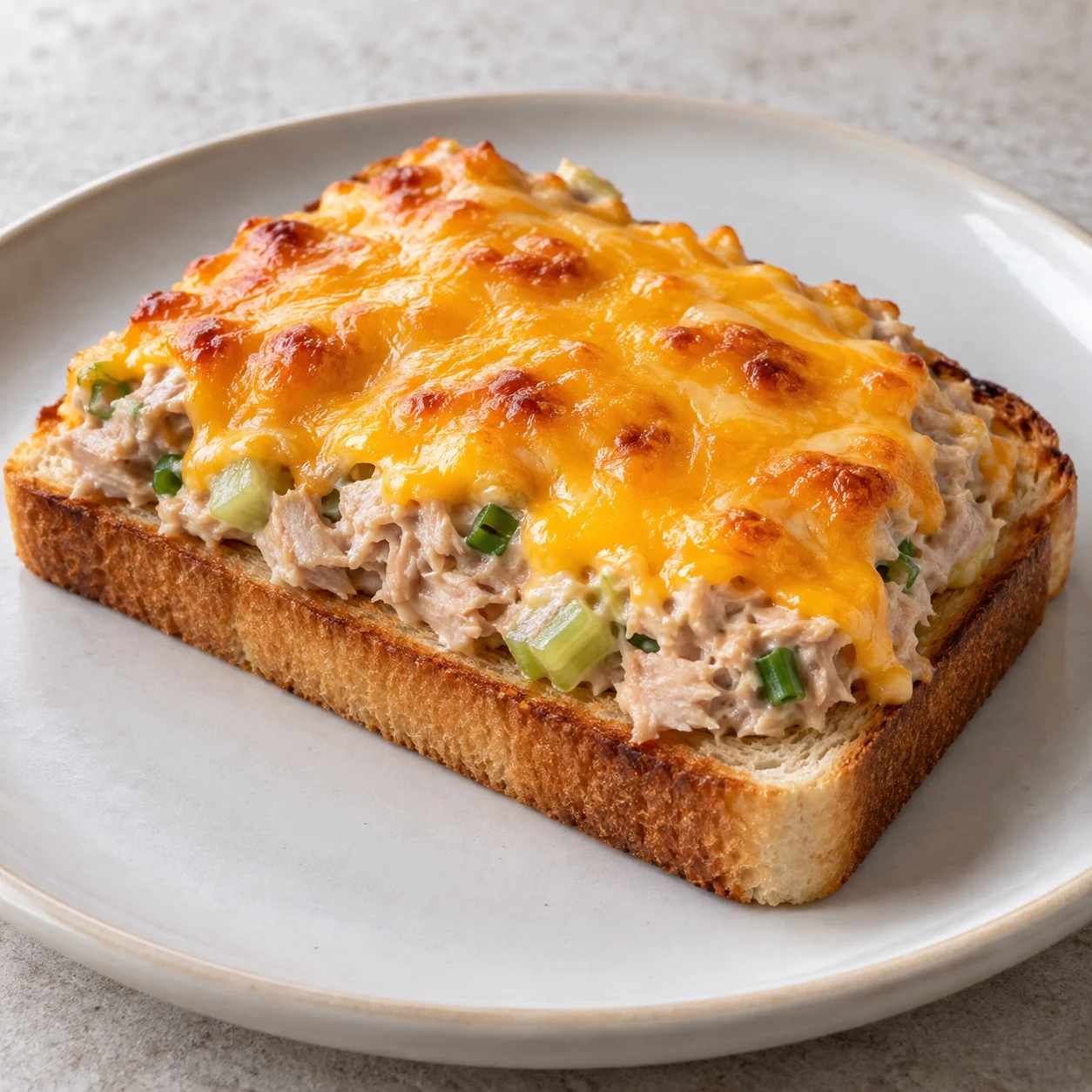
An open-faced melt needs a base that can support a moist tuna filling while the cheese heats above it. This recipe handles those jobs separately: first dry both bread faces in the oven, then add the filling and finish the assembled melts. The full card makes four portions, each on one measured slice. Set out the baking sheet, mixing bowl and thermometer before starting so the topping can be mixed while the oven heats and the toast cooks.
Tuna & cheddar open-faced melts makes 4 servings, with 35 min estimated total time. View the standalone recipe page.
Drain before weighing the tuna
Use canned light tuna packed in water and weigh the solids after draining. The weight printed on a can may include liquid, so it is not automatically the edible amount required here. Let excess water run off without squeezing the fish into a dry compact block. Break the drained tuna into flakes in the bowl. Oil-packed tuna or a flavored pouch changes the ingredient composition and is not the same input for the nutrition calculation. Keep the mayonnaise and cheese measured too; a casual extra spoonful changes the portion more than a few pepper specks.
Make the vegetables small enough to stay in place
Dice the celery finely and slice the scallion into thin pieces. Large chunks can roll off the toast or leave a gap beneath the melted cheese. Mix the dressing ingredients through the tuna just until everything is coated, preserving some flakes rather than crushing it into paste. Scrape the bowl sides so the lemon, mustard and mayonnaise are evenly distributed. No extra salt is specified because the packaged ingredients already contribute their own seasoning. Brand differences are a reason to check labels, not to assume identical sodium levels.
Toast both sides without taking them too dark
Arrange the four slices with space around them on the bare rimmed sheet. They should feel drier on both faces after the initial toast, but still have room to brown during the second bake. If the edges are already very dark, the assembled stage may push them past pleasant crispness. Use slices of comparable thickness as well as equal weight. A very dense small slice and a large airy slice can each weigh forty grams yet hold the filling differently. Choose four similar slices from the same loaf.
Spread the filling into an even layer
Divide the mixture between all four slices before spreading it. Keep it inside the bread edges and avoid a tall mound in the center, which heats more slowly than a flat layer. Distribute the grated cheddar across the surface so each portion receives its share. Bake on the middle rack; this gives the filling time to warm while the cheese melts. A fierce broiler can color the top before the middle is ready. Check the topping center with a thermometer, keeping the tip away from the baking sheet.
Give the molten cheese a short pause
Let the melts stand for the card’s brief rest before moving them to plates. Use a broad spatula under the entire bread slice so the topping does not slide while the toast bends. Serve promptly for the best contrast between crisp bread and soft filling. A stored melt will absorb moisture and become softer, even if it was crisp initially. Refrigerate leftovers promptly and reheat thoroughly. This dish contains fish, wheat, egg and milk; the visible vegetables do not make it suitable for diets excluding those ingredients.
Common questions
Why is the bread soggy underneath?
Undrained tuna, untoasted bread or a thick heap of filling can all contribute. Follow the two-sided toast stage and distribute the topping evenly. Avoid leaving assembled melts waiting on the sheet before baking.
Can melted cheese tell me the filling is hot enough?
No. Cheese near the surface can melt before the tuna mixture in the center reaches the card endpoint. Check a center rather than extending cooking solely until the cheese becomes darker.
Technique & food-safety references
These primary references support the technique, safety and storage guidance. The recipe and cooking explanations are original Recipe Pinboard content.


