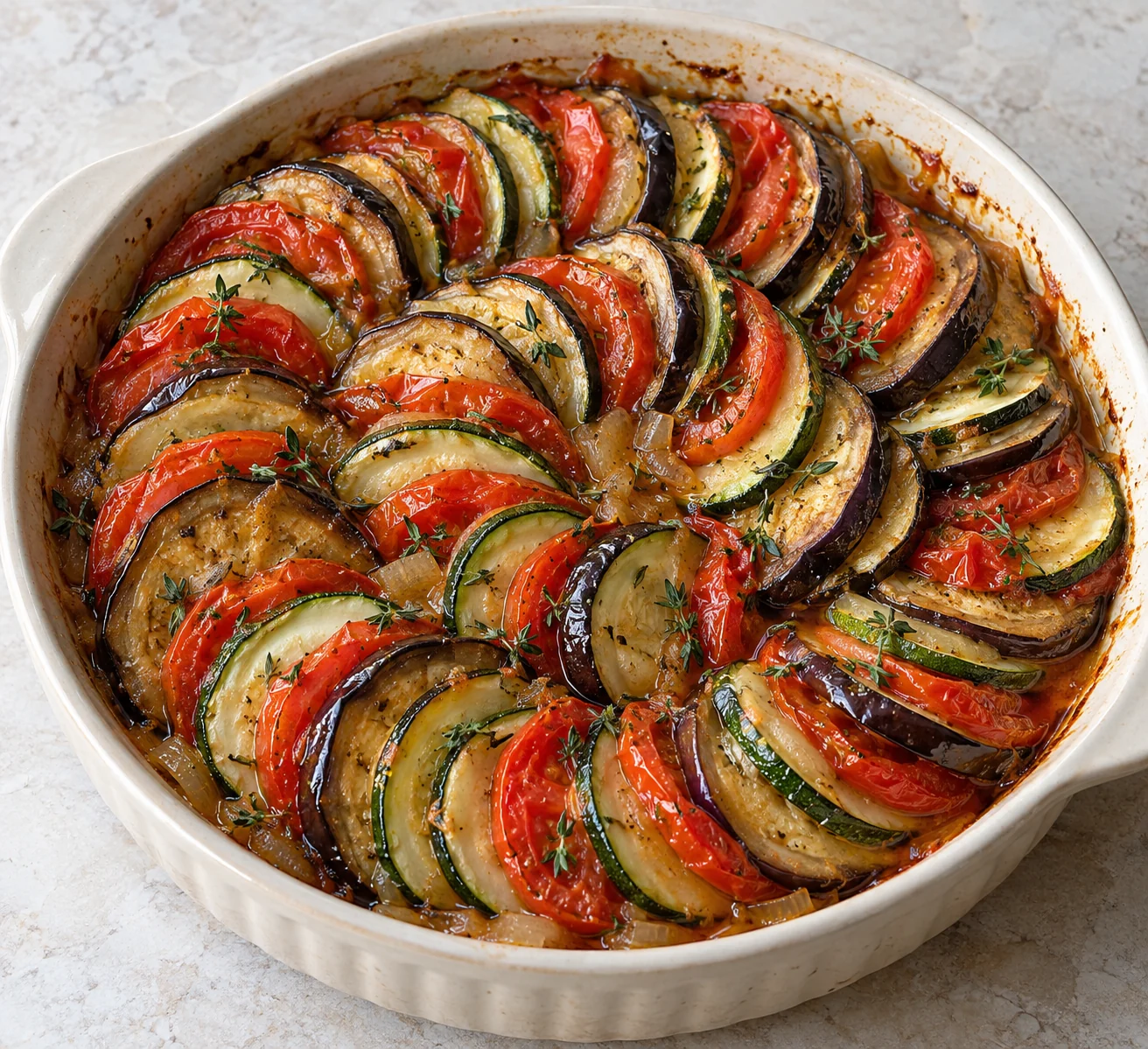
A vegetable tian turns separate slices into a cohesive baked dish without blending them into a sauce. Here, eggplant, zucchini and tomato lean together over onions that are already soft before the dish enters the oven. The covered stage helps the centers soften; the uncovered stage concentrates the juices and colors the edges. The card makes four vegetable portions. Its two-hour allowance includes slicing, both oven stages and a rest, so this is a useful dish to start before the rest of dinner.
Layered summer vegetable tian makes 4 servings, with 2 hr estimated total time. View the standalone recipe page.
Choose shapes that can share a row
Slender eggplant, medium zucchini and firm tomatoes are easier to arrange together than one very broad eggplant beside tiny zucchini. Exact matching is unnecessary: halve a large round so it fits the neighboring slices. Keep all edible trimmed weights specified in the card. Wash the skins well because they stay on. Use a sharp knife and aim for the same thinness throughout; an isolated thick eggplant slice can remain resistant even when the tomato beside it has softened completely.
Cook the onion base before assembling
The onions sit beneath the vegetables, where they will receive moisture but little direct browning. Starting them in a skillet gives them time to soften properly. Use the measured first portion of oil and cook over moderate heat, stirring rather than leaving a dark layer on the pan. Add garlic near the end so it does not spend the whole onion-cooking interval against the hot surface. Spread this mixture evenly across the baking dish; thick onion heaps create uneven support for the rows above.
Arrange overlapping slices rather than deep stacks
Alternate the three vegetables in concentric rows and let each slice lean against the previous one. This exposes a narrow upper edge while placing much of the slice near its moist neighbors. Do not build several horizontal layers in the center to use up space. If the pieces are crowded, adjust their angle across the entire dish. Keep tomato cutting juices and pour them over the onion base. The dish should look full but still have room below the rim for bubbling liquid.
Distribute oil and thyme between the slices
Mixing the remaining oil with the seasonings makes it easier to spread small amounts over the whole surface. Use a spoon and brush to reach the gaps, especially the pale eggplant flesh, instead of leaving all the oil in the middle. Remove woody thyme stems before weighing the leaves. Small tender leaf clusters are fine, but a hard sprig is unpleasant in a spoonful. There is no cheese topping here; the recipe depends on vegetables, olive oil and their own juices for flavor.
Judge the eggplant before ending the bake
Lift the foil carefully after the covered stage because trapped steam escapes quickly. During the uncovered stage, check a thicker eggplant slice near the center with a small knife. It should feel tender, without a springy raw center. If the exposed edges brown sooner, replace the foil loosely while the interior finishes. Rest the dish before scooping so the bubbling subsides. Divide the juices along with the vegetables; leaving them in the pan would omit part of the measured oil and tomato mixture.
Common questions
Why is there liquid beneath the vegetables?
Tomatoes and zucchini naturally release moisture. Some juice is expected and belongs in the serving. Thin even slices, the specified shallow dish and the uncovered baking stage help concentrate it; do not pour it away midway through cooking.
Can I treat this as a full protein-rich dinner?
The card describes four vegetable portions and makes no high-protein claim. Its plant ingredients and olive oil fit the documented Mediterranean-style pattern, but that tag does not make one vegetable dish a complete meal or a medical diet.
Technique & food-safety references
These primary references support the technique, safety and storage guidance. The recipe and cooking explanations are original Recipe Pinboard content.


