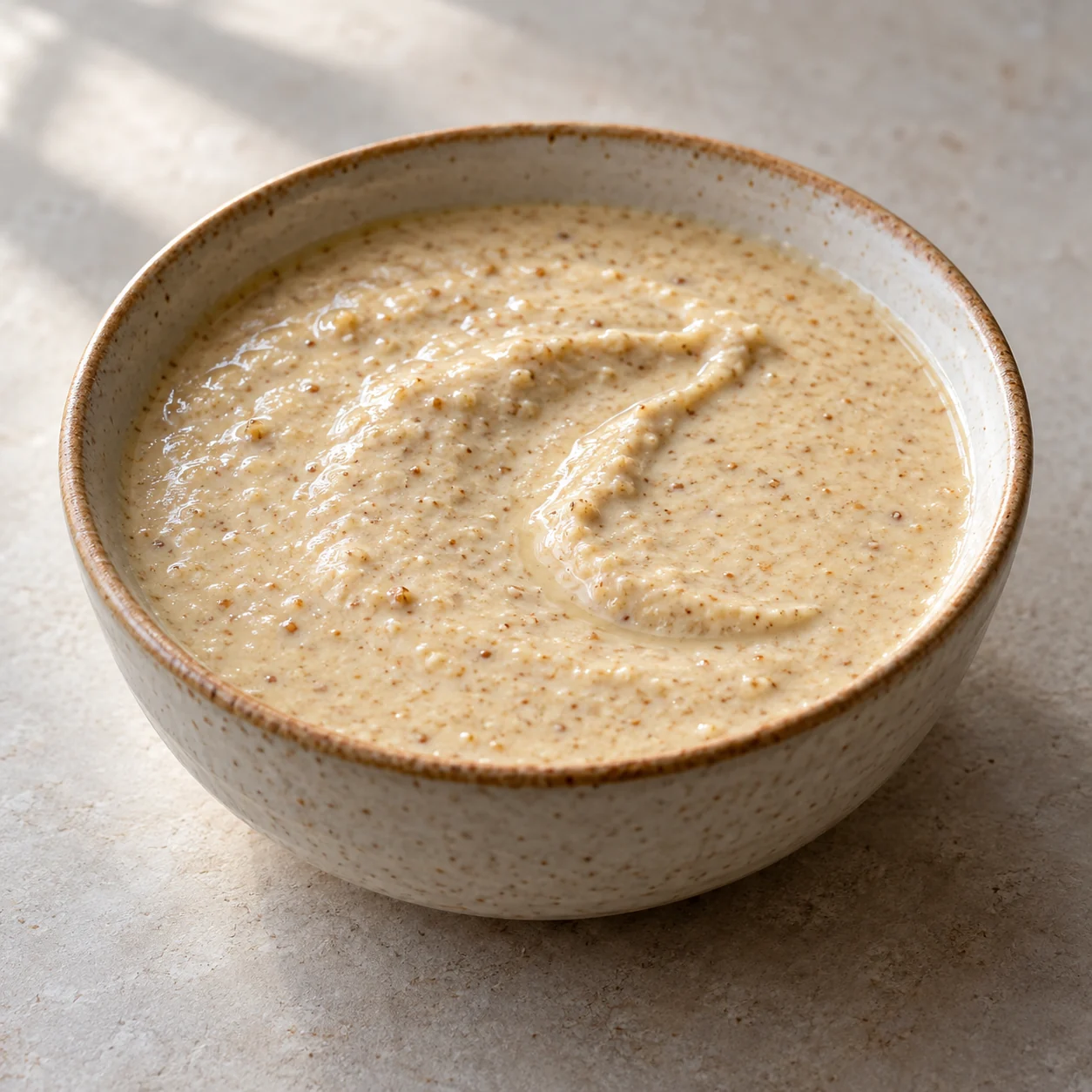
This original dairy-free sauce uses soaked bread to give walnuts a creamy, spoonable texture. It is a variation on the broader idea of bread-and-nut sauces, not a claim to reproduce a traditional Ligurian recipe. The complete card makes six equal portions in thirty minutes, including soaking and a short rest. The useful checkpoints are fully softened crust, finely chopped nuts and a sauce that settles slowly after stirring.
Walnut & bread garlic sauce makes 6 servings, with 30 min estimated total time. View the standalone recipe page.
Choose bread that matches the recipe
Use plain ready-to-eat white bread and include its crust in the eighty-gram weight. Check the ingredient list for milk, eggs and honey before relying on the vegan or dairy-free tags. Different breads absorb water differently, but this formula starts with a fixed measured amount so the process is repeatable. A heavily seeded loaf or a very chewy sourdough changes the texture substantially. Tear the bread into small pieces and place it in a bowl wide enough to press the pieces beneath the water. Do not replace it with raw flour or dry breadcrumbs by volume.
Soak the crust as well as the center
Pour all one hundred sixty grams of water over the bread and wait ten minutes. Press and turn the pieces occasionally so no dry crust sits above the surface. By the end, the crust should yield easily when pressed with a spoon. Keep every bit of soaking liquid in the recipe. Squeezing the bread dry would change both the texture and the intended water ratio. La Cucina Italiana describes soaked bread as one component of walnut sauce; this formulation retains the water and nut skins and omits the ricotta used in that publisher's version.
Chop the walnuts before adding wet ingredients
Use shelled walnut kernels and check for stray shell fragments before weighing. Pulse them alone in the processor until the pieces are small and reasonably uniform. Stop before prolonged processing turns them into an oily paste. This first stage gives the blade a chance to break down larger nuts without soft bread coating everything. Add the soaked bread, all water, finely grated garlic, lemon juice and salt. Scrape the bowl after the first few pulses, particularly beneath the rim where small dry walnut pieces can remain outside the blade's reach.
Blend briefly and add the oil steadily
Process until the bread loses its separate identity and the mixture looks mostly smooth with fine walnut flecks. Pour the measured oil slowly while the motor runs, then stop once the sauce is cohesive. Long blending is unnecessary and can warm a small batch. Scrape the underside of the lid and the bowl walls back into the sauce. If a dry pocket remains, pulse again briefly instead of immediately adding more liquid. The goal is a thick sauce that can be spooned and spread, with enough movement that a spoon trail gradually softens rather than remaining a rigid groove.
Rest, portion and keep the sauce cold
Allow ten minutes before the final stir. The bread continues to hydrate, so the just-blended mixture may become slightly firmer. Divide the complete batch into six equal portions by weight if consistency matters. The estimate includes all walnuts, oil, bread and soaking water; accompaniments are separate. Refrigerate promptly at 40°F / 4°C or below and use within three to four days. Do not hold raw garlic and oil mixtures at room temperature. Use a clean spoon when serving, return the container to the refrigerator promptly and keep the wheat and walnut ingredients in mind when planning for guests.
Common questions
Why is the sauce gritty?
Check whether the walnuts were chopped finely before the bread was added and whether the crust softened completely. Scrape down and process in short bursts. A few fine walnut-skin flecks are expected in this unstrained version.
Can I thin it for pouring?
Stir in a small measured amount of water after the rest if needed. That changes the finished weight and thickness without adding energy, but divide the adjusted whole batch into the same six portions for the stated estimate.
Technique & food-safety references
These primary references support the technique, safety and storage guidance. The recipe and cooking explanations are original Recipe Pinboard content.


