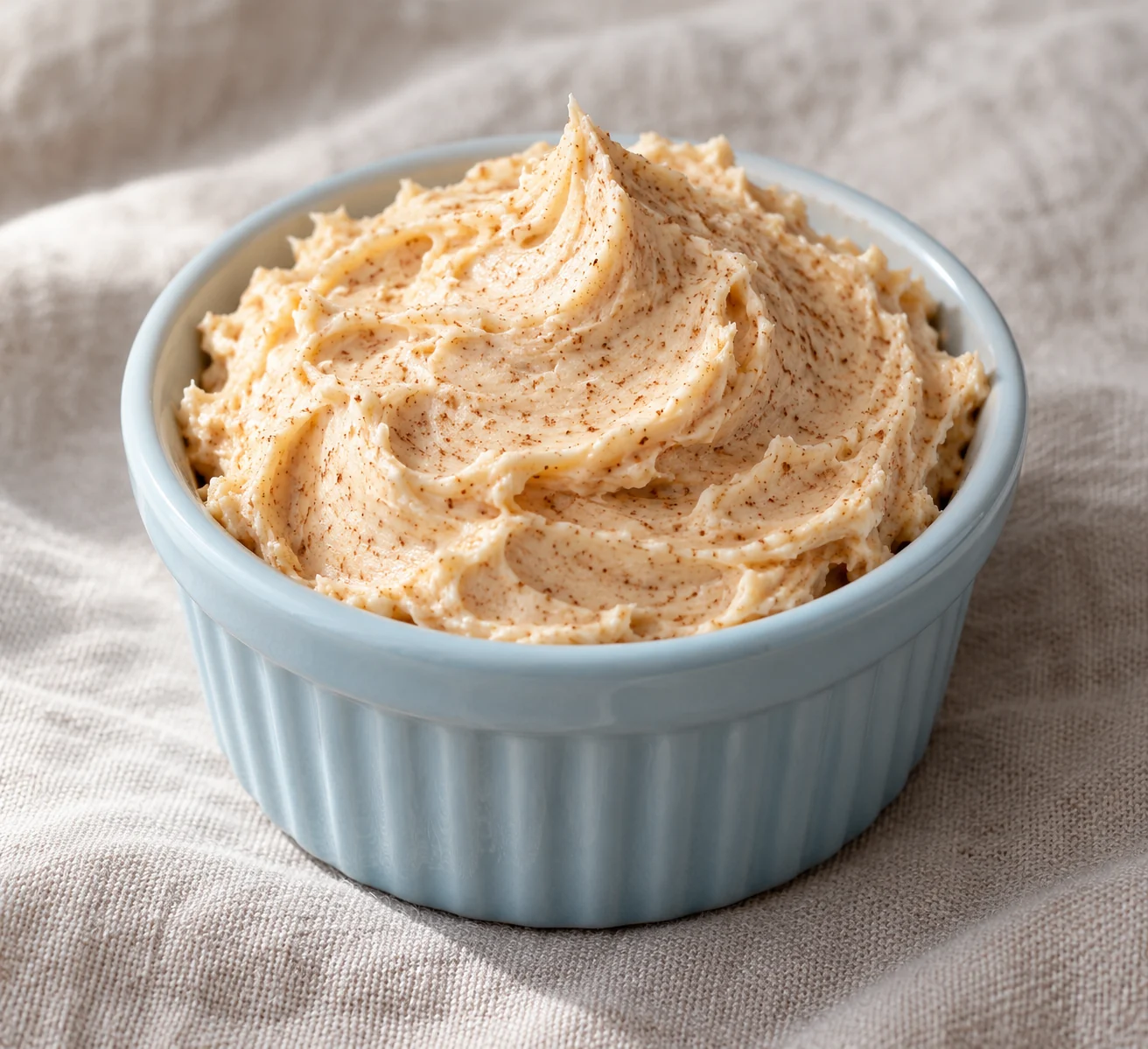
Whipping makes softened butter easier to spread by incorporating air; it does not remove fat or sugar from the recipe. Honey and cinnamon are beaten into the entire batch rather than added as an unmeasured decorative drizzle. The main practical task is keeping the butter soft enough to mix but cool enough to hold its shape. A pale, aerated mixture with soft ridges is the target, not melted cinnamon butter.
Whipped cinnamon & honey butter makes 12 servings, with 50 min estimated total time. View the standalone recipe page.
Give the butter time to soften evenly
Cut the butter into cubes before the softening interval so the center is not still hard when the outside becomes pliable. It should accept a light indentation while remaining opaque. A shiny pool around the cubes means it has gone too far. A cold kitchen may require more than the planning allowance, whereas a warm room may require less. Avoid placing the bowl directly on a hot appliance. Uneven microwave melting is also difficult to control when the goal is a consistent, softly solid texture throughout.
Beat the butter before adding honey
Begin with the butter alone so its small lumps can disappear without being hidden by cinnamon flecks. Use a bowl large enough for the beaters but not so wide that the butter spreads out beneath them. Scrape the sides and the beaters carefully, with the mixer stopped, then continue until the texture is uniform. Do not increase speed indefinitely to compensate for cold cubes. A short pause to let the butter soften is more effective than warming it through prolonged friction from the mixer.
Incorporate the flavorings throughout the batch
Add the measured liquid honey, cinnamon and salt together and beat until the color is even. Honey that is heavily crystallized can leave gritty spots and is not the texture specified here. Scrape the bottom of the bowl, where a sticky layer can hide under the aerated butter. Fine cinnamon should be dispersed as small flecks rather than collected in dry streaks. The recipe does not include a separate drizzle or dusting on top; all of its sweetness and spice belong in the mixed spread.
Stop when the butter holds soft ridges
The mixture should look lighter after beating, with ridges that remain visible when the beaters lift out. More air is not automatically better if the bowl is warming. If the surface becomes glossy and loose, stop and briefly refrigerate the covered bowl before trying again. Do not add extra powdered sugar to stiffen it while retaining this recipe's calculation. That would change the ingredients. The short final stand allows you to assess its spreadable texture without turning a quick whipping step into a long room-temperature hold.
Portion by shares rather than whipped volume
Aeration changes how much space the butter occupies. It does not change the nutrients in the complete batch, so twelve equal portions should reflect equal shares rather than an assumed number of tablespoons after whipping. Keep the main container refrigerated and soften only what you need for serving. Honey means this spread must not be given to children younger than twelve months. The butter contains milk, and the honey makes the recipe unsuitable for a vegan tag. Any toast, pancakes or other serving foods are separate from this estimate.
Common questions
Why did my honey butter become runny?
The butter likely became too warm or was partly melted before mixing. Cover and chill briefly until softly solid again, then beat only enough to restore an even texture. Adding more butter or sugar may thicken it, but those additions would create a new formulation rather than repair the original accounting.
Can I use salted butter?
The recipe specifies unsalted butter and a measured small amount of salt. A salted product varies by brand and would change the seasoning, even though the five displayed nutrients may differ only slightly. Use the stated ingredient for consistency. The gluten-free ingredient screen still requires checking labels and avoiding cross-contact during preparation.
Technique & food-safety references
These primary references support the technique, safety and storage guidance. The recipe and cooking explanations are original Recipe Pinboard content.


