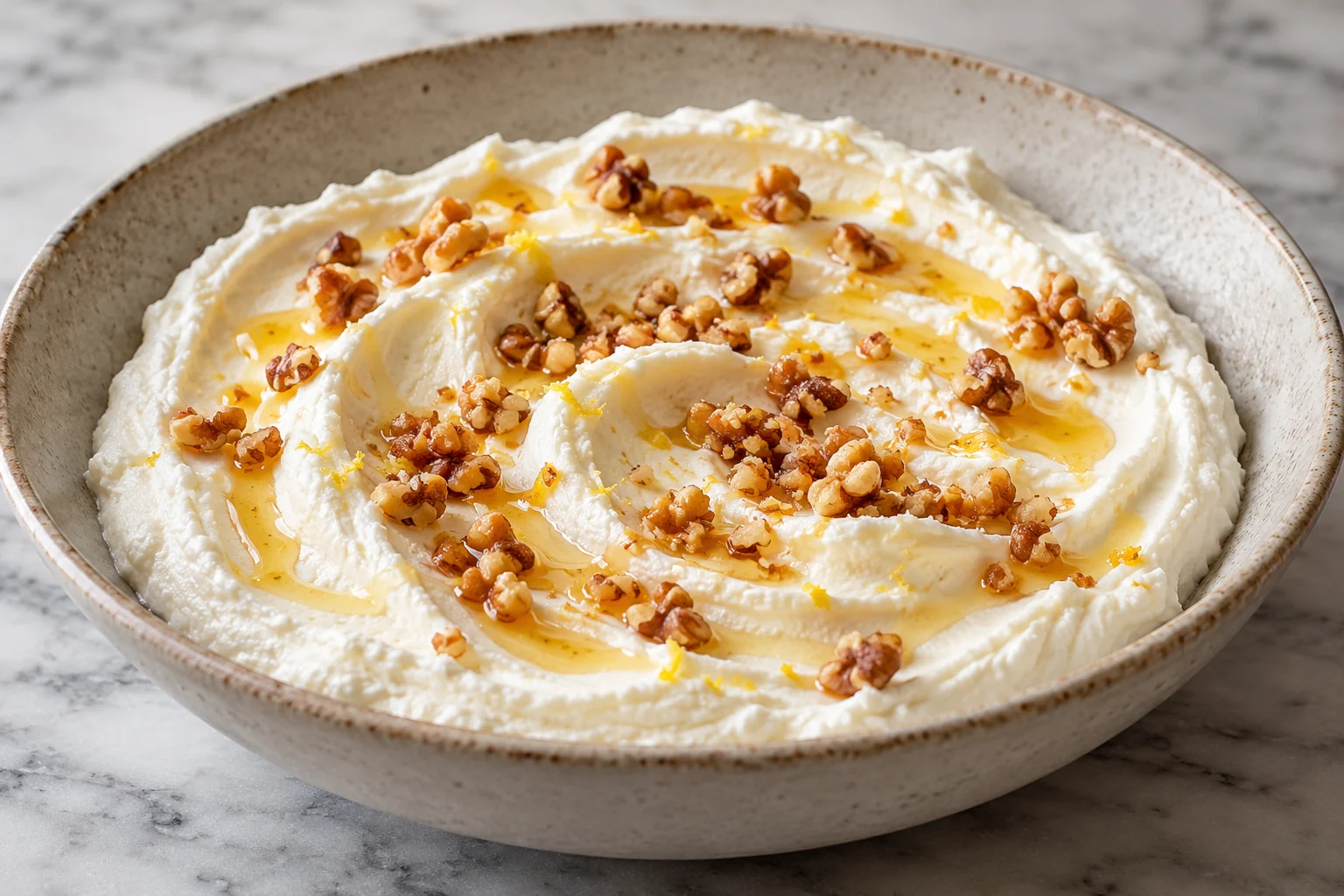
Whipping changes the texture of ricotta without requiring cream or extra oil. Here, a little honey sweetens the cheese, lemon zest adds fragrance and toasted walnuts supply contrast. The remaining honey is measured for the surface rather than poured freely. Eight portions include both the cheese and its toppings. The recipe is quick, but the nuts need time to cool before they meet the chilled dairy.
Whipped ricotta, honey & walnut spread makes 8 servings, with 25 min estimated total time. View the standalone recipe page.
Choose the ricotta state specified
Use whole-milk ricotta as sold and do not drain it before weighing. Removing whey changes the amount and composition of the ingredient compared with the retained profile. Brands differ in texture: some are naturally creamier, while others have a fine grain that remains slightly visible after processing. This recipe does not promise a completely identical result from every tub. If vegetarian suitability matters, choose cheese made with compatible enzymes. Milk and walnuts remain present allergens, and honey means the spread is not suitable for infants younger than twelve months.
Toast walnuts with attention
Place the measured shelled nuts in a dry skillet and keep them moving over moderate, controlled heat. Their aroma should become pleasantly toasted before the pieces turn dark. A heavy pan can retain enough heat to burn them after the burner is off, so transfer them to a plate promptly. Allow the full cooling interval before chopping. Warm walnuts can soften the whipped cheese and create a greasy impression on its surface. Chop finely enough for easy spreading, but leave recognizable pieces rather than grinding them into a paste.
Whip in a bowl that catches the blade
A small food processor suits this quantity better than a very large container with ingredients spread below its blade. Add the ricotta, the first measured honey portion and finely grated yellow lemon zest. Avoid the white pith, which contributes a different flavor. Process briefly, then stop to scrape the sides and base. Continue only until the texture is lighter and even. More processing is not always better: repeated long runs warm the cheese. There is no need to pour in milk or oil to make the blade move.
Share the topping across the bowl
Transfer all the whipped mixture to a shallow serving dish, scraping the processor carefully. A broad surface makes it easier to distribute the chopped walnuts and remaining honey evenly. The honey should be a light drizzle rather than a deep pool in the center. Scatter every measured walnut piece over the spread, including the fine crumbs. These are ingredients, not optional decorations. When portioning, give each serving a comparable share of topping instead of leaving all the nuts for the final spoonful at the bottom of the dish.
Keep the finished spread cool
Prepare it close to serving and keep it refrigerated until needed. The twenty-five-minute schedule includes toasting, cooling, whipping and assembly, but not a long unattended period at room temperature. Refrigerate leftovers within two hours and use within three to four days. Cover the container to protect the surface from drying and use a clean spoon each time. The walnuts will gradually soften against the cheese; that is a texture change rather than evidence that they were omitted. Bread, crackers and fruit are separate accompaniments outside the recipe's estimate.
Common questions
Why is my whipped ricotta still a little grainy?
Ricotta starts with small curds, and some brands retain more texture than others. Scrape the bowl and give it another short run if needed. Do not chase absolute smoothness by heating the cheese through prolonged processing or adding unmeasured liquid.
Can I replace honey with another syrup?
A different syrup changes both flavor and nutrient values. Keep the measured honey for this version, or calculate a separate variation. Honey is present in the whipped base as well as the finishing drizzle, so removing only the topping does not make it vegan.
Technique & food-safety references
These primary references support the technique, safety and storage guidance. The recipe and cooking explanations are original Recipe Pinboard content.


