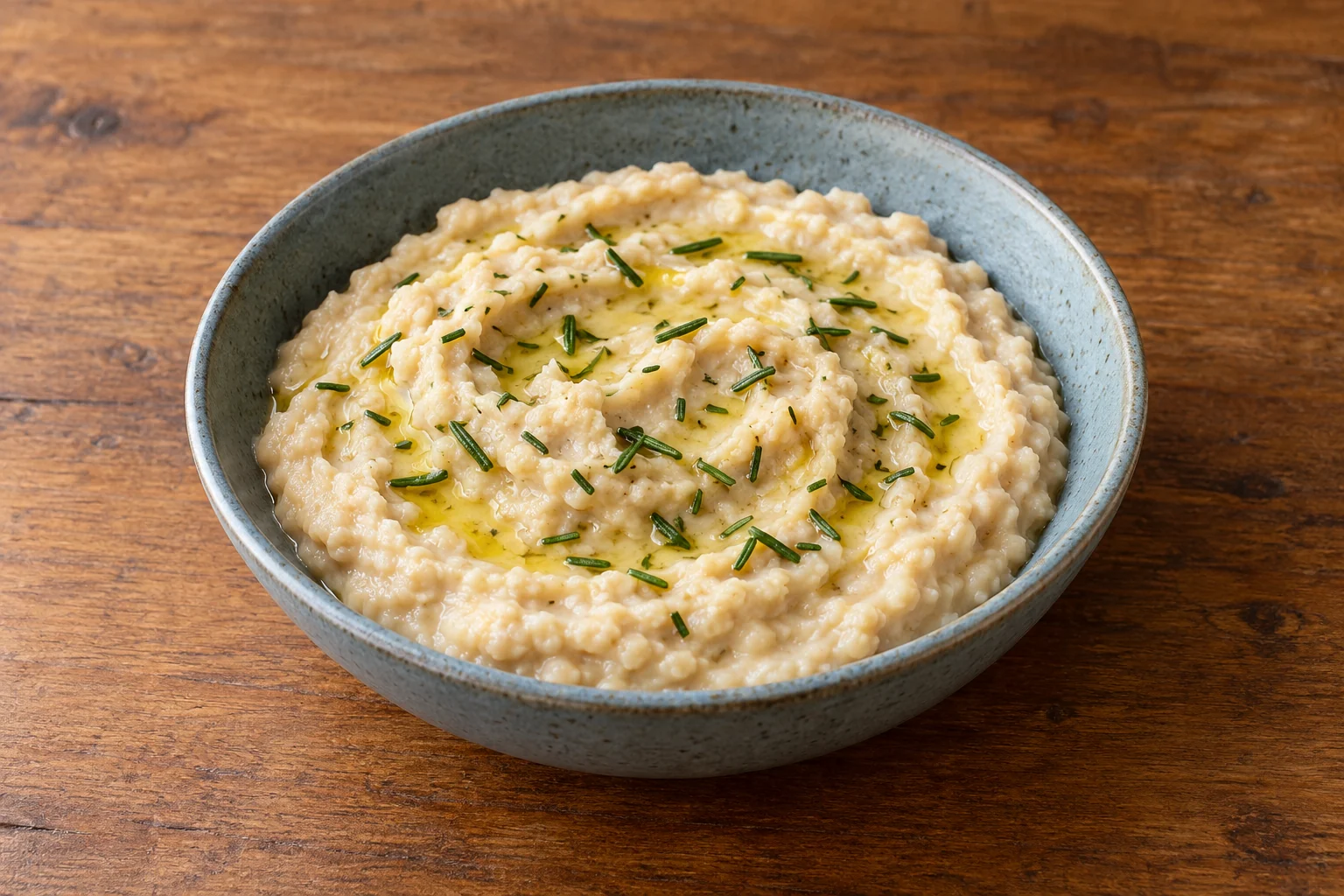
This white bean spread gets its body from cannellini beans rather than cream or cheese. Its flavor is intentionally gentle: rosemary and garlic are warmed briefly in oil, then blended with beans and lemon. The main practical decisions are how well to drain the beans, how finely to prepare the herb, and how much texture to leave in the finished spread. The recipe makes six portions, with breads and crackers kept separate.
Rosemary white bean spread makes 6 servings, with 20 min estimated total time. View the standalone recipe page.
Measure drained beans, not the whole can
The ingredient list calls for 480 g canned cannellini beans after draining and rinsing. The liquid in an unopened can is not part of that weight. Tip the beans into a sieve, rinse and allow the water to drain before weighing. A large amount of clinging water can make the spread looser even when the ingredient number appears right.
Use plain beans with the specified simple ingredient list. Beans in a seasoned tomato sauce or another prepared mixture are a different ingredient. Cannellini beans give a pale, creamy result. A different white bean can vary in skin thickness and texture, so it should not be treated as an invisible change when you are trying to repeat the same consistency.
Warm the garlic gently and keep the rosemary fine
The skillet stage is only one minute over medium-low heat. Its purpose is to distribute the garlic and rosemary through the oil without developing a dark fried flavor. Keep the garlic moving, and take the pan off the heat if it begins to color rapidly. The smaller the skillet and the hotter the burner, the more attention this brief step needs.
Chop rosemary very finely before measuring the small amount for the mixture. Whole needles can feel woody in an otherwise soft spread. Reserve the separate finishing portion as directed so you do not accidentally put all the herb into the skillet. Let the flavored oil cool for five minutes before processing; there is no benefit in blending it while it is sizzling.
Blend, scrape and assess before making changes
Add the drained beans, measured water, lemon juice, salt and pepper to the processor with the cooled flavored oil. Process until mostly smooth, stopping to scrape down the bowl. Small flecks of bean skin and rosemary are compatible with the rustic texture; the goal is a spread, not a strained restaurant-style purée.
If the mixture seems uneven, scraping and another short processing interval may solve it without any extra liquid. The initial water amount is modest because rinsed canned beans already contain moisture. Adding a great deal of oil to chase smoothness changes both texture and nutrition. Start with the written method and judge the finished result before modifying it.
Use the finishing oil and serve measured portions
Spoon the spread into a shallow bowl so the last 5 g oil and the small reserved rosemary portion can be distributed over the surface. The finish should be a light sheen, not a pool. Divide the entire batch into six equal portions, approximately 95 g each; the exact result depends on how much moisture the beans retained.
You can serve the spread with vegetables or alongside a meal, but those foods are not included in its ingredient list or yield. If you choose bread or crackers, review their labels separately for dietary needs. The spread is made from plant ingredients, but that does not establish that every packaged ingredient or accompaniment is suitable for every allergy.
Treat garlic-in-oil mixtures as perishable
The beans, fresh herb and garlic make a fresh refrigerated food. Do not leave the spread out for a long grazing session, and do not keep it at room temperature because it contains oil or lemon. Follow the recipe’s two-hour limit, or one hour in heat above 90°F, and refrigerate leftovers in a shallow covered container.
Use the refrigerated spread within three to four days and take out only the amount you intend to serve. A clean utensil helps avoid introducing crumbs or other food into the stored batch. If it has thickened when cold, stir it before making any adjustment. Keep the original storage time in mind even if you blend it again.
Common questions
Can I skip the processor?
A potato masher can make a coarser version, but it will leave more skin and bean pieces. Mince the garlic and rosemary especially carefully, and keep the ingredient amounts unchanged. The texture will be different from the pictured soft spread.
Why does my spread taste too strongly of rosemary?
Coarse needles or an increased quantity can dominate a small batch. Use the specified finely chopped amount and separate the tiny garnish portion. More blending may distribute coarse pieces, but it does not remove excess herb flavor.
Technique & food-safety references
These primary references support the technique, safety and storage guidance. The recipe and cooking explanations are original Recipe Pinboard content.