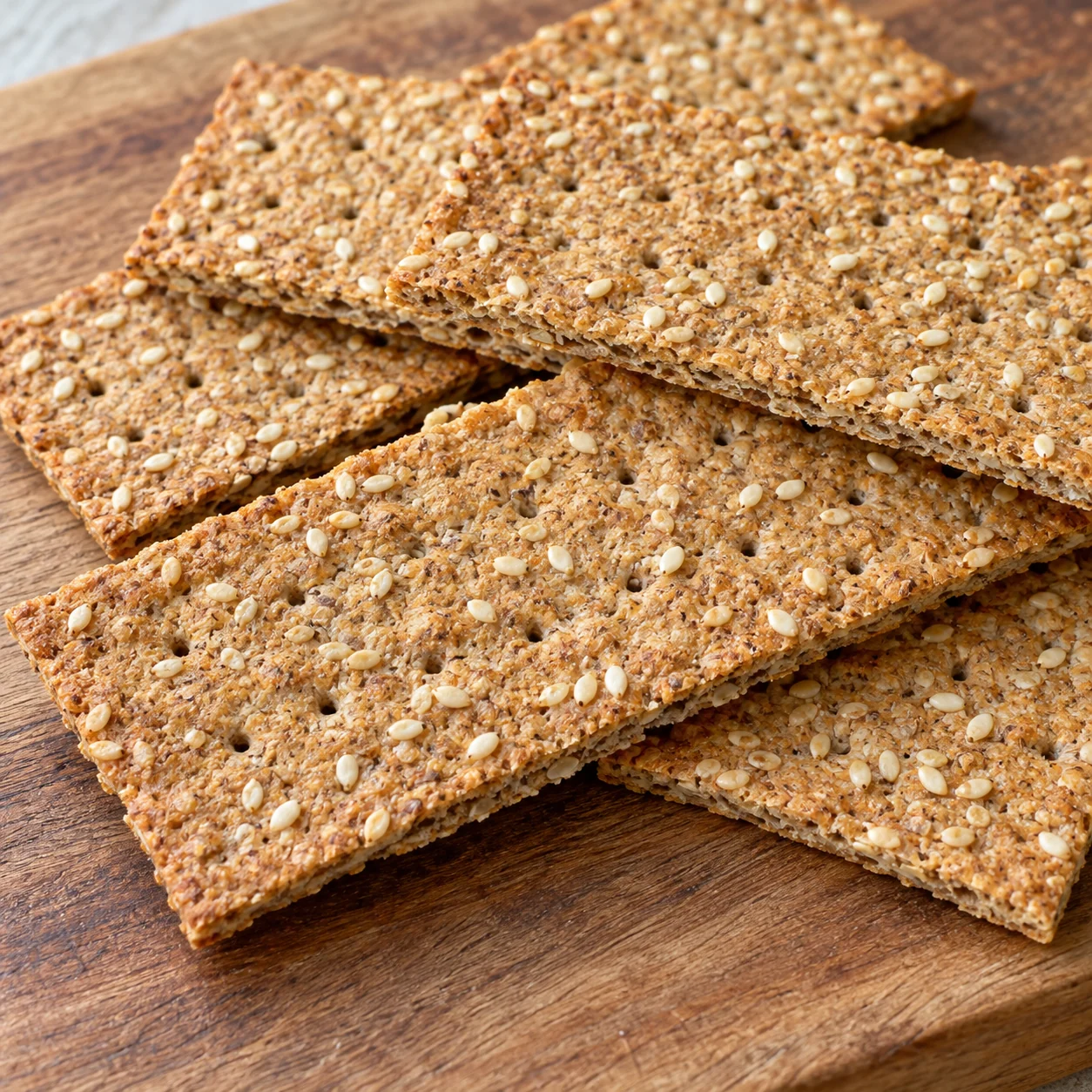
Crispbread depends on a thin, even sheet and enough drying time for the center to become crisp. This dough uses whole-wheat flour, a smaller share of all-purpose flour, sesame and oil, with no yeast or starter. The complete recipe card above makes thirty-two crackers. The guide focuses on rolling, docking and finishing uneven pieces without turning the edges bitter.
Whole-wheat sesame crispbread makes 8 servings, with 1 hr 35 min estimated total time. View the standalone recipe page.
Weigh the flour and allow the rest
Combine the dry ingredients thoroughly before adding the measured water and oil. Knead briefly in the bowl until there are no isolated dry pockets. Cover the dough for the twenty-minute rest so its surface does not crust. Whole-wheat dough can feel a little rough at first; the pause makes it easier to handle without adding extra flour. The recipe's flour and water balance is intentional. Repeatedly dusting the surface changes that balance, so use the parchment sandwich described in the card instead.
Divide before rolling
Split the rested dough into two equal pieces, which makes two manageable sheets. Put one between parchment and roll from the middle toward the edges, turning the sheet as needed. Lift the top paper occasionally to release wrinkles, then lay it back down. Aim for an even rectangle about twelve by sixteen inches. Check the center as well as the perimeter: a thick central island surrounded by paper-thin edges is the most common reason a tray contains both soft and overbrowned crackers.
Score portions and dock the surface
Remove the upper parchment and cut each sheet into sixteen rectangles. Leave the pieces in place on the lower paper so the thin dough does not tear during transfer. Prick the rectangles with a fork, spacing the holes across the surface. Embedded sesame seeds may displace the fork slightly; work around them rather than pressing so aggressively that pieces fall apart. Docking encourages a flatter cracker, but a few small blisters are normal. Do not taste the uncooked dough, even though it contains no egg.
Manage the two trays independently
Bake in the preheated oven and rotate the trays while swapping their shelf positions halfway through. Ovens and sheet materials brown unevenly, so look at the food rather than treating both timers as a guarantee. Thin outer pieces can finish first. Lift those to a rack and let the remaining crackers continue until dry and golden. This prevents finished edges from becoming bitter while the center catches up. Keep parchment away from heating elements and follow its temperature rating.
Cool before deciding whether they are crisp
A hot cracker can be slightly flexible even when it will become crisp on cooling. Give the pieces their rack time, then test a center piece for a clean snap. If it still bends, use the lower-temperature drying step in the card, watching closely. Cool completely again before closing the storage container; trapped warmth can create condensation and soften the batch. Count four crackers per serving. Because uneven edges can produce slightly different sizes, distribute larger and smaller pieces evenly among the eight portions.
Common questions
Can I add sourdough discard to this dough?
Not as an unmeasured extra. A starter adds both flour and water, and its hydration changes the recipe balance. This particular card is an unleavened crispbread with verified flour quantities. Use a separate sourdough cracker formula when you want to use discard, rather than replacing water alone and assuming the nutrition is unchanged.
Why did the crackers soften overnight?
They may have been sealed before cooling completely, or they may not have dried through at the center. Briefly crisping them in a low oven can improve texture, followed by complete cooling. Discard any crackers showing mold or an off smell instead of trying to revive them.
Technique & food-safety references
These primary references support the technique, safety and storage guidance. The recipe and cooking explanations are original Recipe Pinboard content.


