Beef · ALWAYS FREE
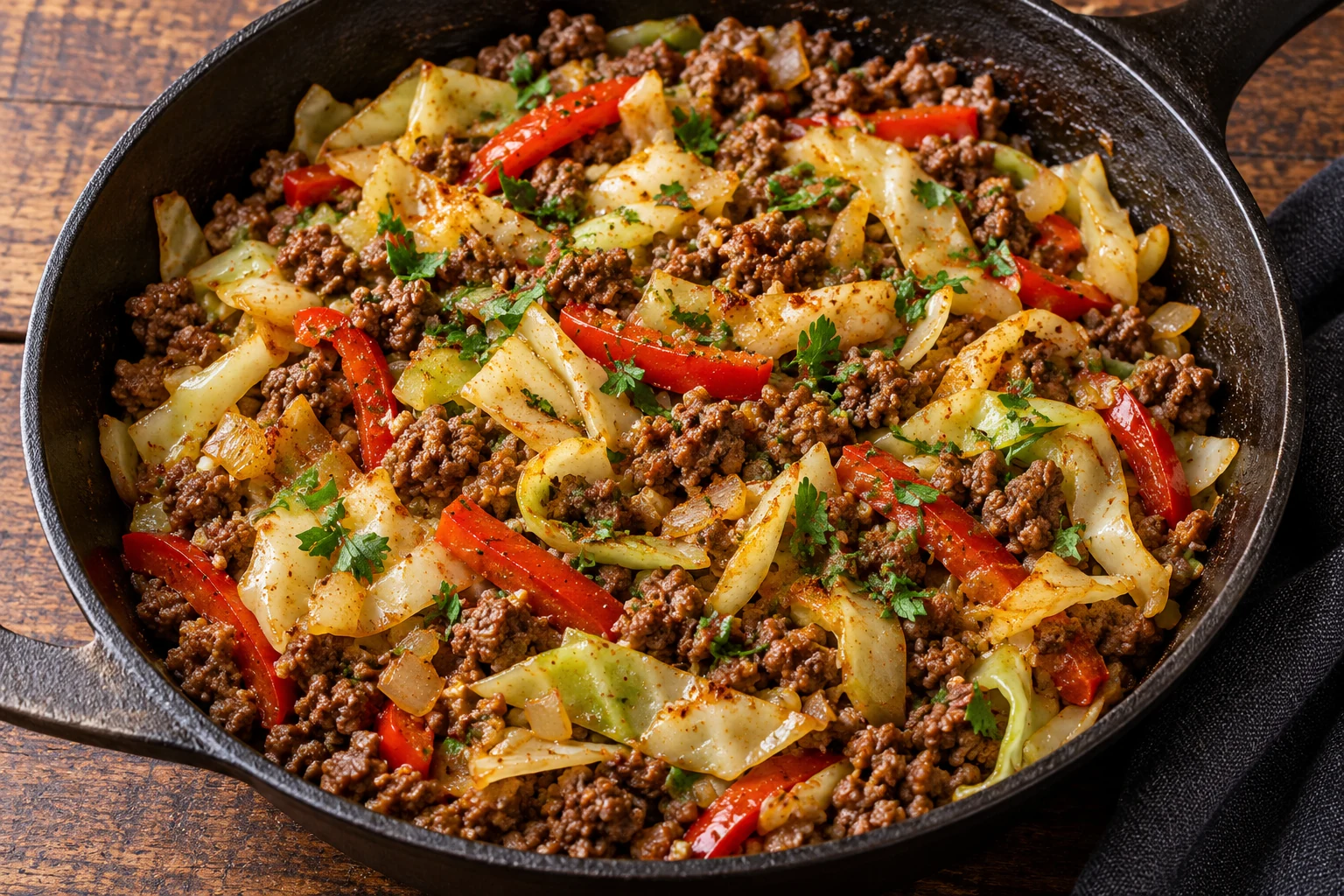
Cumin beef & cabbage skillet
Browned ground beef, tender cabbage and red pepper come together in one cumin-scented skillet, finished with a splash of cider vinegar and parsley.
Ingredients
Volumes are approximate. For baking, use a scale; Metric keeps the specified gram weights.
Let’s make it
- Prepare the vegetables before handling the beef. Heat a deep 30 cm skillet or sauté pan over medium-high heat. Add the olive oil and beef, breaking it into small crumbles with a spoon. Cook for 7–9 minutes, stirring occasionally, until browned and the beef reaches 160°F (71°C) on a food thermometer. Transfer the beef and its juices to a clean bowl.
- Reduce the heat to medium. Add onion and red pepper to the same pan and cook for 5–6 minutes, stirring, until beginning to soften. Stir in garlic, cumin and paprika for 30 seconds.
- Add the cabbage in two batches, stirring each into the hot vegetables so it starts to wilt before adding the next. Add the salt, pepper and measured water. Cover and cook for 6–8 minutes, stirring once or twice, until the cabbage is tender but still has a little bite.
- Return the cooked beef and its juices to the pan. Add the cider vinegar and cook uncovered for 3–4 minutes, stirring, until everything is hot and excess liquid has evaporated. Check that the mixture reaches 165°F (74°C) before serving.
- Fold in the chopped parsley. Stir thoroughly to distribute the beef and vegetables, then divide the finished skillet into four equal portions.
Estimated nutrition
Per serving · 1 of 4- Calories
- 376 kcal
- Protein
- 33.5 g
- Total carbohydrate
- 17.9 g
- Total fat
- 19.3 g
- Total sugars
- 8.8 g
Calculated from the listed ingredients and yield. Brands, draining, cooking and portioning can change the result. Not a laboratory analysis.
Calculation notes & sources
Estimated from listed ingredient amounts and identified food-composition profiles, divided by the stated number of servings. Not laboratory analysis or kitchen testing. The ingredient-sum method uses raw or cooked food profiles matching the ingredient state. Moisture gain/loss does not change the stated serving count. No general cooking/fermentation nutrient-retention factors are applied. Unless a discard/absorption blocker is listed, all measured pan fats and sauces are assumed consumed. Actual amounts left in pans, on utensils or during cooking can reduce intake. Optional additions are excluded when noted. Calories are kcal. Protein, total carbohydrate, total fat and total sugar are grams. Total carbohydrate includes fiber; these are not net carbs. No %DV or FDA-compliance claim. Null means unavailable, never zero. Sodium and fiber are omitted because retention, brands, rinsing and missing source rows make them less reliable here.
View the ingredient calculations · Source 1Why it’s in this collection
- High Protein: Protein-only lower-bound estimate from raw 90%-lean ground beef: 600 g × 20 g protein per 100 g ÷ 4 equal portions = 30.000 g, rounded down to 30.0 g per portion. Other ingredients are not counted. Raw ingredient weights match the USDA raw-food entry; all pan juices are divided among the portions. This is an estimate, not a full nutrition panel; food variation and substitutions change it. USDA reference · USDA reference · USDA reference
- Paleo: Every ingredient was screened against the site’s strict Paleo exclusions. No white potatoes, grains, legumes, dairy, added sugar, syrups or unverified sauces are included. The label describes ingredient compatibility, not a health outcome. Supporting reference
- Weight Loss Journey: One of four equal portions includes 240 g measured nonstarchy vegetables (600 g trimmed cabbage + 200 g trimmed red pepper + 160 g peeled onion, divided by 4) and 150 g of the raw main protein, yielding an estimated protein-only minimum of 30.0 g. The recipe has no added sugar and is not deep-fried. Vegetable weights are raw, trimmed edible weights before cooking. This is portion-aware meal planning, not a calorie prescription or a promise of weight loss. Supporting reference · Supporting reference · Supporting reference · Supporting reference
Calculations are estimates from the specified ingredients and portions. Brands, trimming, substitutions, and cooking losses change the result. This is recipe guidance, not individualized nutrition or medical advice.
Times are estimates. Images illustrate the dish; check ingredients and portions for your needs.
Use a food thermometer for meat, fish, and egg dishes. Refrigerate perishable food within 2 hours, or 1 hour above 90°F (32°C). Reheat leftovers to 165°F (74°C). Safe cooking temperatures · USDA leftover guidance