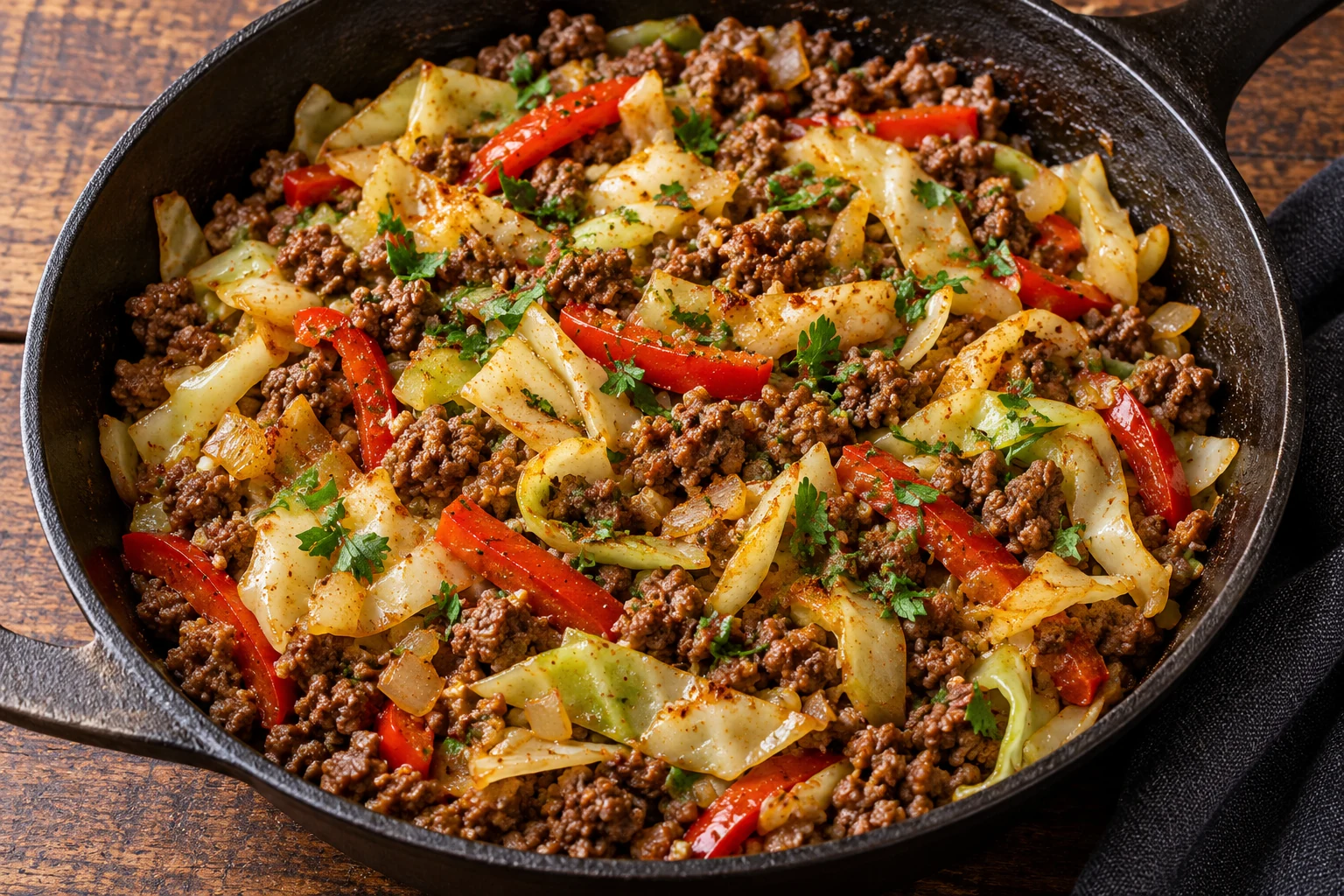
A panful of raw cabbage looks bulky before it wilts, which is why this recipe adds it in two batches after the beef has left the skillet. Covered cooking softens the ribbons; a final uncovered stage removes excess liquid. The forty-minute recipe makes four portions from 600 g ground beef and 600 g trimmed cabbage, with pepper, onion, cumin and a late vinegar finish.
Cumin beef & cabbage skillet makes 4 servings, with 40 min estimated total time. View the standalone recipe page.
Prepare the vegetables before handling ground beef
Remove the tough cabbage core and cut the edible portion into short ribbons about two centimeters wide. Weigh the 600 g after trimming. Long tangled strips are harder to stir through ground-beef crumbles and can make portions uneven. Slice the red pepper thinly, dice the onion and mince the garlic before opening the beef package.
Set out a deep 30 cm skillet or sauté pan with a lid. Depth contains the cabbage as it is first added, while width helps moisture escape during the final uncovered stage. Measure the cumin, paprika, water and vinegar separately. Keep the parsley for the finish so it does not undergo the entire covered cooking period.
Brown and fully cook the beef before removing it
Heat the olive oil over medium-high heat and add the ground beef. Break it into small crumbles while leaving occasional pauses between stirs for pan contact. Cook for seven to nine minutes, checking that it reaches 160°F/71°C. Browning is useful for flavor, but a brown surface does not replace a thermometer reading.
Gather enough crumbles around the probe's sensing area to obtain a food temperature rather than touching the hot skillet, and check more than one area. Transfer the cooked beef and its juices to a clean bowl. This clears space for the vegetables and avoids leaving the beef in the pan throughout every later stage of softening the cabbage.
Soften aromatics before the cabbage goes in
Reduce the heat to medium and cook onion and red pepper for five to six minutes, stirring until they begin to soften. Scrape across the skillet bottom as the vegetables release moisture. The goal is an even base for the cabbage, without small burnt patches of onion that would carry through the entire finished dish.
Stir in garlic, cumin and paprika for thirty seconds. Keep the measured water within reach because the next stages follow quickly. Ground spices need distribution through the vegetables rather than a prolonged dry fry on the bottom of the pan. If the skillet is running too hot, reduce the heat instead of letting the paprika darken aggressively.
Wilt the cabbage in two additions
Add half the cabbage and stir it into the hot vegetables until it starts to lose volume, then add the remaining half. This gives the spoon room to move without throwing raw ribbons over the edge. Add salt, pepper and the measured 60 ml water, then cover for six to eight minutes.
Stir once or twice during the covered cook and check a thicker cabbage ribbon for tenderness. It should retain a little bite. Do not automatically extend the covered period until the cabbage is completely limp, because there is another hot stage ahead. The lid traps enough moisture to soften the ribbons, while the small water quantity avoids beginning with a soup-like pan.
Return the beef and evaporate excess liquid
Return the cooked beef and all its collected juices. Add the cider vinegar and cook uncovered for three to four minutes, stirring until everything is hot and extra liquid has evaporated. The written method calls for the combined mixture to reach 165°F/74°C before serving, in addition to the earlier ground-beef check.
Fold in the parsley and mix from the bottom before dividing into four portions. This prevents a last serving made mostly of cabbage because the heavier crumbles remained underneath. The finished skillet should look lightly moist rather than dry and scorched or surrounded by a deep pool. Use the uncovered stage to manage liquid rather than adding an unlisted thickener.
Common questions
Why is the skillet watery at the end?
Cabbage releases moisture and the covered stage holds it in. Remove the lid for the final beef-and-vinegar stage, stir across the bottom and allow excess liquid to evaporate while ensuring the mixture reaches 165°F/74°C.
Is brown ground beef enough to show it is cooked?
No. Verify 160°F/71°C during the initial beef cook. The recipe also requires the combined finished skillet to reach 165°F/74°C before serving.
Technique & food-safety references
These primary references support the technique, safety and storage guidance. The recipe and cooking explanations are original Recipe Pinboard content.